
Ultra-processed food: what the research says and why the food pyramid helps
General information, not medical advice. If you have questions about your diet, talk to your GP or a dietitian.
Ultra-processed food gets a lot of attention, but the term is less clear-cut than it sounds. Here is what it means, what the studies show and why the Flemish institute Gezond Leven prefers the food pyramid as a guide.
What is ultra-processed food?
The term comes from the NOVA classification, which sorts foods into four groups by how processed they are. Gezond Leven, the Flemish health promotion institute, describes ultra-processed products as industrial products that usually contain little or no intact, whole food. They contain ingredients you rarely find in an ordinary kitchen, such as refined fats, protein isolates and additives (substances added for taste, colour or texture). They are often high in sugar, fat or salt and low in fibre or vitamins, and people tend to eat more of them.
Processed does not automatically mean unhealthy. According to Gezond Leven, wholegrain bread, frozen vegetables and yoghurt are examples of healthy processed products. The institute also says there is no truly clear definition of ultra-processed. More than five ingredients or the word “isolate” can be a sign, but a balanced ready meal quickly has more than five ingredients, and a biscuit made only of flour, butter, sugar and eggs is not healthy either.
How much ultra-processed food do Belgians eat?
Vandevijvere and colleagues (2019) analysed the Belgian food consumption survey of 2014-2015. Ultra-processed food provided on average 33.3% of daily energy in children aged 3 to 9, 29.2% in adolescents and 29.6% in adults. The biggest contributors were processed meat, cakes and pastries, sweet biscuits and soft drinks. If you want to start with soft drinks, here is how to cut back on sugary drinks.
What the Belgian Superior Health Council recommends
In its 2025 dietary guidelines, the Belgian Superior Health Council, the federal government’s scientific advisory body, recommends limiting ultra-processed foods and choosing unprocessed or minimally processed foods instead. It gives examples such as industrially made bread, biscuits, soft drinks, ice cream and sausages. According to the Council, there are signs of a link with a higher risk of chronic disease, but more research is needed to understand the mechanisms.
What two studies do and do not show
In a randomised study by Hall and colleagues (2019), 20 adults stayed in a US research hospital. They received 2 weeks of ultra-processed and 2 weeks of unprocessed meals, matched for calories, sugar and salt among other things, and could eat as much as they wanted. On the ultra-processed diet they ate 508 kilocalories a day more and gained 0.9 kilograms; on the unprocessed diet they lost 0.9 kilograms. It remains a small study over a short period.
Lane and colleagues (2024) brought together 45 analyses from meta-analyses of observational studies, with almost 9.9 million participants in total. Eating more ultra-processed food was linked to a worse outcome for 32 of the health outcomes studied (71%). For cardiovascular deaths and type 2 diabetes, among others, the authors rate the evidence as convincing. Yet according to GRADE, a system for rating the quality of evidence, the quality was low or very low in 41 of the 45 analyses and moderate in 4. Observational studies show a link, not cause and effect.
Why the food pyramid remains the guide
Gezond Leven advises relying first and foremost on the food pyramid: more vegetables, pulses, fruit and wholegrain products, with products from the “red ball” outside the pyramid kept for now and then. Some ultra-processed products, such as wholegrain breakfast cereals or plant-based alternatives, can still be part of a balanced diet, according to the institute. The label “ultra-processed” is therefore not a good guide to whether something is a healthy choice. Whether a bag of crisps contains extra additives makes little difference to your health, says Gezond Leven; swapping the crisps for a mix of nuts does bring a real health gain.
What you can do in the shop and at home
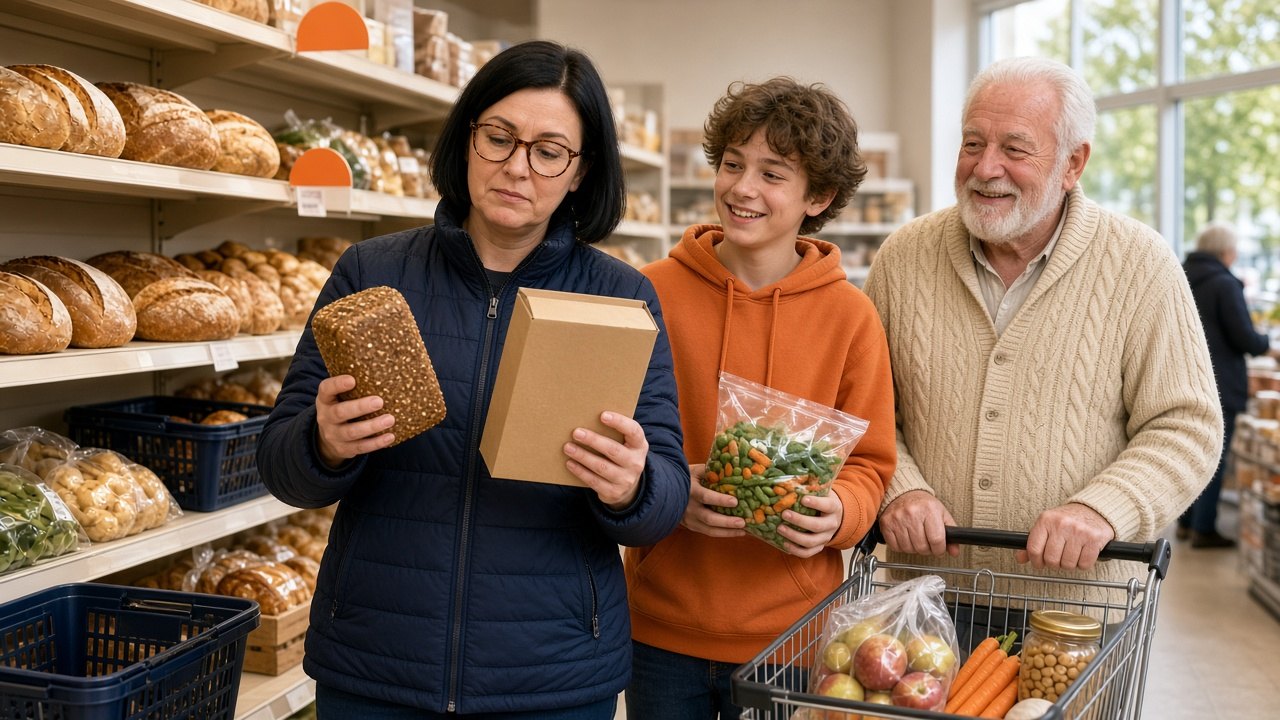
In the shop, the Nutri-Score helps you compare products within the same category, such as biscuits or cereals, according to Gezond Leven. For bread, it helps to know how to go about recognising wholegrain bread, and frozen vegetables, which Gezond Leven counts as healthy processed products, simply count towards your vegetables per day.

At home, you can start more often from unprocessed or minimally processed foods, as the Superior Health Council recommends. Because many ultra-processed products contain salt, it also helps to know where salt hides.
References
- Gezond Leven. (Ultra)bewerkte voeding (in Dutch). Flemish institute Gezond Leven, accessed October 2026.
- Gezond Leven. “Vergeet ultrabewerkt. Neem liever de voedingsdriehoek als kompas” (in Dutch). News item, 28 October 2025.
- Superior Health Council. Voedingsaanbevelingen voor de Belgische bevolking – 2025 (in Dutch; also available in French). Advice no. 9805-9807, 2025.
- Vandevijvere S, De Ridder K, Fiolet T, Bel S, Tafforeau J. Consumption of ultra-processed food products and diet quality among children, adolescents and adults in Belgium. European Journal of Nutrition. 2019;58:3267-3278.
- Hall KD, Ayuketah A, Brychta R et al. Ultra-Processed Diets Cause Excess Calorie Intake and Weight Gain: An Inpatient Randomized Controlled Trial of Ad Libitum Food Intake. Cell Metabolism. 2019;30(1):67-77.
- Lane MM, Gamage E, Du S et al. Ultra-processed food exposure and adverse health outcomes: umbrella review of epidemiological meta-analyses. BMJ. 2024;384:e077310.




One Comment