
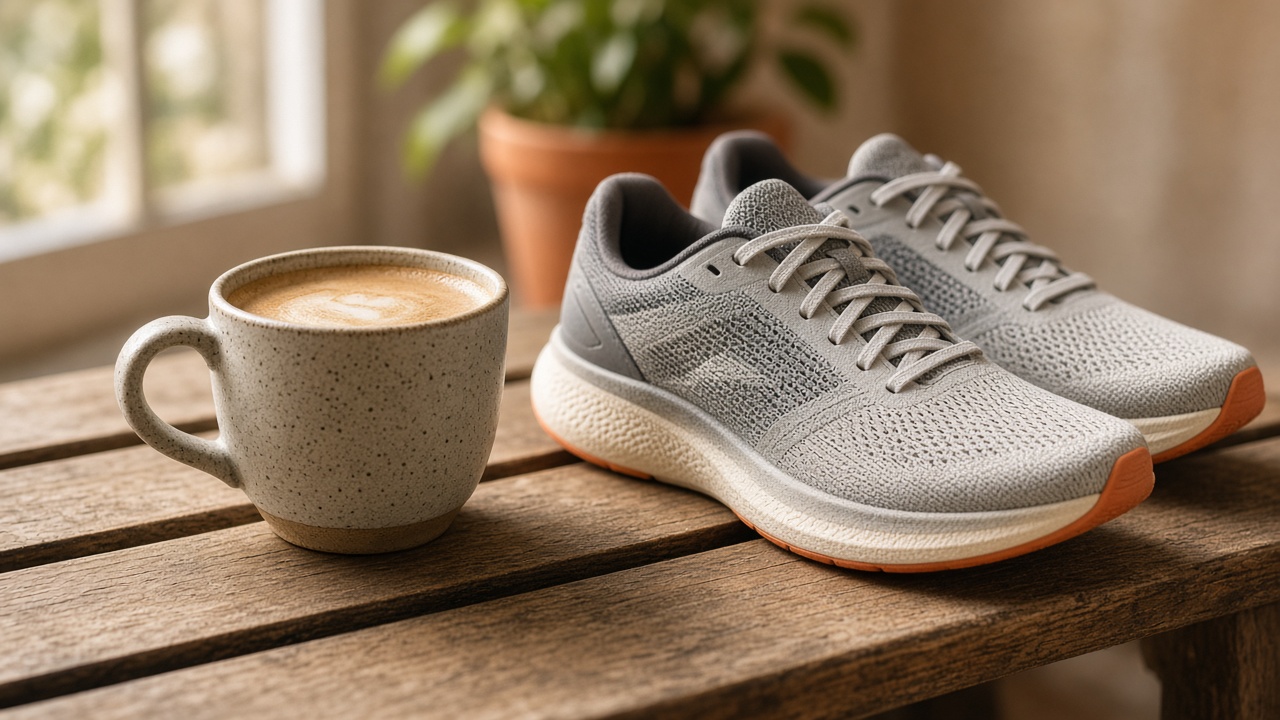
Coffee and training: when caffeine helps — and when it wrecks your sleep
Disclaimer: Not medical advice. Caffeine sensitivity, palpitations, anxiety, pregnancy or medication: talk to a doctor or pharmacist. This is literacy for recreational athletes.
TLDR
- Caffeine can help alertness and endurance a bit — not everyone responds the same.
- EFSA frame for healthy non-pregnant adults: up to ~200 mg per sitting, up to ~400 mg/day; sleep weighs more than “one more espresso.”
- Yes: test a low dose 30–60 min before daytime training. No: pre-workout or double coffee in the evening “to get through it.”
- Energy drink is not a sports drink; see also afternoon-dip habits and sleep checklist.
On feeds, coffee is a “performance hack.” In a normal work week it is more often: training too late, cappuccino too late, and the next morning a heavy RPE. As a practitioner I like coffee myself before a morning session — and I have also ruined enough evenings with “one more” after 6 pm. Put it in perspective: caffeine is a tool with limits, not a personality.
Voedingscentrum and EFSA set hard bands for the average healthy adult. Those numbers are not a sports recipe; they are a safety fence marketing likes to jump.
What caffeine does (and does not)
Caffeine mainly works via alertness and perceived effort: a pace sometimes feels a bit easier. For endurance there is reasonable support; for pure max strength it is more mixed. Some studies also look at blood flow after exercise — interesting, not sacred. What is clear in practice: if caffeine hits your sleep, you lose more recovery than you gain in “drive.”
Same logic as pre-workout literacy: many products are mainly caffeine in a flashy tin, plus compounds you do not need.
When yes / when no
- Worth considering: morning or early-afternoon training; you know your dose; no sleep issues that week.
- Do not force: evening training + caffeine <6–8 h before bed (individual; sensitive people cut earlier); palpitations; combo coffee + pre-workout + energy drink.
- Limit thinking: “one more shot for the late HIIT” is often sleep debt in disguise — see signs of too little recovery.
Practical dosing without a lab
EFSA: up to 200 mg in one go (also within 2 h before intense exercise in healthy non-pregnant adults <45, with caveats) and up to ~400 mg/day. A cup of filter coffee sits roughly around 50–100 mg depending on brew — labels sometimes lie, espresso bars too. Start low. Do not measure “mg perfection”; measure whether you fall asleep, or scroll until midnight.
Pregnancy, 45+, extreme heat/altitude: EFSA is more cautious — then “sports coffee” is not a solo experiment.
Link to your Engy week
Caffeine belongs to energy management, not “more is better.” Who tackles the afternoon dip with habits often needs fewer late shots. Who restarts after a break: volume and sleep first, then caffeine fine-tuning — restarting after a break. Healthspan thinks in sustainability: healthspan vs lifespan.
Recommendations in bullets
- Test caffeine on a non-competition day, 30–60 min before, low dose.
- Add coffee + tea + cola + pre-workout together — not each “innocent” on its own.
- Evening block: water, light meal, earlier bed; no double espresso “for the grind.”
- Sleep > marginal watts.
- Complaints or medication: a professional, not a self-stack.
Sources (selection)
- EFSA — caffeine: acute and chronic intake; sports-effort context.
- Voedingscentrum — caffeine encyclopaedia; coffee/tea without sugar; energy drink not a sports drink.
- ISSN / sports-nutrition reviews — caffeine as an ergogenic aid with individual response (frames; not an EU claim stamp).
- Cross-check: pre-workout & sleep risk in youth (stimulants) — translation: late high doses are risky behaviour, not “biohacking.”

3 Comments