
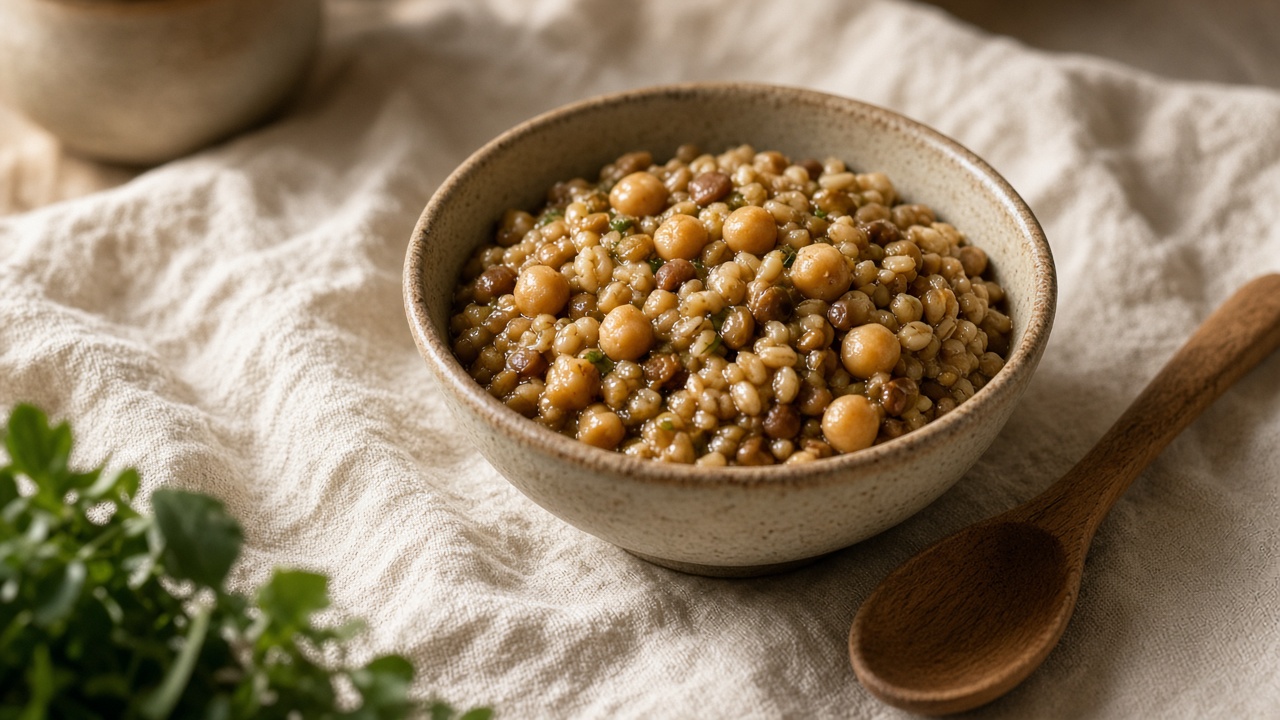
Plant proteins for athletes: when they work (and when you fall short)
Disclaimer: Informational, not a diet prescription and not medical advice. With eating-disorder history, kidney disease or strict restrictions: consult a dietitian or doctor.
TLDR
- Plant protein can support muscle maintenance/building if total intake and portion size are right — not if “less is automatically enough.”
- Belgian/EU framing (Superior Health Council, Gezond Leven) and the Dutch Wheel of Five 2026 push toward more legumes; athletes often need more than the population minimum.
- Yes: combine (legumes + grains/soy), ~20–40 g protein per eating occasion, sometimes slightly larger plant portions for leucine.
- No: ultra-processed “high protein” snacks as the main strategy; or suddenly 250 g legumes/week without building up (gut).
- The base remains: see protein needs for active adults and eating around training.
Supermarket shelves shout protein; at the same time food guides push toward more plant-based. Dietitian Jen Cnops (VRT) puts it sharply: with a varied pattern you often don’t need a protein supplement — fibre is the bigger shortfall for many Belgians. As a practitioner I want to relativise that for people who train 3–5×/week: the direction is right, the grams still have to land.
Not everyone benefits from a strict “all plant” overnight switch. Context: total energy, training volume, digestion.
What the guidelines say
In the Netherlands the renewed Wheel of Five (2026) raised legumes (toward ~250 g/week as population advice) and lowered red meat. In Flanders, Gezond Leven and the Superior Health Council have long pointed to a protein shift: more legumes, less (red) meat — in line with European sustainability thinking. That is population advice, not a hypertrophy protocol.
For active adults a common sports-nutrition band often sits around 1.4–2.0 g protein/kg/day (depending on goal and energy balance) — higher than the baseline need of a sedentary adult. Hit that with chicken, fine. Hit it with lentils, tofu and quark, also fine — if you plan.
Do plant proteins work equally well for muscle?
Recent reviews and RCTs suggest: at equal total protein intake and enough training, the animal vs plant difference for muscle mass/strength in young adults is often small to non-significant. The nuance is leucine and digestibility: plant sources sometimes need a larger portion or a blend (e.g. pea+rice, or legumes+soy) to approach the same anabolic stimulus per meal. “One scoop of pea without thinking” is not magic.
EFSA and national councils assess protein mainly via adequate intake and food patterns; they do not sell shakes. Use that as an anchor against marketing.
When yes / when not
- Yes: you hit the daily total + 3–5 eating occasions with ~20–40 g; you build legumes over 2–3 weeks; you combine sources.
- Not as the only plan: hard cut + salad only without protein density; or ignoring GI complaints “for the gains.”
Practical for a realistic week
- Replace 1–2 meat meals with a lentil/bean dish + whole grains.
- Post-training: tofu/tempeh, quark, egg, or a solid legume+grain bowl — timing less sacred than total (see eating-around-training).
- Ultra-processed high-protein snacks: handy sometimes, not a base — Cnops’ fibre point still stands.
Recommendations in bullets
- Count grams, not only “plant = healthy.”
- Legumes: build up; combine with grains/soy.
- Aim for enough protein/kg for your training level.
- Supplement powder = tool, not identity; food first.
- If in doubt about shortfalls: dietitian, not an influencer spreadsheet.
Sources (selection)
- VRT NWS — Jen Cnops on protein assortment vs varied pattern / fibre (2026).
- Voedingscentrum — renewed Wheel of Five 2026 (legumes, meat reduction); population frame.
- Gezond Leven / Superior Health Council — protein shift and food-triangle thinking.
- EFSA — Dietary Reference Values for protein (EU frame).
- Reviews in e.g. Nutrients on plant protein and recovery/MPS at adequate dose/leucine — heterogeneous, no blank cheque.


2 Comments