
Social contact in your daily routine: small habits that count
General information, not medical advice. If you have felt lonely or low for a long time, talk to your GP; in Flanders you can also call Tele-Onthaal, a free anonymous helpline, on 106.
Social contact is not a side issue for your health. This article explains what research says about loneliness and social ties, and how to build more contact into your week with small, regular habits instead of big plans.
What the WHO says about loneliness
In 2025, the WHO Commission on Social Connection published a global report. According to the report, 1 in 6 people worldwide is affected by loneliness, and loneliness is linked to an estimated more than 871,000 deaths a year. The commission concludes that strong social connections can lead to better health and a longer life. Loneliness is the feeling of having less contact than you would like; social isolation is actually having little contact. You can feel lonely among many people, and live alone without feeling lonely.
What a large meta-analysis found about social contact
A 2010 meta-analysis by Holt-Lunstad and colleagues pooled 148 studies that followed participants for an average of seven and a half years. People with stronger social ties had a 50 percent greater likelihood of still being alive during that period than people with weaker ties. These are observational studies: they show a link, not proof that contact alone makes the difference. Healthy people also find it easier to get out. Still, many studies point the same way. The article on social contact and healthy ageing looks at its role as you get older.
Small habits you keep up
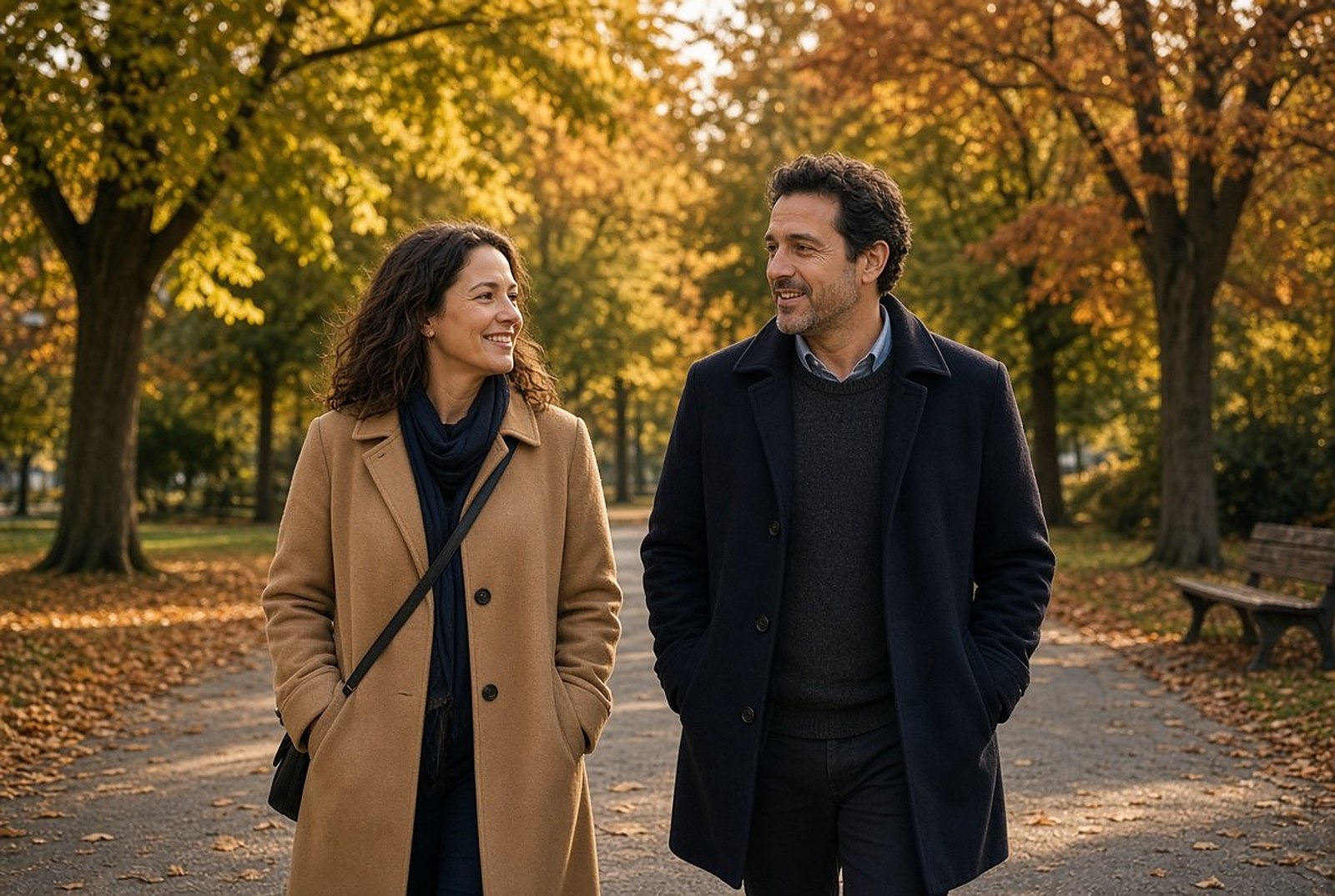
Big resolutions, such as organising something new every week, rarely last. A fixed arrangement usually works better, because you do not have to think about it each time. Think of a weekly walk with a neighbour or friend, a regular Sunday evening call with a relative, or coffee after training with the same group. A local club, a choir or volunteering also give you recurring contact without you having to arrange it.
Contact and movement go well together too. Walking with someone gives you conversation and daylight at the same time, as the article on exercising outdoors in autumn and winter explains. A long weekend walk with someone else turns into a habit more quickly, as in the article on the long weekend walk.
Sometimes a familiar network falls away, for example after a move, when you retire or after losing a partner. Then it helps to look deliberately for new regular moments. In many Flemish municipalities, a local service centre, a meeting place for local residents, organises activities such as walks, cooking classes or discussion groups. Your municipality, a sports club or a local association can also be a first step. It often feels awkward at first, but if you come back a few times, you soon become a familiar face.
Quality matters more than the number of contacts. A few people you can really rely on count for more than a large circle of acquaintances. Start small: pick one fixed moment a week and build from there. Put it in your diary like a dentist appointment, so it is less likely to slip when life gets busy.
References
- World Health Organization. Social connection linked to improved health and reduced risk of early death. Press release accompanying the report van de WHO Commission on Social Connection. 2025.
- Holt-Lunstad J, Smith TB, Layton JB. Social relationships and mortality risk: a meta-analytic review. PLoS Medicine. 2010;7(7):e1000316.





One Comment