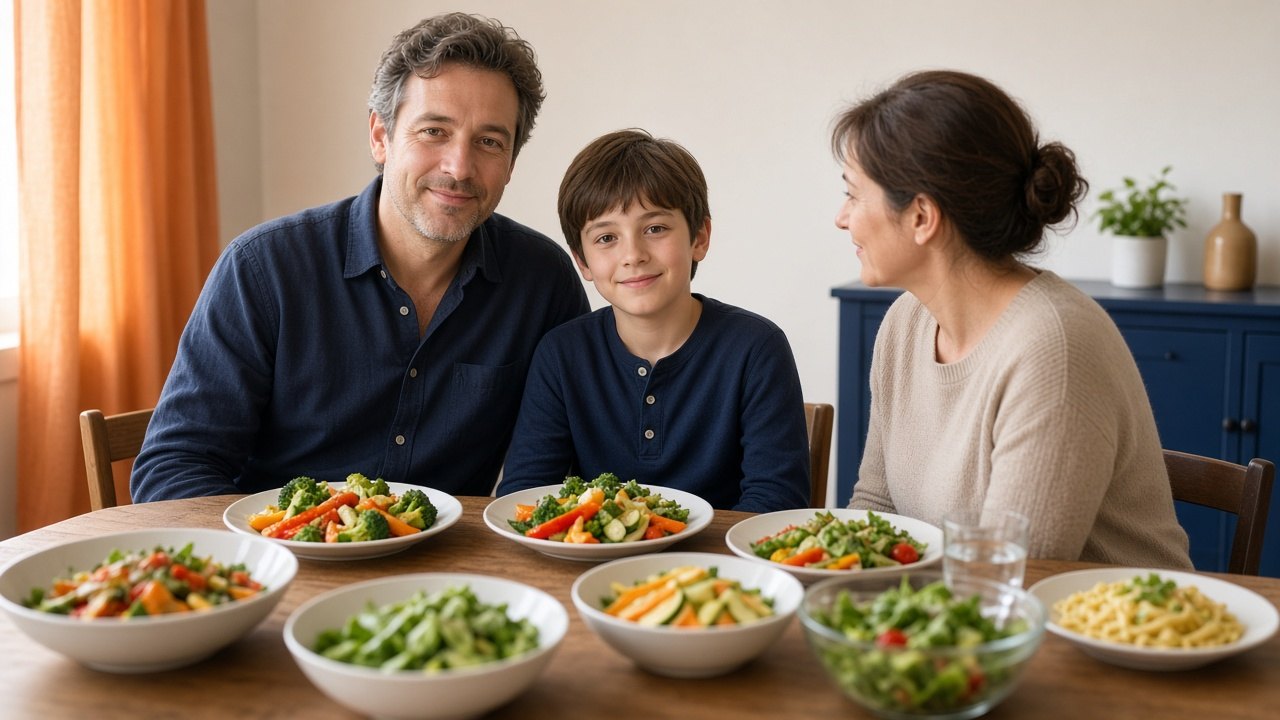
Vegetables: how much per day according to the food triangle?
General information, not medical advice. If you have symptoms, discuss them with your GP or dietitian.
Vegetables how much per day you best eat has been clear in the Belgian guidelines since 2025. The Superior Health Council (SHC) advises at least 300 grams of raw or prepared vegetables a day, with variety and season. The Flemish Institute Gezond Leven takes that figure into the food triangle and advises spreading that amount over at least two eating moments.
Vegetables how much per day: what counts as 300 grams?
Gezond Leven puts vegetables in the dark-green zone: fresh vegetables, frozen vegetables without cream or sauce, and vegetables from can or jar belong there. For soup they ask at least 40 grams of vegetables per 100 millilitres and moderate salt. Instant packet soup does not count, according to them, as a full replacement. Avocado may sit in the vegetable group, but is according to Gezond Leven not indispensable and has a higher environmental impact.
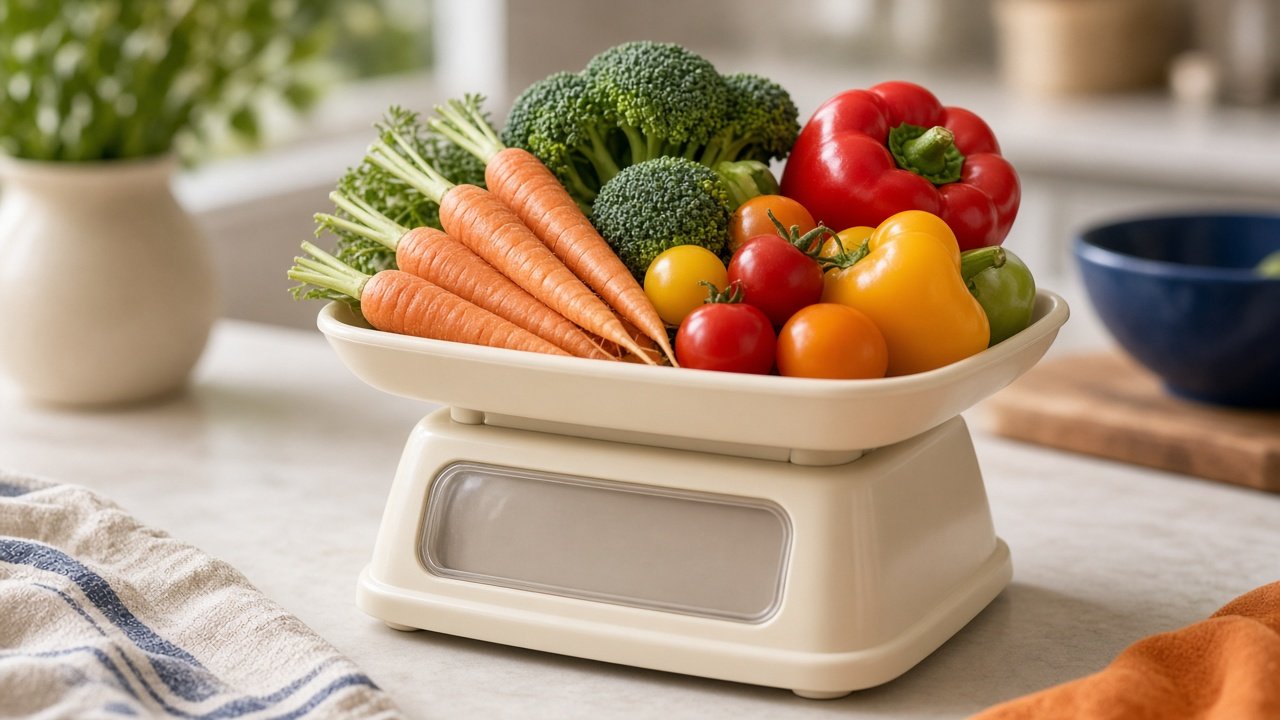
Practical supports Gezond Leven names: fill half your plate with vegetables first at the hot meal; add raw vegetables or a bowl of soup at the bread meal; snack on vegetables or drink soup between meals. That way you reach 300 grams more easily without one giant evening portion.
Gezond Leven writes that Flemings on average eat too few vegetables. About two thirds eat vegetables every day, but the portion often stays too small. On average we should, according to them, eat about twice as much as now. Children and young people score worst in that summary.
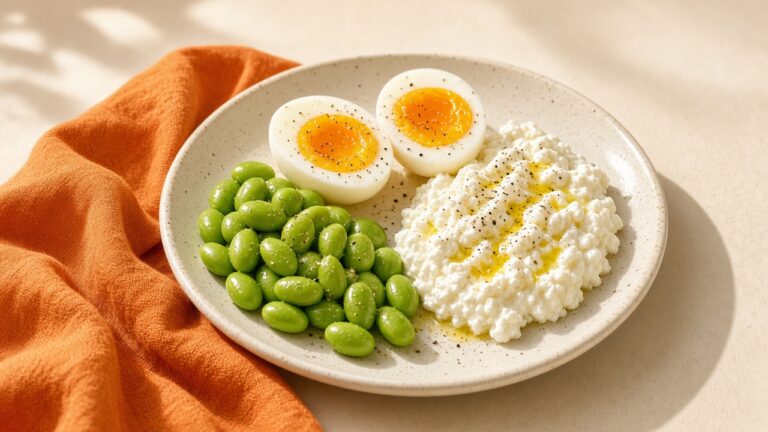
That gap makes small habits useful. A bowl of vegetable soup a day helps raise the tally. In colder months, leek, endive and celeriac fit season and budget well. Pulses such as canned chickpeas belong to another group in the triangle, but easily fill a plate next to vegetables and for example eggs.
Raw, cooked or frozen?
Gezond Leven explains that cooking can reduce vitamins (roughly 20 to 50 per cent, depending on technique), while some substances become more available after heating. Therefore alternate raw and prepared vegetables. Frozen vegetables without additions get preference next to fresh; check the label for cream, sauce or extra salt.
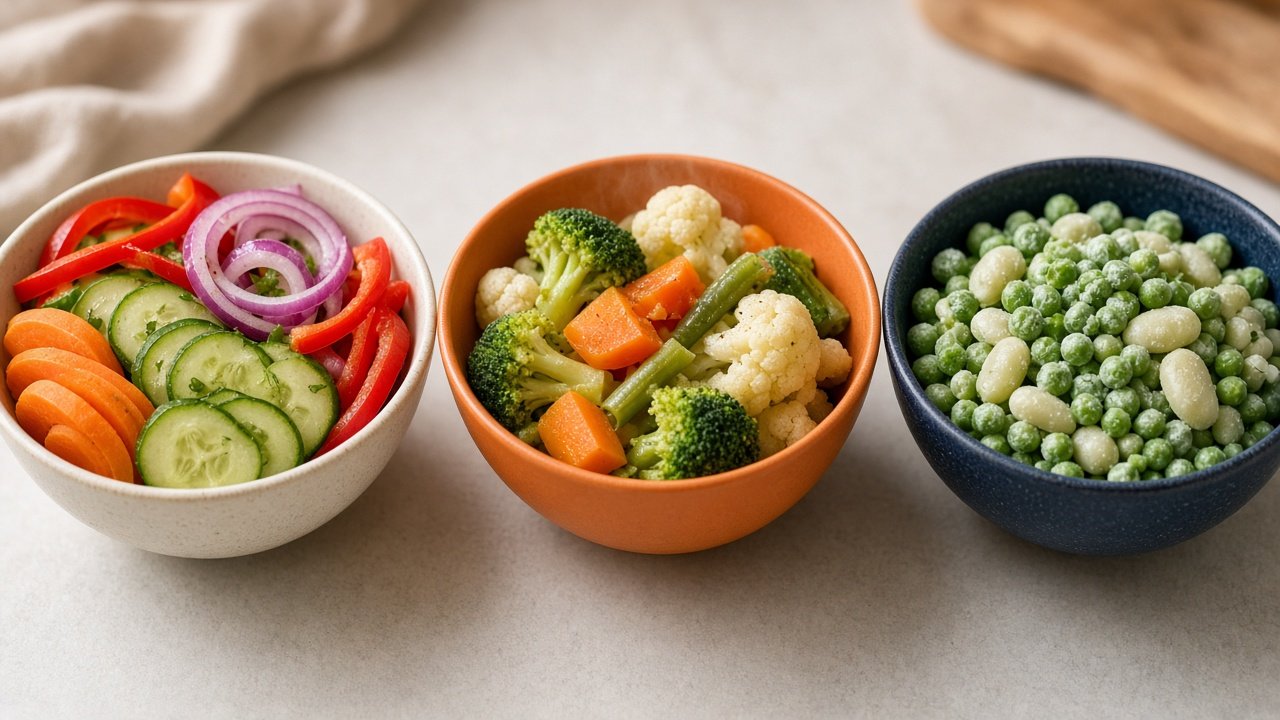
Season first, local next: that is how Gezond Leven summarises the environmental choice. Out of season, frozen, canned or jarred options can be a more environmentally friendly alternative than fresh vegetables from heated greenhouses or air freight. Rinse vegetables under running water.
A plate half-full of vegetables sounds abstract until you weigh it. Gezond Leven examples (tomato plus a few spoonfuls of carrots, or lettuce with tomato, cucumber and beans) show that 300 grams spread over the day is achievable without restaurant portions. Soup counts if there is enough vegetable in it; a pale broth without pieces does not do that job.
If you now sit around 150 grams, you do not double overnight. First add vegetables to the hot meal, then a fixed raw-vegetable moment at lunch. Frozen bags without sauce lower the barrier on busy days. Yesterday’s leftovers taste as good in an omelette or wrap as a new recipe.
Vegetables do not replace fruit and the other way around: Gezond Leven stresses that both are needed daily because the nutrients differ. Keep fruit separate in your planning even if vegetables are already on track. With digestive complaints or a low-FODMAP advice from your care provider, follow that scheme and adapt the 300 grams accordingly.
If you follow a medical diet, take medication that clashes with certain vegetables, or eat very one-sidedly, ask your GP or dietitian. For most adults, 300 grams a day is a clear, achievable guideline from the SHC and Gezond Leven.
Sources
- Vlaams Instituut Gezond Leven. Groenten. gezondleven.be, accessed 16 October 2026.
- Vlaams Instituut Gezond Leven. Aanbevelingen van de Hoge gezondheidsraad met focus op voedingsmiddelen. gezondleven.be, 2025.
- Superior Health Council. Voedingsaanbevelingen voor de Belgische bevolking – 2025. Advice no. 9805-9807, 2025.