
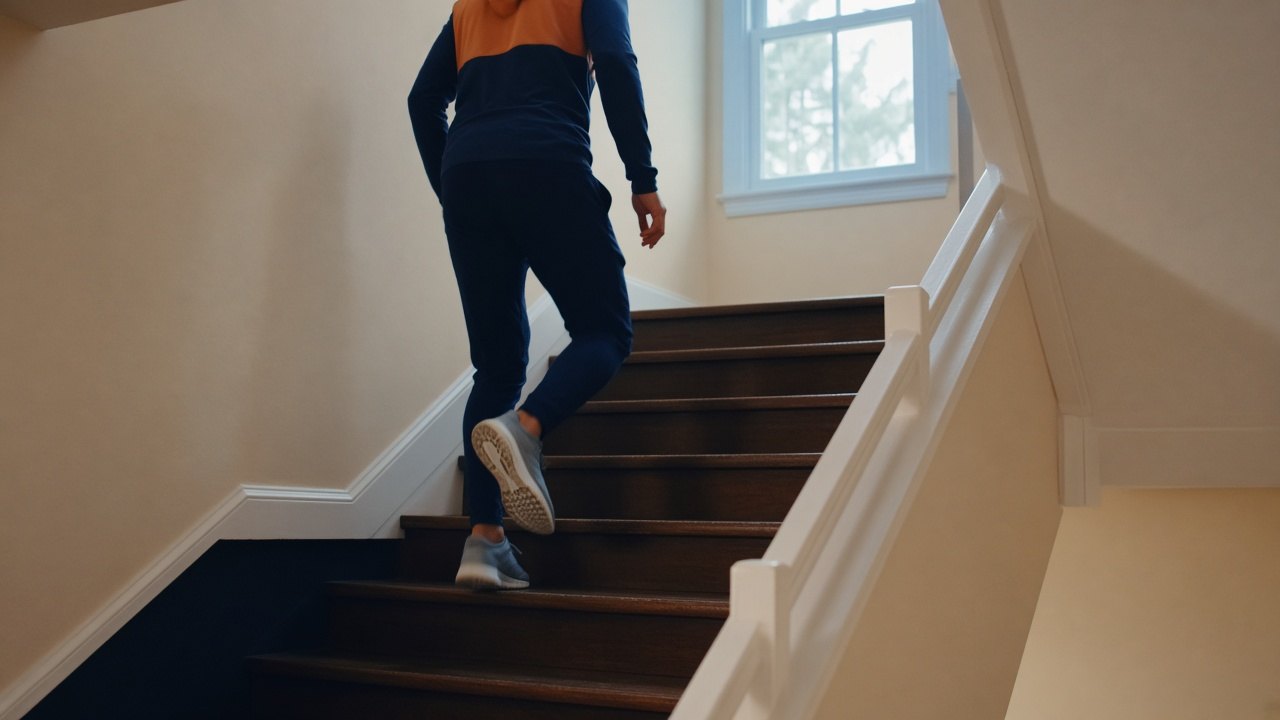
Stair intervals at home: a short session when it gets dark outside
Informational, not a diagnosis. This is not medical advice.
In short
- When it gets dark early outside, I use the stairs at home for short intervals: brisk up, easy down.
- WHO guidelines (2020) ask for aerobic work and muscle strengthening; stairs lightly touch both in little time.
- My session lasts about 10–15 minutes: repeatable on busy evenings, not a replacement for all training.
- Knee, hip or balance issues: adapt or skip. This is not a rehab plan.
In October the motivation to go outside again before sunset is sometimes thin. Rather than cancel the whole session, I take the stairs: a short, solid block I can fit between work and dinner. It is my backup when running or a long walk does not fit, alongside options like zone 2 on an indoor trainer in the rain (zone 2 is an easy endurance pace at which you can still talk comfortably).
Why stair intervals (for me)
Climbing stairs asks more of legs and fitness than flat walking. By going up briskly and recovering on the way down, I get a simple interval form with no equipment. WHO (2020) recommends moderate-to-vigorous aerobic activity for adults, plus muscle strengthening on at least two days. Stairs are not a full strength session, but they do count as deliberate effort when the day would otherwise stay still.
In peak weeks this fits the same philosophy as a minimum training dose: better 12 minutes done than zero.
My short session (example)
- Warm-up: 2 minutes easy up and down, or marching on the spot.
- Intervals: 6–8 rounds: brisk up (no sprint if the stairs are narrow or wet), easy down as recovery.
- Finish: 2 minutes slow steps, slippers back on, water.
Breathing may get heavier; full sentences may feel a bit harder. Knee pain or chest tightness: stop. If you are new, start with 4 rounds and build up.
How it sits next to other training
Stair intervals do not replace my strength training at home or a long weekend walk. They fill gaps: dark evening, short break, or when I notice I mostly sat all day. Rest days still exist; see rest day or deload if the legs feel heavy.
Limits
Bad knees, recent surgery, dizziness or balance problems: stair intervals are often a bad idea, or only at an adapted pace with the handrail. I avoid wet socks on slippery steps. And “more rounds” is not automatically better: quality and safety first. This piece is not cardiac rehab and not a plan for obesity or chronic disease; align that with a professional.
This article is informational and not medical advice. For chest pain, severe breathlessness or joint pain: stop and get checked.
Sources (selection)
- World Health Organization. Guidelines on physical activity and sedentary behaviour (2020). who.int.
- Vlaams Instituut Gezond Leven. Movement guidelines for adults. gezondleven.be.
- American College of Sports Medicine (ACSM). Cardiorespiratory exercise guidance (often-cited frame; not an EU guideline).


One Comment