
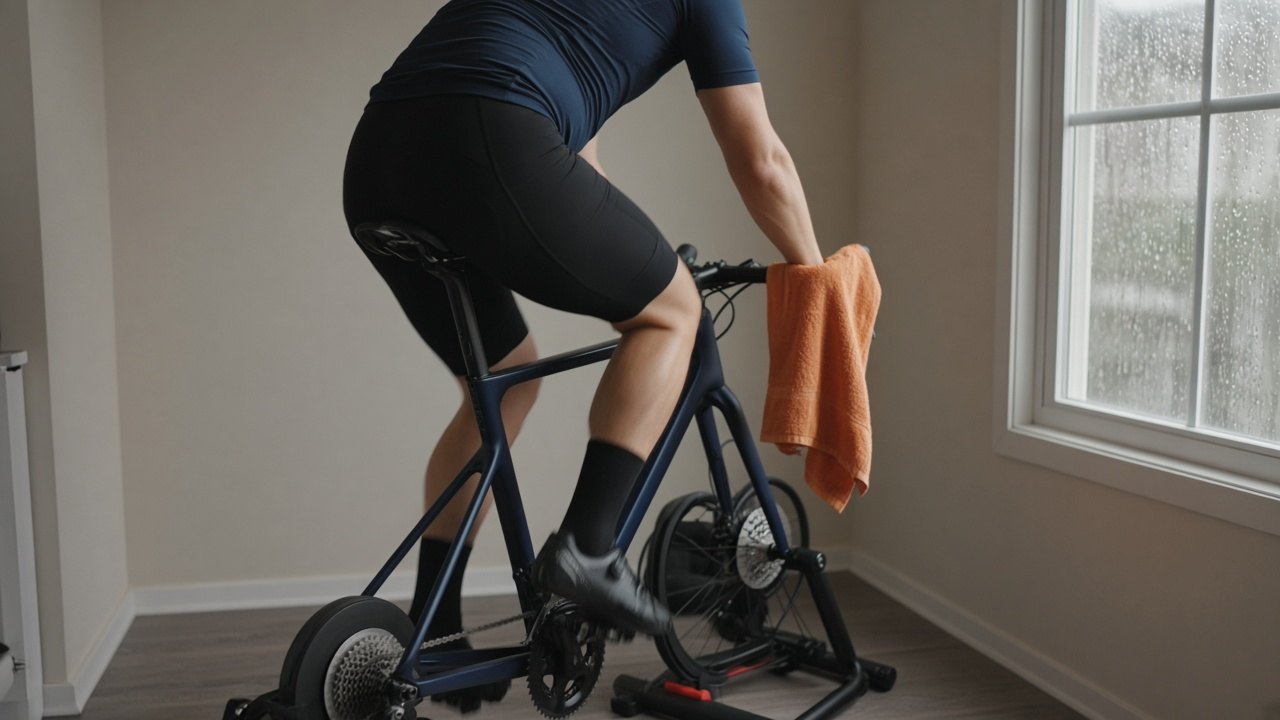
Zone 2 on the indoor trainer when it rains outside
Informational, not medical advice.
TLDR
- When it rains outside, I keep my zone-2 minutes on the indoor trainer instead of dropping the week.
- Zone 2 is easy endurance work where you can still talk; heart-rate zones are explained in zone 2 training explained.
- A fixed indoor routine of 30–45 minutes, 2–3× per week, often keeps the base going alongside walking.
- WHO and ACSM frame regular aerobic activity; this piece is rain-day practice, not a medical programme.
October in Flanders means grey skies and wet cycle paths. I used to cancel my endurance ride “until it dries”. That sometimes became two weeks of nothing. Now the indoor trainer is ready as plan B — not as punishment, but so zone 2 does not evaporate.
Zone first, machine second
Zone 2 is the pace where you can still hold a conversation but can no longer sing comfortably. Heart-rate zones, talk test and nuance: see zone 2 training explained. This piece is about the indoor version when it rains.
The World Health Organization (WHO) advises adults to do enough moderate-intensity aerobic activity weekly (2020 guidelines, summarised among others by Bull et al. in the British Journal of Sports Medicine). The American College of Sports Medicine (ACSM) — widely cited in training literature — points the same way: consistency over heroics. I translate that as: three easy indoor sessions beat one heroic ride in a downpour that I then skip for a week.
My rain routine on the indoor trainer
- Duration: 30 to 45 minutes. Longer is fine; shorter still counts when the week is tight — see minimum training dose.
- Frequency: 2–3× per week as a replacement or add-on to outdoor rides.
- Intensity: resistance so I can still talk; no sprint blocks in this session.
- Structure: 5 minutes easy warm-up, then steady cadence, last 5 minutes ease down.
- Environment: open window or fan, water bottle, podcast or music without drifting into “one more interval”.
What I do not do on rain days
I do not chase virtual races if the goal is zone 2. Sweating is fine; gasping until I dread the next session is not. Also: indoor does not replace all movement. Steps and NEAT still count — more in steps and NEAT.
If you have no indoor trainer
An indoor trainer is handy, not mandatory. A gym stationary bike, an easy treadmill walk, or indoor rowing at conversation pace can serve the same goal. The criterion stays: sustainable, talkable, repeatable.
Limits
Chest pain, dizziness or unusual shortness of breath? Stop and get checked. Anyone restarting after illness or on medication builds up with professional advice. Zone 2 is not a treatment and not a performance guarantee.
This article is informational and not medical advice. If you doubt training with a condition, ask your doctor.
Sources (selection)
- Bull FC et al. (2020). World Health Organization 2020 guidelines on physical activity and sedentary behaviour. British Journal of Sports Medicine, 54(24), 1451–1462.
- American College of Sports Medicine (ACSM). Position stands / guidelines for cardiorespiratory training (widely cited; not EU law).
- Engy. Zone 2 training explained. engy.be/en/zone-2-training-explained/





One Comment