
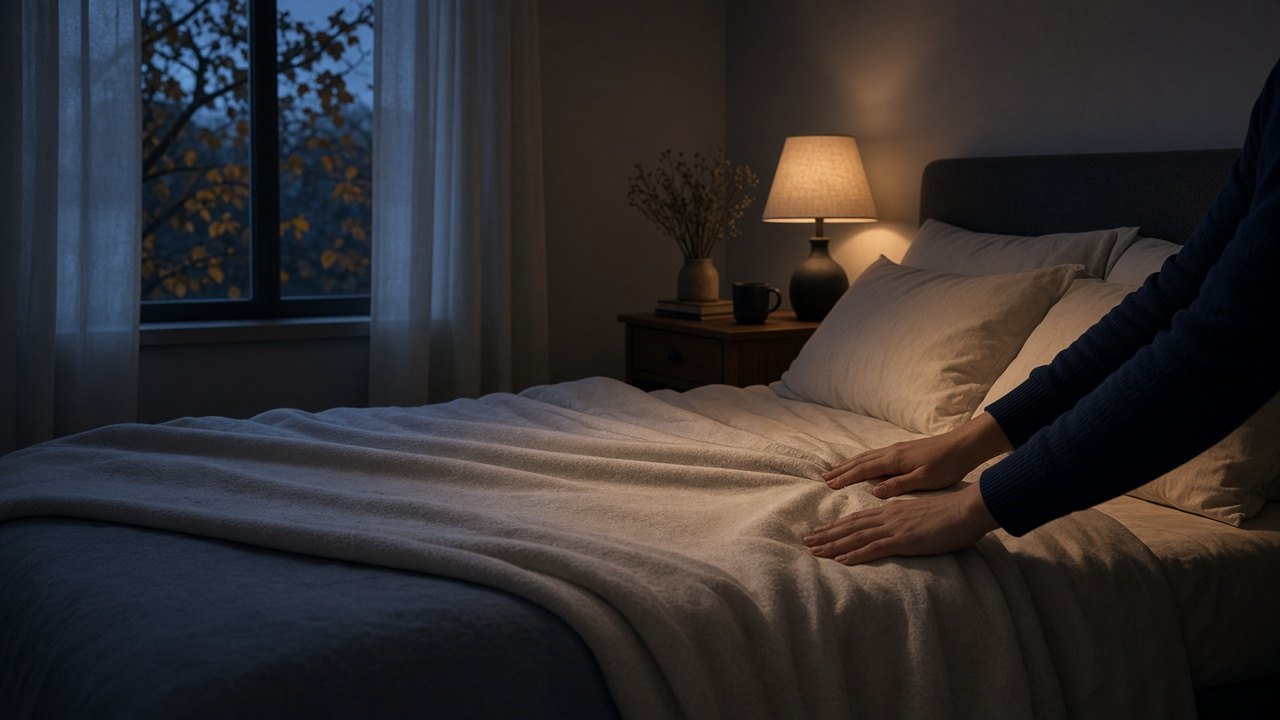
A cooler bedroom in autumn: what I try (not a medical prescription)
Informational, not a diagnosis. This is not medical advice.
In short
- Sleep research often links a cooler bedroom with more comfortable sleep onset; exact “ideal” degrees differ by person and study.
- In autumn I try: brief airing, adjusting the duvet, and not running the radiator full blast overnight in the bedroom.
- This is a comfort experiment, not a medical prescription and not treatment for sleep problems.
- I combine it with fixed evening habits: dimmer light, less bright screens, and sometimes reading before sleep.
Once the heating comes on, my bedroom gets too warm fast. I wake more easily or toss and turn. This autumn I am testing a cooler room again: not as a miracle fix, but as one slider next to light, caffeine and routine.
What research roughly says (framed)
In the sleep literature (including overviews often cited by the American Academy of Sleep Medicine and related sources), a moderately cool environment regularly shows up as a factor that may support subjective sleep quality. Exact temperature advice varies; what is “cool” for one person is too cold for another. European and Belgian public-health sources focus more on sleep hygiene in a broad sense (regular timing, caffeine, light) than on one magic thermostat number.
So I keep it practical: a bit cooler than the living room, without shivering. No medical target, just a comfort zone.
What I try in autumn
- Brief airing before bed: 5–10 minutes with the window open, then close it. That fits how I think about airing your home in autumn.
- Swap the duvet: lighter, or add a sheet, instead of turning the radiator up.
- Radiator low or off in the bedroom; warmth comes from the rest of the house or a warm shower beforehand.
- Socks or an extra blanket within reach if I still get cold mid-night.
When the clocks go back, I watch routine even more. I wrote about that in winter time and sleep: temperature is one slider, timing another.
Other sliders I do not forget
Cool sleep helps me little if I still have bright screens late or caffeine too late. So I combine this with softer evening light and sometimes reading before sleep. Morning light stays the counterpart: morning light as a circadian nudge helps keep my day–night contrast sharper.
Limits
People who feel cold easily (older adults, some medical situations) should not make a room “cold for cold’s sake”. Babies and vulnerable people follow other safety guidance: that is not this article. Chronic insomnia, snoring with breathing pauses or extreme fatigue belong with a doctor, not a thermostat experiment. And a damp draught is not the same as “fresh”.
This article is informational and not medical advice. It is not a prescription for sleep disorders or for temperature during illness.
Sources (selection)
- American Academy of Sleep Medicine (AASM). Sleep hygiene and environment (often-cited frame; not a Belgian guideline).
- World Health Organization. Mental health and sleep in a broad sense (context). who.int.
- Vlaams Instituut Gezond Leven. Sleep and recovery (general lifestyle tips). gezondleven.be.



One Comment