
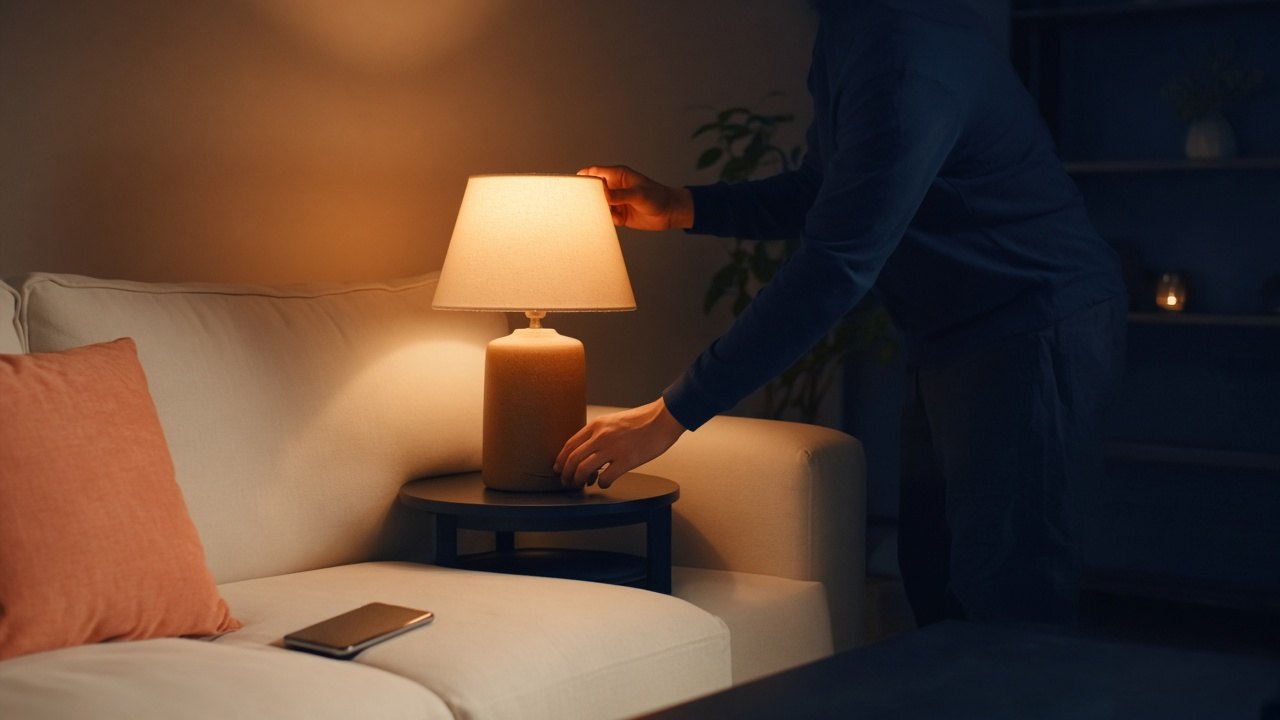
Warm evening light at home: how I soften screens and lamps
Informational, not a diagnosis. This is not medical advice.
In short
- Bright, blue-rich light in the evening keeps me “on” more easily; I dim lamps and screens in the last hour before bed.
- Morning light stays the counterpart: bright by day, softer at night, so day–night contrast grows.
- Practical: warm bulbs, night mode on phone and laptop, and prefer reading or a short walk over another series at full brightness.
- No therapy claim: this is a household habit, not treatment for sleep disorders.
In autumn it is already dark outside while I am still finishing e-mails. A house full of bright LEDs and a vivid screen then feels as if the day will not end. So in the evening I deliberately set softer light: warmer lamps, lower brightness, less blue. No gadget circus, just a few fixed sliders.
Why evening light matters (short frame)
Our day–night rhythm reacts strongly to light. Bright, blue-rich light (typical of many screens and cool-white LEDs) can delay melatonin production and make falling asleep feel harder. That is a known theme in circadian biology and sleep hygiene; Belgian and WHO sources stress regularity, caffeine and a calm evening routine most, with light as one environmental factor.
By day I actually want light: see morning light as a circadian nudge. In the evening I do the opposite: enlarge the contrast instead of staying “office-bright” all night.
What I do in practice
- Lamps: after dinner I switch to warm bulbs or a lamp on a lower setting. Full ceiling spots stay off in the living room.
- Screens: night mode or a warmer colour temperature on phone and laptop; brightness down in the last hour.
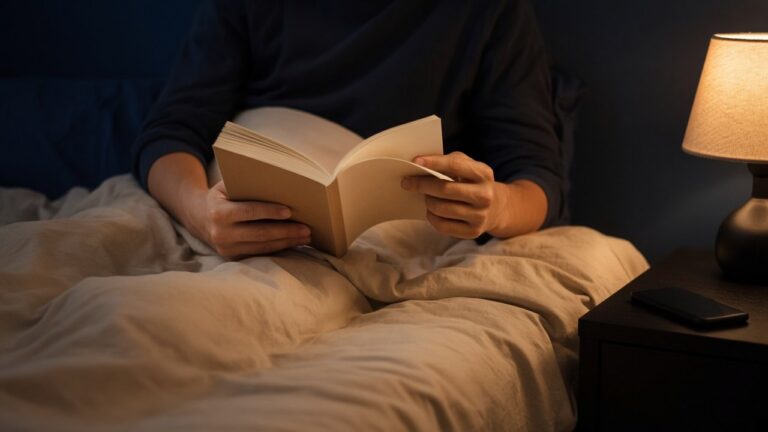
- Alternative: reading before sleep with a soft reading lamp, or a short evening walk after eating without a podcast at full screen brightness.
- Caffeine: no late espresso “to stay awake for more work”; that fights the same goal. See also caffeine later versus pre-workout.
Airing and a fresher bedroom strengthen the evening feel for me; I apply that in airing in autumn and in cooler-bedroom choices.
What I do not do
I do not promise myself a perfect “digital detox”. Sometimes a message still has to go out. Then I still dim brightness and set an end time. I also do not buy an expensive “sleep lamp” as a first step: first the lamps and screen settings already there.
Limits
Warm evening light does not cure insomnia, depression or circadian disorders. Ongoing sleep problems belong with a doctor or sleep specialist. Shift work and night shifts need a different approach than this household ritual. And total darkness with a trip hazard is not the goal either: safe soft light in the hallway can stay.
This article is informational and not medical advice. It is not treatment for sleep or mood complaints.
Sources (selection)
- World Health Organization. Sleep and health (broad context). who.int.
- Vlaams Instituut Gezond Leven. Sleep and screen use (lifestyle tips). gezondleven.be.
- American Academy of Sleep Medicine (AASM). Light and sleep hygiene (often-cited frame; not a Belgian guideline).



2 Comments