
Strength training at home with no equipment: a simple full-body I repeat
Informational, not medical advice.
TLDR
- WHO advises adults to do muscle-strengthening activities on at least two days a week; that can be bodyweight at home.
- My no-equipment full-body covers squat, hinge, push, pull and core in one short session.
- I repeat it 2× per week, with simple progression (more reps, slower tempos, harder variants).
- This is not injury treatment and not a substitute for guidance when you have pain or medical limits.
When the gym was nearby, I trained with bars and machines. After a move and busy weeks, sometimes nothing was left. A bodyweight-only routine became the difference between “I do nothing” and “I keep strength”. Why strength matters for longevity, I wrote in strength training as a longevity tool.
What the guidelines say (briefly)
The World Health Organization (WHO) recommends muscle-strengthening on at least two days a week, on top of aerobic work. The American College of Sports Medicine (ACSM) — a widely cited US college — describes similar basics: large muscle groups, multiple sets, progressive load. I use that as a frame, not as a tailored prescription.
The five moves I repeat
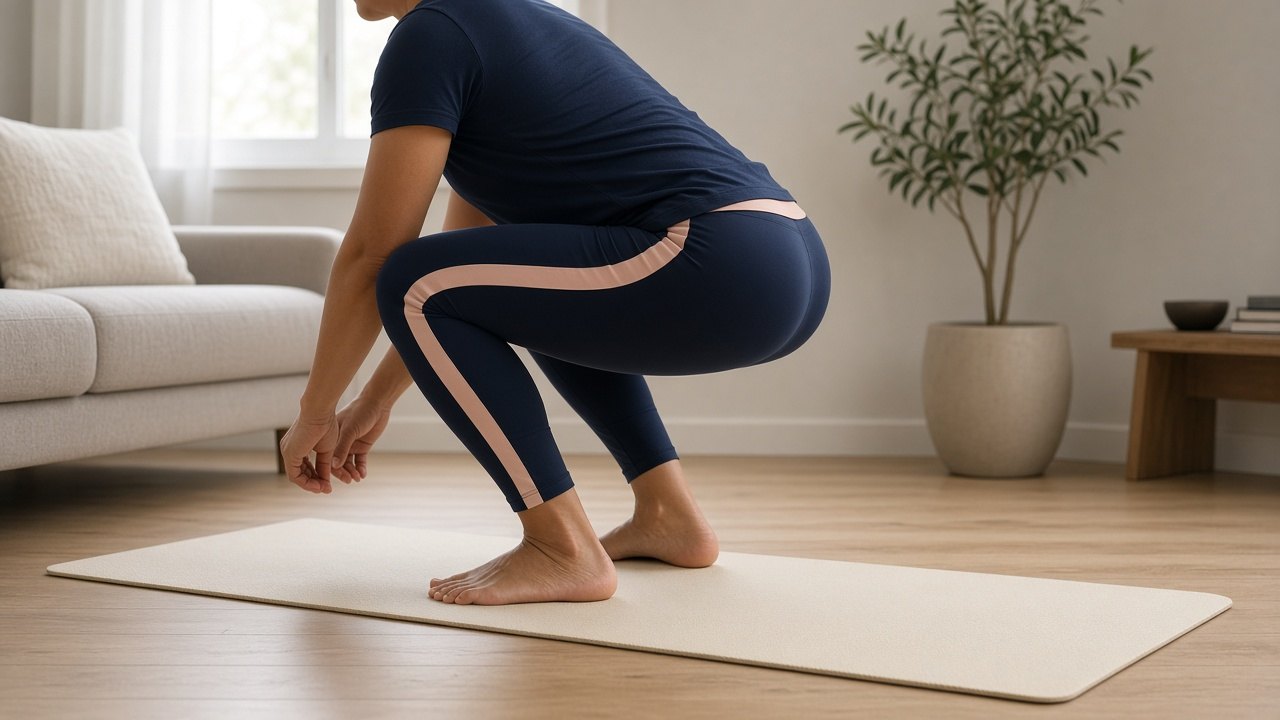
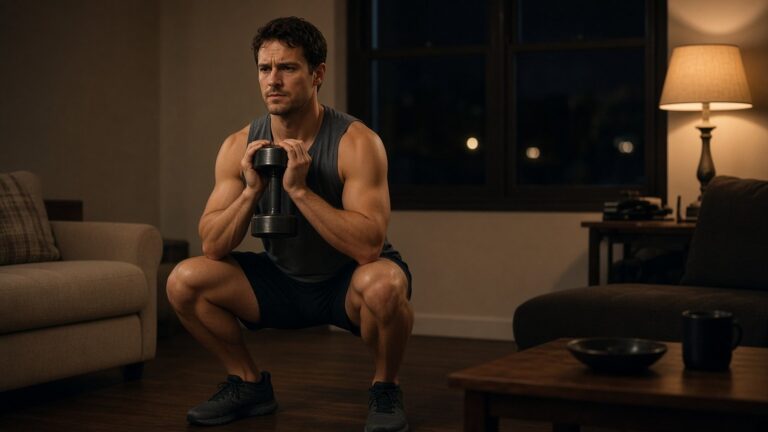
- Squat: bodyweight squat or split squat. Hips back, knees track toes, deep enough to keep control.
- Hinge: unweighted good morning, or single-leg Romanian deadlift pattern with light wall support. Hips hinge, spine neutral.
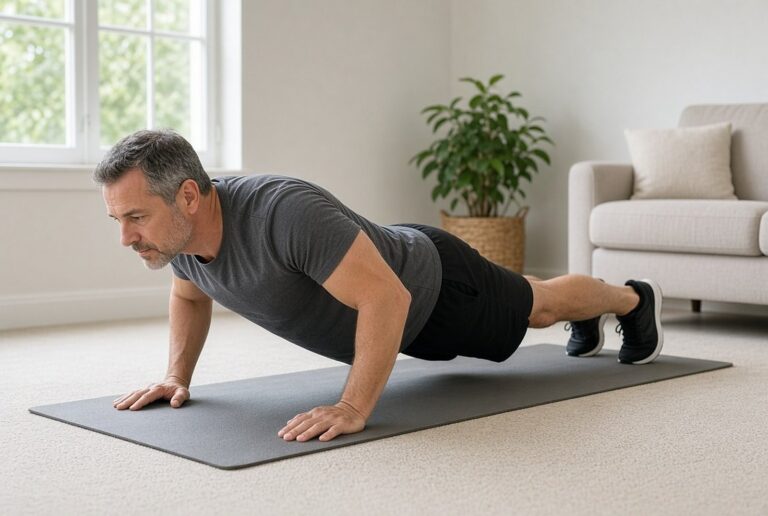
- Push: push-up on knees or toes, or against an elevated surface. Checking level with the push-up test is optional.
- Pull: without a pull machine I do inverted rows under a sturdy table (if it can take it), or band rows if I have a band. No band? That day I lean on scapular work (wall slides) and accept that pull at home is the weak link until I see a park bar or a gym again.
- Core: dead bug or side plank, controlled, without arching the low back.
Sample session (20–30 minutes)
- 2–3 rounds: 8–12 squats · 8 hinges per side · 6–10 push-ups · 8–12 pulls or wall slides · 6–8 dead bugs per side.
- Rest 60–90 seconds between exercises if breathing is still high.
- 2× per week, with at least one day between.
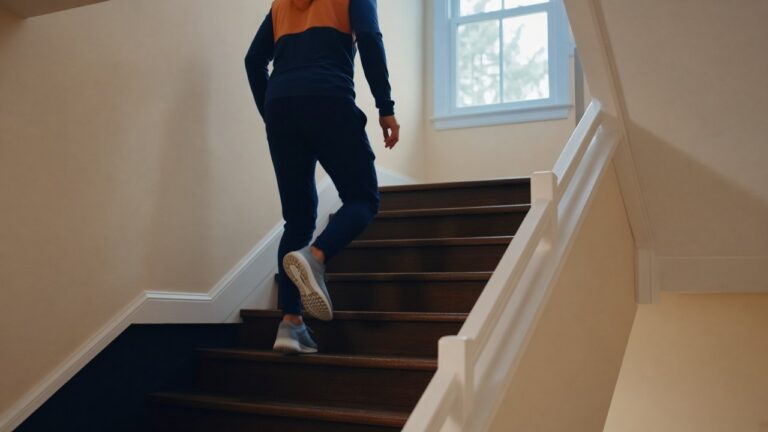
In between, exercise snacks like the stairs count for general activity, but they do not replace targeted strength sets.
Progression without equipment
Technique first, then volume. More reps, slower eccentric (3 seconds down), or a harder variant (knee push-up to toe push-up). Jumping or max reps to failure I do not add while the base is shaky.
Limits
Pain (sharp, radiating, or lasting days) is a stop sign, not “no pain no gain”. After injury, surgery or with joint issues: see a physio or doctor. Training at home without gear is handy, not magic.
This article is informational and not medical advice. It does not replace individual training or rehab guidance.
Over 50? Your muscles get stronger faster than your tendons. Also read why tendons adapt more slowly after 50 and how to train them at home.
Sources (selection)
- World Health Organization (2020). Guidelines on physical activity and sedentary behaviour.
- American College of Sports Medicine (ACSM). Resistance training basics / position stands (widely cited; frame as US source).
- Engy. Strength training as a longevity tool. engy.be/en/strength-training-as-longevity-tool/
3 Comments