
Canned chickpeas: a fibre-rich meal in fifteen minutes
General information, not medical advice. If you have symptoms or a prescribed diet, talk to your GP or a dietitian.
In short
- Gezond Leven places legumes such as chickpeas at the top of the dark-green zone of the food triangle.
- Canned chickpeas are already cooked, so you can make a warm meal with fibre and plant protein in about fifteen minutes.
- Draining and rinsing removes some of the salt: for canned beans, in one US study, on average 41 percent.
- If you rarely eat legumes, start with a small portion.
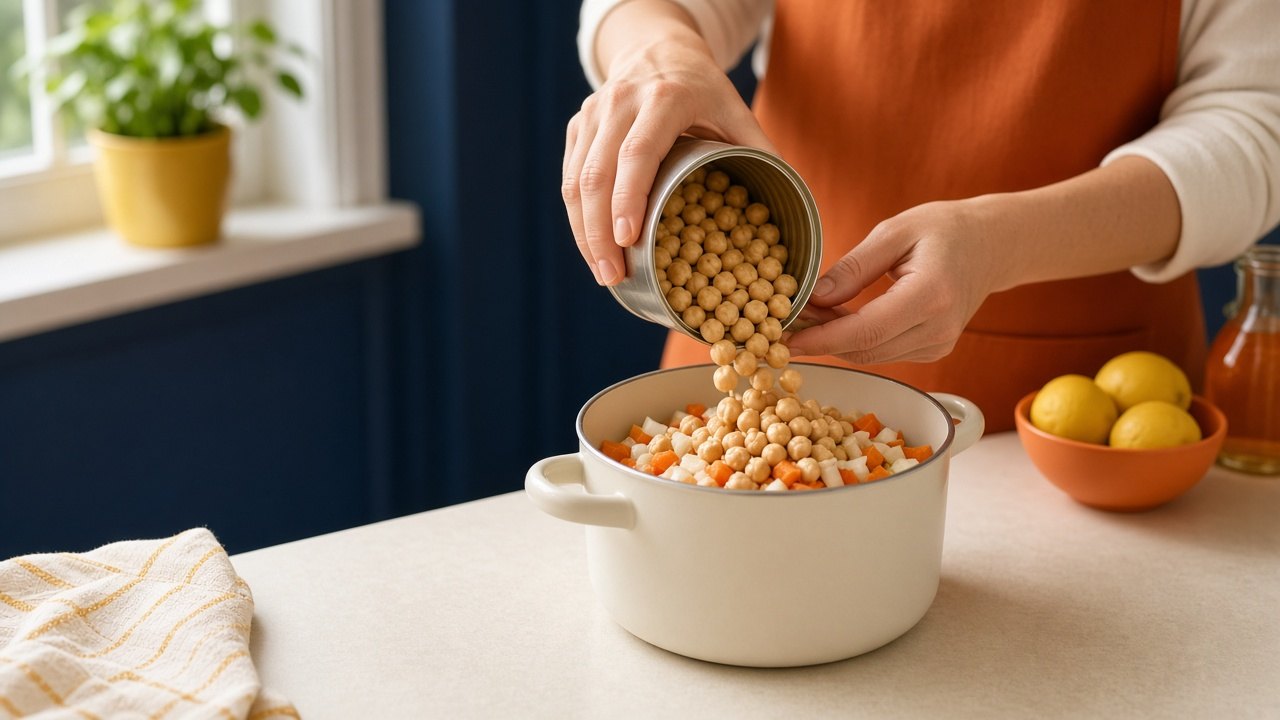
On a weekday evening you often want something solid without spending an hour in the kitchen. A can of chickpeas is then one of the fastest options: open, rinse, pan with vegetables, and eat after about fifteen minutes. No planning needed, and the can can sit in the cupboard for months.
What Gezond Leven and the Superior Health Council recommend
Flanders’ Gezond Leven has given legumes their own place in the food triangle since 2017, at the top of the dark-green zone. According to Gezond Leven, people in Flanders still eat too few legumes: only a little more than one in ten eats them more than once a week. The same page notes that canned legumes are nutritious, long-lasting, quick to prepare and affordable.
Belgium’s Superior Health Council published new dietary recommendations for the Belgian population in 2025. Gezond Leven summarises them as more whole grains, vegetables, fruit, legumes and nuts, and less salt and ultra-processed food. A quick chickpea dish fits that direction, especially with vegetables.
For fibre, the European Food Safety Authority (EFSA) uses a reference of 25 grams per day for adults. Legumes, wholegrain products, vegetables and fruit help you get there. As a ballpark figure: according to the Dutch food composition table NEVO, canned or jarred chickpeas contain 7.9 grams of protein and 7.2 grams of fibre per 100 grams. The US database FoodData Central gives about 7 grams of protein and 6.3 grams of fibre for drained and rinsed canned chickpeas. What is in your can is on the label, because brands differ.
Why a can is not a lesser choice
Dried chickpeas are cheaper, but you need to soak them overnight and then cook them for a long time. From a can they are ready to use. Drain and rinse them under cold water. In one US study, researchers measured five types of canned beans (red kidney, chickpeas, pinto, black and white great northern) and found that draining lowered sodium by 36 percent on average, and draining plus rinsing by 41 percent (Duyff and colleagues, 2011). For chickpeas it was 47 percent. That is an average across canned beans in that one study, not a fixed value for every can. Choose a low-salt or no-additive can when you can.
The same idea applies to frozen vegetables: already cut, they go straight into the pan.
If legumes leave you bloated, first read how to build up legumes gently. This article assumes you already tolerate small portions.
A meal in fifteen minutes
An example for one or two people:
- First two minutes: soften an onion or a piece of leek in a little extra virgin olive oil. Open the can and rinse the chickpeas.
- Until minute eight: add vegetables such as pepper, courgette, spinach or a handful of frozen vegetables. Season with cumin, paprika and pepper.
- Until minute twelve: stir in the chickpeas and let them warm and colour lightly. A splash of water or tomato sauce makes it creamier.
- Last minutes: finish with lemon juice, parsley or a handful of nuts. Still hungry: add wholemeal bread or rice.
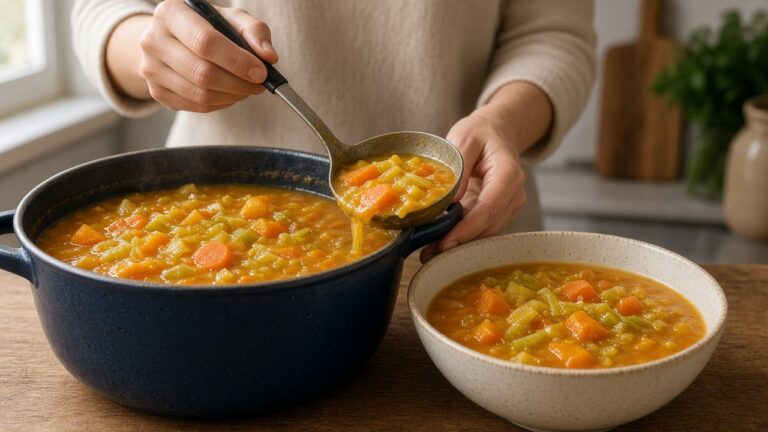
With leftover vegetables and stock you can also turn it into a quick soup, like a bowl of vegetable soup. To combine legumes and whole grains across a whole week, see whole grains and legumes in an active week.
What to keep in mind
A chickpea dish is a meal, not a diet plan. What you eat the rest of the day still counts. If you follow a diet for medical reasons (kidney issues, allergy, low-FODMAP), check with your doctor or dietitian before eating more legumes.
Sources
- Vlaams Instituut Gezond Leven. Legumes (food triangle). gezondleven.be, accessed October 2026.
- Superior Health Council. Dietary recommendations for the Belgian population (2025). 2025.
- EFSA Panel on Dietetic Products, Nutrition and Allergies. Scientific Opinion on Dietary Reference Values for carbohydrates and dietary fibre. EFSA Journal, 2010.
- U.S. Department of Agriculture, Agricultural Research Service. Chickpeas (garbanzo beans, bengal gram), mature seeds, canned, drained, rinsed in tap water (FDC ID 173801). FoodData Central, SR Legacy, accessed October 2026.
- Duyff RL, Mount JR, Jones JB. Sodium Reduction in Canned Beans After Draining, Rinsing. Journal of Culinary Science & Technology, 9(2), 106-112, 2011. The article does not state a funding source.
- RIVM. NEVO-online, version 2025/9.0, code 3185 (chickpeas can/jar). Accessed October 2026.




One Comment