

Strength training for longevity: a realistic start plan
General information, not medical advice. If you have doubts about your health or an injury, discuss training with your doctor or physiotherapist first.
In short
- WHO recommends that adults do muscle-strengthening activities on at least two days a week, plus 150–300 minutes of moderate or 75–150 minutes of vigorous aerobic activity, and limit sedentary behaviour.
- As a general guideline, two or three whole-body sessions a week are enough, with calm progression.
- Combine strength with easy endurance, for example zone 2, and plan recuperation in.
Muscle strength remains trainable later in life too. This article explains what public guidelines say and how you can start calmly with two or three whole-body sessions a week.
Why muscles matter
Muscles help with daily tasks such as standing up, lifting and climbing stairs. Without a targeted stimulus, strength declines with age for many people. Strength training is one of the approaches guidelines recommend to support strength and functional capacity. That is different from the claim that osteoporosis or sarcopenia is automatically prevented.
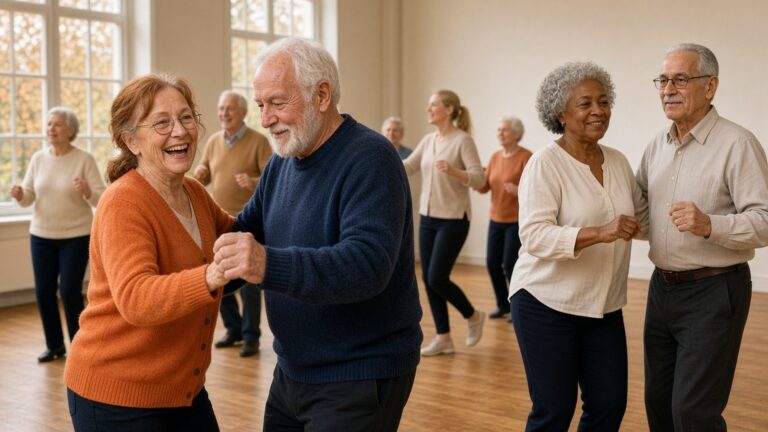
According to WHO (2020), adults do at least 150–300 minutes of moderate or 75–150 minutes of vigorous aerobic activity per week (or an equivalent combination), plus muscle-strengthening activities for all major muscle groups on at least two days, and they limit sedentary behaviour. For adults 65 and over, add multicomponent activity that emphasises balance and strength, on at least three days a week (Bull et al., 2020; WHO, 2020).
A network meta-analysis in older people with sarcopenia (Shen et al., 2023) found improvements in handgrip strength, walking speed and functional tests such as rising from a chair, especially with resistance training combined with balance or aerobic training. That applies to that population, not as a guarantee for every healthy adult.
What you can expect
As a general guideline: in the first two to four weeks, movements often feel more efficient through nervous-system adaptation. After eight to twelve weeks, many people notice measurable strength gains with calm progression. Genetics, age, sleep and stress influence the pace. Longevity is repeatability over years, not a transformation in twelve weeks.
Two or three whole-body sessions
WHO asks for muscle-strengthening activity on at least two days. The NSCA position statement for older adults (Fragala et al., 2019) describes two to three training days per week. Hurst et al. (2022) propose two sessions per week for sarcopenia. For most non-specialised athletes, two or three whole-body sessions are a solid anchor. Three is fine if recuperation allows; two is already a good start.
Starter plan: exercises, series and progression
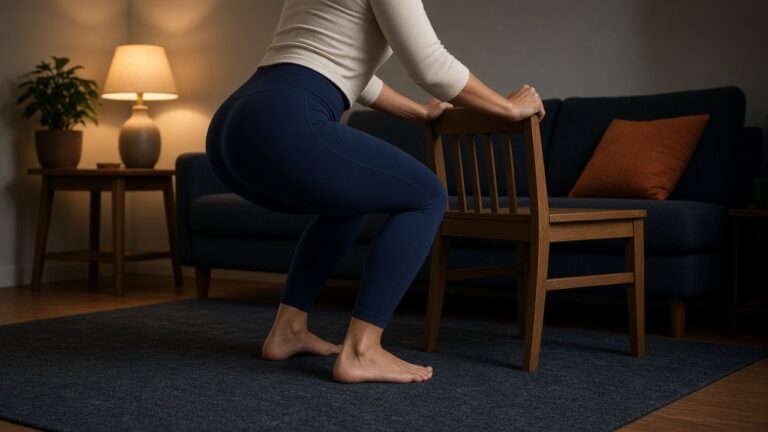
This is a general guideline for healthy adults without acute injury. New to free weights? Work with machines first or ask for coaching. Per session (about 45 to 60 minutes): five to eight minutes of warm-up; then three series of six to ten repetitions of knee bend and hinge at the hips (rest 90–150 seconds), three series of six to twelve repetitions of horizontal push and pull (rest 60–120 seconds), optional shoulder press, and trunk exercise or farmer carry. Examples: knee bend with a dumbbell or kettlebell at the chest; hinge at the hips as a Romanian deadlift; push-up or bench press; seated row.
As a beginner, stop one to three repetitions before true failure. Weeks one and two: learn the movement with margin. Once you hit the top of the range with good technique, nudge the weight up slightly or add one series. Every four to six weeks you can optionally schedule a week with less volume (about 30 to 40 percent less), a deload, if fatigue builds up.
Combining with zone 2
Strength and an aerobic base can complement each other. They mainly compete if you maximise both without recuperation. Same day: strength first, then a short zone 2 session, or the reverse if endurance is the priority; keep the second session short. Separate days are often easier, for example Monday and Thursday strength, Tuesday and Friday zone 2. WHO asks for both aerobic volume and muscle strength; it is not either-or (Bull et al., 2020).
A sample week
Monday strength A, Tuesday 45–60 minutes zone 2, Wednesday rest or a walk, Thursday strength B (same patterns), Friday zone 2 or sport, Saturday optional third strength session or light stretching, Sunday rest.
When to see a doctor
Stop and see your doctor or physiotherapist for acute injury or recent surgery, dizziness, chest pain or unusual shortness of breath during effort, chronic joint complaints that block training, or doubt about free-weight technique.
Sources
- Bull FC et al. (2020). World Health Organization 2020 guidelines on physical activity and sedentary behaviour. British Journal of Sports Medicine, 54(24), 1451–1462. WHO publication: WHO guidelines on physical activity and sedentary behaviour.
- Hurst C et al. (2022). Resistance exercise as a treatment for sarcopenia: prescription and delivery. Age and Ageing, 51(2), afac003.
- Shen Y et al. (2023). Exercise for sarcopenia in older people: A systematic review and network meta-analysis. Journal of Cachexia, Sarcopenia and Muscle, 14(3), 1199–1211.
- Fragala MS et al. (2019). Resistance Training for Older Adults: Position Statement From the National Strength and Conditioning Association. Journal of Strength and Conditioning Research, 33(8), 2019–2052.




12 Comments