Clocks go back on 25 October: how I ease my sleep into winter time
For information only, not medical advice.
TLDR
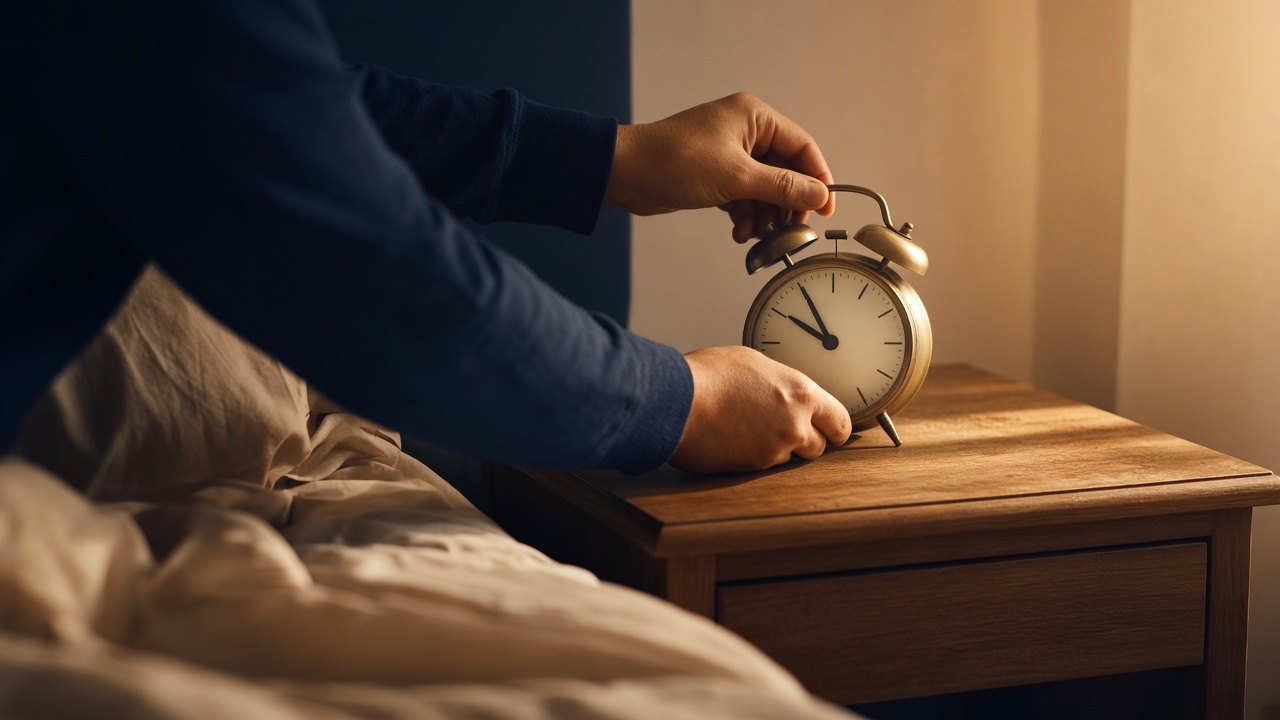
- In the night from Saturday 24 to Sunday 25 October, the clocks go back from 3 a.m. to 2 a.m. Summer time ends.
- That “extra hour” does not automatically mean extra sleep. Research mostly sees a shifted rhythm and, for some people, somewhat more restless nights in the days after.
- Early birds and young children often notice it most: they suddenly wake up an hour too early.
- What helps: shifting in small steps beforehand, getting morning light and sticking to your wake-up time.
Every year at the end of October I hear the same thing: “Nice, an hour more sleep.” I used to think so too. Until I found myself wide awake at half past five that Sunday, with oddly off evenings all the following week. Time to find out what actually happens.
What changes
An EU directive (2000/84/EC) requires all EU countries to change the clocks on the same days: one hour forward in spring, one hour back on the last Sunday of October. In 2018 the European Commission proposed ending this, but the member states could not agree.
Your body knows nothing about it. Your internal clock runs on light, meals and habits. It does not jump along with your phone; it adjusts slowly, usually over several days.
Why the extra hour doesn’t always work
In 2013 sleep researcher Yvonne Harrison reviewed the research on clock changes. In autumn, people sometimes sleep a little longer on the first night, but that benefit fades fast. Natural early risers simply wake at the old time, which is now an hour too early. In the following days, researchers more often saw people taking longer to fall asleep and waking up more during the night.
An important nuance: the autumn change is usually milder than the spring one, when you really lose an hour of sleep. Not everyone notices anything. But if you already sleep on the short side, or keep a fixed early rhythm, that week can feel messy.
Chronobiologists have long argued for a fixed time without changes. Both the Society for Research on Biological Rhythms, an international association of researchers who study the body clock, and the American Academy of Sleep Medicine, the US professional society for sleep medicine, state that permanent standard time (our “winter time”) fits that clock best. That is a position, not a law.
How I’m handling it this year
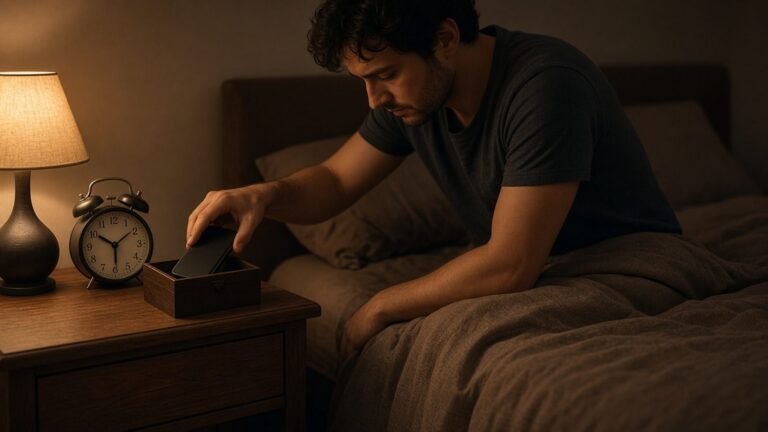
Small steps beforehand. From Wednesday or Thursday, I move my bedtime and wake-up time a quarter of an hour later each day. By Sunday I’m already mostly on the new time.
Morning light is still the strongest lever. After the change, it gets light earlier in the morning again. A short walk or your coffee by the window helps your clock set itself. More on that in my piece on morning light outdoors.
Dim the evening light. Because it gets dark an hour earlier, everything quickly feels “late”. Softer light at home and a less bright screen in the last hour help you avoid dozing off on the sofa at nine and lying awake at four.
A fixed wake-up time, Sunday included. The temptation to stay in bed for that extra hour is strong. I prefer to keep my usual wake-up time, on the new clock. I explain why in my pieces on sleep consistency and social jet lag.
Shift training and meals too. If you train in the evening, move that session gradually as well. Same for dinner: a meal that suddenly falls an hour earlier sends you back to the fridge at ten.
When it doesn’t settle by itself
After a week, most people’s rhythm is back on track. If you’re still sleeping badly after several weeks, or simply can’t get going during the day, it’s probably not down to that one hour. Then a conversation with your GP is more useful than yet another sleep tip.
My checklist for that week
- Wednesday to Saturday: bedtime and wake-up 15 minutes later each day.
- Sunday 25 October: get up at your usual time, new clock.
- About ten minutes of outdoor light every morning.
- Dimmed light in the evening and the screen away a bit earlier.
- No panic after a restless night: one bad night is not a trend.
This article is for information only and is not medical advice. If you have persistent sleep problems or work shifts, talk to your GP.
Sources (selection)
- Directive 2000/84/EC of the European Parliament and of the Council of 19 January 2001 on summer-time arrangements. Official Journal of the European Communities, L 31.
- Harrison Y (2013). The impact of daylight saving time on sleep and related behaviours. Sleep Medicine Reviews, 17(4), 285–292.
- Roenneberg T, Wirz-Justice A, Skene DJ et al. (2019). Why should we abolish daylight saving time? Journal of Biological Rhythms, 34(3), 227–230.
- Rishi MA et al. (2020). Daylight saving time: an American Academy of Sleep Medicine position statement. Journal of Clinical Sleep Medicine, 16(10), 1781–1784.