
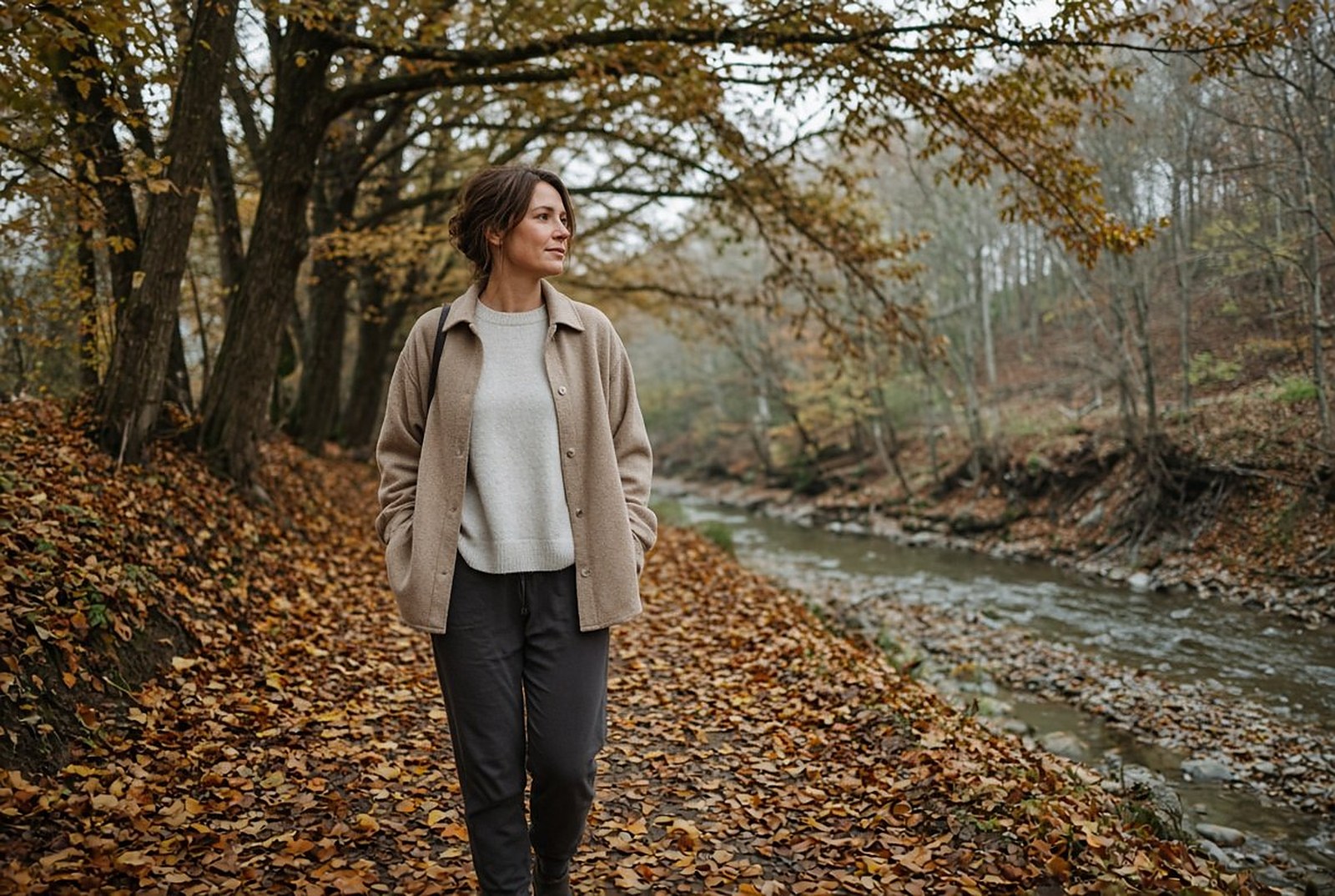
Exercising outdoors in autumn and winter: what it gives you
General information, not medical advice. If you have heart or lung problems that get worse in the cold, talk to your GP about how to stay active outdoors.
Exercising outdoors in autumn and winter takes a bit more effort, but it gives you something indoor exercise does not: daylight. This article explains why that light matters, what it does and does not do for your vitamin D and how to dress so you keep it up.
Daylight and your body clock
Your body follows a day-night rhythm, the circadian rhythm, which among other things determines when you feel awake and when you get sleepy. Light reaching your eyes is the main signal that sets this internal clock. In 2022, an international group of sleep and light researchers, with Brown as first author, recommended getting at least 250 lux at eye level during the day, preferably daylight. Lux is the unit for how much light falls on a spot. According to the same researchers, indoor light is usually at least ten times weaker than outdoors, even on a grey day.
A walk or bike ride during the day therefore combines two things: movement and light. The article on morning light and your body clock explains why morning light in particular helps keep your rhythm stable.
Exercising outdoors and vitamin D: less than you think
The idea that an autumn walk tops up your vitamin D is only half true. From roughly October to March, the sun in Belgium is too low for your skin to make much vitamin D. Daylight is still good for your body clock then, but for vitamin D you rely on food and possibly a supplement during those months. The article on vitamin D in winter explains what a blood test measures and which limits EFSA uses.
The activity guideline applies all year
The World Health Organization (WHO) recommends that adults get 150 to 300 minutes of moderate-intensity activity a week, or 75 to 150 minutes of vigorous activity, plus muscle-strengthening activities on at least 2 days. That guideline has no season. Moderate means your breathing speeds up but you can still talk. Brisk walking already counts. If you want your arms and upper body to work too, nordic walking, walking with special poles, is a good option for the winter months, as the article on nordic walking shows.
Clothing and safety
With the right clothes, cold is rarely the real problem. Dress in layers: a base layer that wicks sweat away, a warm mid layer and an outer layer that keeps out wind and rain. That way you can take off a layer when you warm up, instead of sweating and then cooling down. A hat and gloves keep your head and hands warm.
Wet leaves and frozen paths are slippery; shoes with good grip make the difference. In the dark months, reflective clothing or a small light help you be seen, especially early or late in the day. If you rarely get outside during the day, plan your walk or run around midday: that is when you get the most daylight. A fixed arrangement with someone else also makes it easier to head out on a grey day.
References
- Brown TM, Brainard GC, Cajochen C e.a. Recommendations for daytime, evening, and nighttime indoor light exposure to best support physiology, sleep, and wakefulness in healthy adults. PLOS Biology. 2022;20(3):e3001571.
- World Health Organization. WHO guidelines on physical activity and sedentary behaviour. 2020.


2 Comments