Sleep in teenagers: why teens get tired later and what you can do as a parent
General information, not medical advice. If your child stays tired despite enough time in bed, snores a lot or sleeps badly, talk to your GP.
Sleep in teenagers changes during puberty, and it is not just a matter of behaviour. According to a Flemish survey of young people, almost 60 percent of adolescents do not reach the lower limit of 8 hours of sleep. Here you will read how many hours children and teenagers need, why teens get tired later and what you can do as a parent or grandparent.
How many hours of sleep do schoolchildren and teenagers need?
The Flemish Institute for Healthy Living (Gezond Leven) gives recommendations by age, based on international guidelines. Children aged 6 to 13 need 9 to 11 hours of sleep per 24 hours, young people aged 14 to 17 need 8 to 10 hours. These are guide values: how much sleep a child or young person needs also varies from person to person.
The American Academy of Sleep Medicine arrives at the same 8 to 10 hours for teenagers aged 13 to 18. That recommendation is a consensus statement: a panel of 13 experts weighed 864 scientific articles to reach it.
Why sleep in teenagers starts later
In the evening your body makes melatonin, a hormone that makes you sleepy. During puberty this happens later, so young people naturally get tired later. Gezond Leven explains that weeknights get shorter as a result and that teenagers feel more tired during the day.
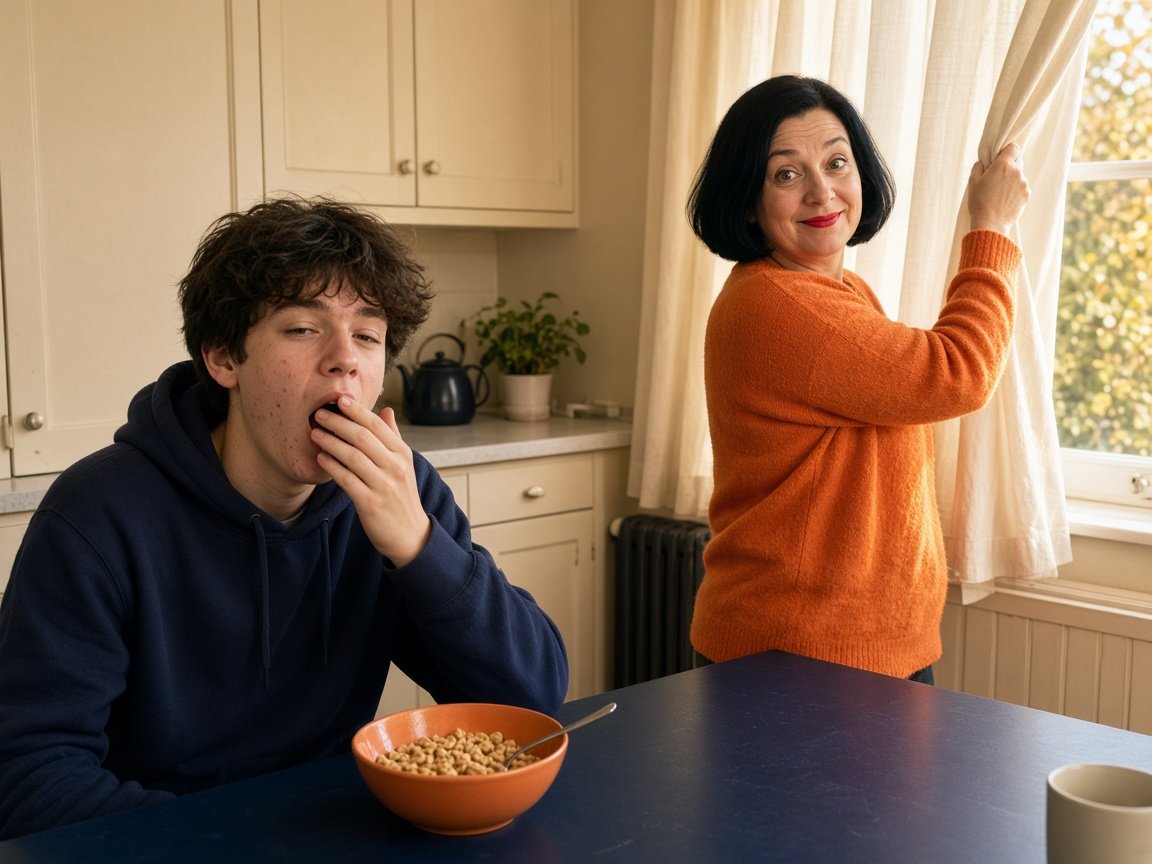
School does not take this into account. Researcher Anneke Vandendriessche (Ghent University) gives the example that a seven-year-old starts school at 8.30, and so does a fifteen-year-old.
The figure of almost 60 percent comes from the Flemish Health Behaviour in School-aged Children study (HBSC Flanders), a large Flemish survey of pupils. Among girls, 56 percent do not reach 8 hours, among boys 59 percent. Vandendriessche calls those 8 hours a low minimum and would recommend at least 9 hours for teenagers too.
What too little sleep can do
According to the American consensus, regularly sleeping less than recommended is associated with attention, behaviour and learning problems. Insufficient sleep also goes together with a higher risk of accidents, injuries, high blood pressure, obesity, diabetes and depression. This is about regularly sleeping too little, not about a single short night.

What you can do as a parent
Screens are often a first place to start. On a smartphone you use several apps at once, the content stirs up emotions and the blue light from the screen delays the production of melatonin. So agree that the screen before bed is put away in time and switch off app notifications. Those agreements can also apply when your grandchild stays over with you.

The weekend counts too. Limit lie-ins to at most 2 extra hours: if your child gets up at 7 on weekdays, it is best not to sleep later than 9 at the weekend. That keeps the weekend closer to the weekday rhythm, towards a regular sleep rhythm.
Caffeine deserves attention, because it can take 6 to 8 hours to wear off. Gezond Leven advises no more caffeine after 3 pm. Caffeine is not only in coffee and tea, but also in dark chocolate and energy drinks.
Moving during the day, especially outdoors, helps you sleep well at night, because daylight sets your body clock better. In the holidays you can do this for example by staying active with children during the autumn break. On school days, a bit of morning light outdoors on the way to school helps.
Friend groups make the difference. It works better to agree that everyone goes offline together at a set time than for your child to be the only one who has to put the phone away.
Parents can certainly set sleep rules and make sure screens are put aside in time. Some young people said in the research that they themselves need this. A teenager who stays up late is therefore not necessarily lazy: the body shifts with puberty, and fixed agreements at home help them get more of the recommended hours.
Sources
- Vlaams Instituut Gezond Leven. Wat is slaap? Geraadpleegd in oktober 2026.
- Vlaams Instituut Gezond Leven. Slaaptekort bij jongeren: zo komt het en zo pak je het aan. Interview met Anneke Vandendriessche (UGent), 17 maart 2023.
- Paruthi S, Brooks LJ, D’Ambrosio C e.a. Recommended Amount of Sleep for Pediatric Populations: A Consensus Statement of the American Academy of Sleep Medicine. Journal of Clinical Sleep Medicine. 2016;12(6):785-786. Consensusverklaring.