
Screen before sleep: what it costs your sleep, and what helps
General information, not medical advice. If you have sleep problems, discuss them with your GP.
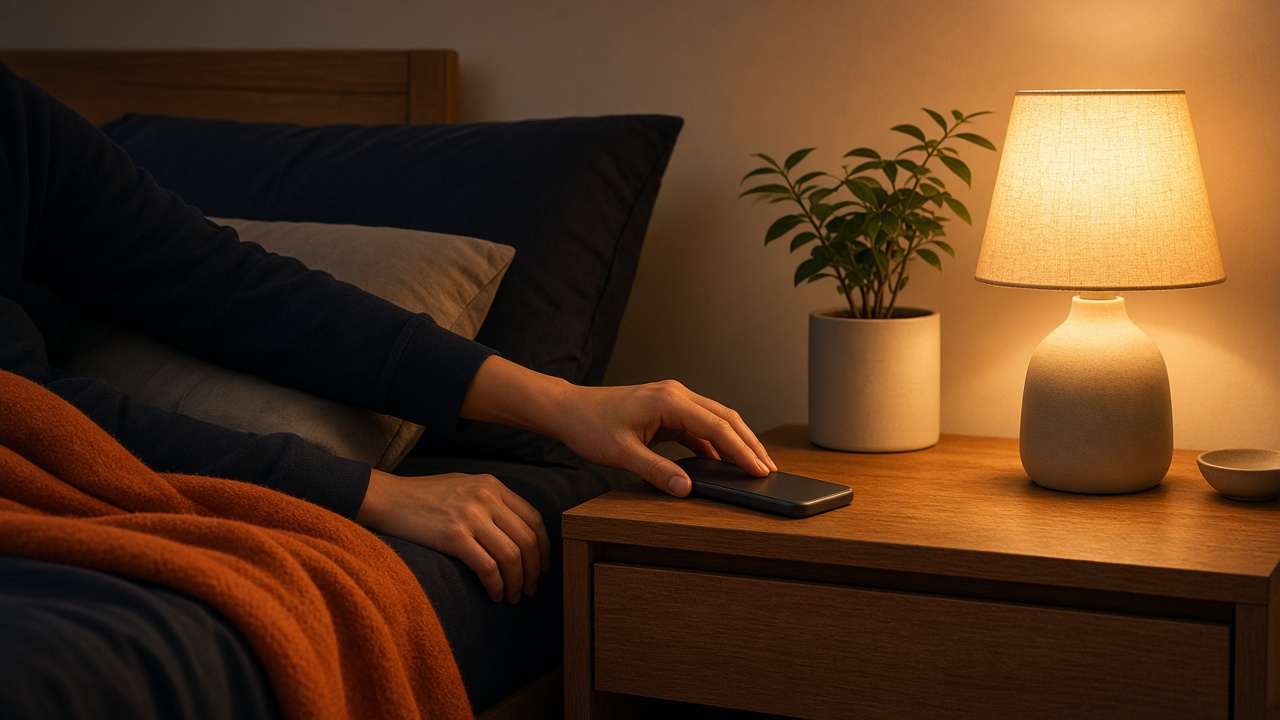
For many people, a screen before sleep is simply part of the evening: reading a few more messages, watching a video or scrolling through the news. There is nothing wrong with that, but it can cost you sleep, and sleep is a large part of how you recover after training. Below you can read what research says about this and how to fill the last half hour differently.
Why a screen before sleep costs you sleep
The first effect is time. If you keep watching for a while, you often go to bed later, while your alarm does not move with you. In a survey of 844 Flemish adults (Exelmans and Van den Bulck, 2016), six in ten took their phone with them to the bedroom. Those who still sent messages or made calls after lights out reported worse sleep: taking longer to fall asleep, more disturbed sleep, getting up later and feeling more tired during the day. This is an association, not proof of cause and effect.
What you watch may also play a role. A gripping series or a busy group chat can keep your mind busy just when you want to wind down. How large that effect is has been studied less well than the effect of light.
What the light from your screen does
In a lab study (Chang and colleagues, 2015), twelve young adults read for a few hours on several evenings in a row on an eReader, an electronic reading device with a screen that gives off its own light, and in another period from an ordinary printed book. After the eReader, melatonin, the hormone that makes you sleepy in the evening, was suppressed by about 55 percent. Participants took almost ten minutes longer to fall asleep and were less alert the next morning. It is a small study with long screen time, so the figures do not simply apply to fifteen minutes on your phone.
The US National Heart, Lung, and Blood Institute (NHLBI) advises avoiding bright artificial light, such as from a TV or computer screen, in the hour before bed, because that light may signal to your brain that it is time to be awake. Research on glasses with a blue light filter is limited and mixed. Such glasses are therefore no licence to keep watching until late.
What this means for how you recover
The US Centers for Disease Control and Prevention (CDC) recommend at least seven hours of sleep a night for adults. If an extra half hour goes to a screen every evening while your alarm stays fixed, you drop below that more easily. After a hard session, sleep, food and light movement together shape what you do in the first 24 hours after a hard training session. You rarely notice a shortfall after one night; it is more often a pattern of signs that you are not recovering enough.
How to wind down your evening
The CDC lists turning off electronic devices at least 30 minutes before bedtime as one of the habits that can improve your sleep. Gezond Leven, the Flemish institute for health promotion, advises avoiding screen time just before going to sleep and keeping screen devices out of the bedroom. Half an hour to three quarters of an hour without a screen is a workable rule of thumb around that guideline.
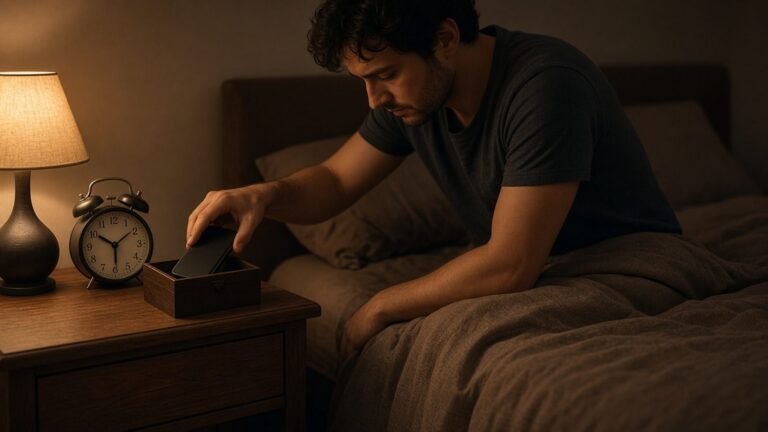
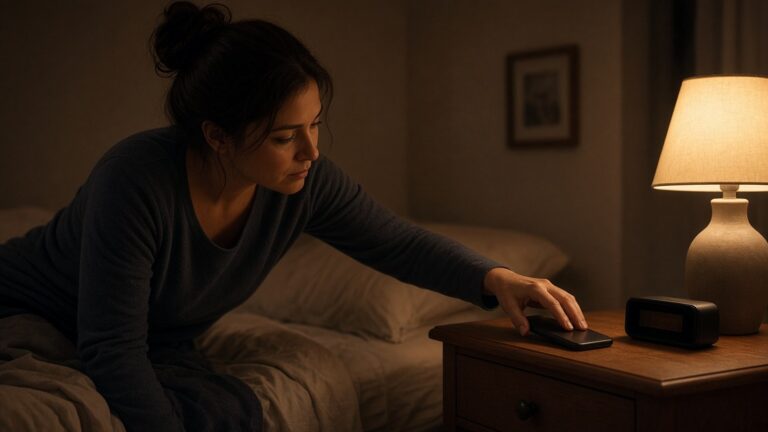
For example, charge your phone outside the bedroom and use an ordinary alarm clock. If you want to sleep at 11 pm, schedule a reminder for 10.30 pm. That way you make the decision at a moment when you are still clear-headed.
Caffeine also counts. According to the NHLBI, its effects can last up to about eight hours. Gezond Leven advises preferably no more coffee or tea after 3 pm.
Catching up on sleep at the weekend
A panel of the US National Sleep Foundation (Sletten and colleagues, 2023) concluded that regular sleep timing is important for health and performance, and that some extra sleep on days off may help if you sleep too little during the week. A regular rhythm remains the starting point: the NHLBI advises limiting the difference between weekdays and weekends to about an hour, because staying up late and sleeping in late can disrupt your body clock, the internal rhythm that decides when you get sleepy. You will find more on bedtime and your bedroom in the sleep checklist for training weeks.
Sources
- Centers for Disease Control and Prevention (2024). About Sleep. CDC.
- National Heart, Lung, and Blood Institute (2022). Healthy Sleep Habits. NHLBI, National Institutes of Health.
- Vlaams Instituut Gezond Leven. Je slaap verbeteren. Gezond Leven (accessed 15/10/2026).
- Exelmans L, Van den Bulck J (2016). Bedtime mobile phone use and sleep in adults. Social Science & Medicine, 148, 93–101. PMID 26688552.
- Chang AM, Aeschbach D, Duffy JF, Czeisler CA (2015). Evening use of light-emitting eReaders negatively affects sleep, circadian timing, and next-morning alertness. PNAS, 112(4), 1232–1237. PMID 25535358.
- Sletten TL et al. (2023). The importance of sleep regularity: a consensus statement of the National Sleep Foundation sleep timing and variability panel. Sleep Health, 9(6), 801–820. PMID 37684151.

3 Comments