Keeping your home warm after 65: why the WHO calls 18 degrees a safe indoor temperature
General information, not medical advice. If you have symptoms, discuss them with your GP.
As soon as it starts to freeze outside, many people turn the thermostat down a little to keep their energy bill in check. Yet keeping your home warm in winter is also a health matter, especially as you get older. This article explains which indoor temperature the World Health Organization puts forward, why cold at home matters and how to heat sensibly.
What the WHO says about 18 degrees indoors
In its housing and health guidelines from 2018, the World Health Organization (WHO) writes that indoor temperatures should be high enough to protect residents from the harmful health effects of cold. For countries with a temperate or colder climate, the WHO names 18 °C as a safe and well-balanced indoor temperature to protect the health of the population during the cold season. It is a strong recommendation, the firmest category the guidelines use.
The reason is in the same guidelines. According to the WHO, housing that is difficult or expensive to heat contributes to poorer outcomes for your lungs and for your heart and blood vessels.
Why cold at home matters more after 65
The UK’s National Health Service (NHS) puts people aged 65 and over at the top of its list of groups that are more vulnerable to cold weather. Children under 5, pregnant women, people with a long-term health condition, a disability or a mental health condition and people on a low income who cannot afford heating are on the list too.
According to the NHS, keeping warm over the winter months can help to prevent colds and flu, as well as more serious problems such as heart attacks, strokes, pneumonia and depression. In the most extreme case, your body temperature drops too far. The NHS speaks of hypothermia when your body temperature falls below 35 °C, while it is normally around 37 °C. Living in a cold house is listed among the causes, and older people living alone are particularly at risk, according to the NHS.
Keeping your home warm without heating every room
The NHS advises heating your home to a temperature that is comfortable for you and, if you can, to at least 18 °C in the rooms you regularly use, such as the living room and the bedroom. This is particularly important if you have a health condition, the NHS adds.
For the bedroom, the advice is not far apart. Gezond Leven, the Flemish institute for health promotion, recommends in its sleep tips a comfortable temperature that is no colder than 17 °C. The NHS advises keeping your bedroom windows closed at night. How to keep a bedroom fresh without letting it get too cold is covered in the article on bedroom temperature.
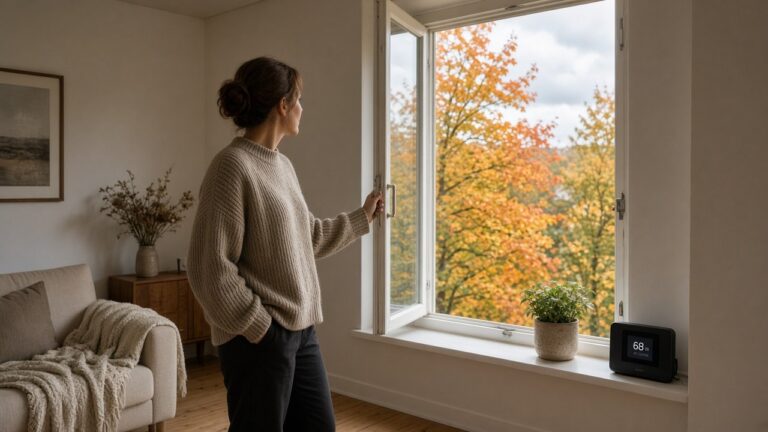
Gezond Leven also recommends airing your home and bedroom regularly. How to do that in the heating season is explained in the article on airing your home in autumn. How damp and mould are linked is covered in the article on mould in the house.
The NHS also advises checking that your heating and cooking appliances are safe. If you heat with gas, wood or heating oil, a carbon monoxide alarm belongs in your home. Where it should go is explained in the article on the CO detector in the heating season.
Keeping an eye on older neighbours and relatives
The NHS asks you to think of others in winter too. Icy pavements and the cold sometimes keep older neighbours, friends and relatives indoors. Stay in touch, ask whether they need practical help and make sure they have enough food in for a few days. If they do need to go out in the cold, the NHS suggests shoes with a good grip and a scarf around the mouth against the cold air.
When to see a doctor
The NHS lists shivering, pale, cold and dry skin, lips that turn blue or grey, slurred speech, slow breathing and tiredness or confusion as signs of hypothermia. If you think someone has hypothermia, call the emergency services straight away. While you wait for help, move the person indoors, remove any wet clothing and wrap them in a blanket. According to the NHS, do not use a hot bath or hot water bottle and do not rub their arms or legs.
Sources
- World Health Organization (WHO). WHO Housing and health guidelines (executive summary). 2018.
- NHS (United Kingdom). Winter vaccinations and winter health. 2022 (page last reviewed 16 November 2022).
- NHS (United Kingdom). Hypothermia. 2023 (page last reviewed 9 June 2023).
- Vlaams Instituut Gezond Leven (Flemish institute for health promotion). Je slaap verbeteren. Accessed November 2026.