Banana too sweet? What research says about sugar in fruit
General information, not medical advice. If you have symptoms or follow a diet for medical reasons, discuss it with your GP or dietitian.
Sugar in fruit sometimes gets the same bad name as the sugar in soft drinks. Yet nutrition experts draw a clear line between sugar in whole fruit and added sugar or sugar from juice. Here is where that line comes from and what large studies found about fruit and blood sugar.
How much sugar is in fruit?
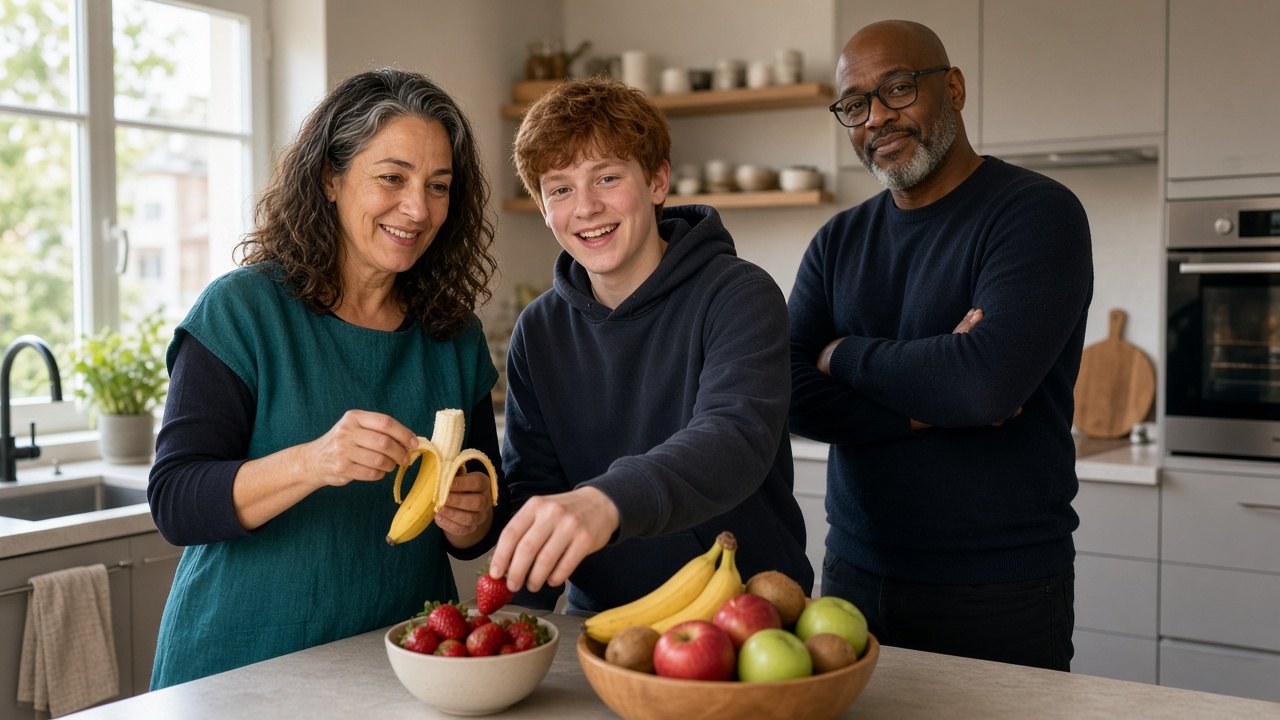
According to the US Department of Agriculture (USDA) database, a raw banana contains about 12 grams of sugar per 100 grams, an apple about 10 grams, a kiwi about 9 grams and strawberries about 5 grams. A 120-gram peeled banana therefore gives about 15 grams of sugar. That sugar comes packed in fibre, water and cell walls, which makes all the difference.
Sugar in fruit versus free sugars
The European Food Safety Authority (EFSA) published a detailed opinion on sugars in 2022. It separates sugars naturally present in whole fruit and vegetables from free sugars: added sugars plus the sugars in honey, syrups and fruit juice. EFSA advises keeping added and free sugars as low as possible within a nutritious diet. The sugar in a whole apple is not part of that.
The Vlaams Instituut Gezond Leven, the Flemish institute for health promotion, agrees: whole fruit belongs to the foods to choose often, at about 250 grams a day. Juice and smoothies sit in the grey zone because they contain less fibre and more sugars and fill you up less. To count those 250 grams, read the article how much fruit per day.
What studies say about fruit and type 2 diabetes
In 2013 the British Medical Journal published an analysis of three large US cohorts, groups of people followed for years. Among about 187,000 nurses and health professionals, eating more whole fruit went with a slightly lower risk of type 2 diabetes. Every three extra servings of blueberries a week were linked to a roughly 26 percent lower risk. Grapes, raisins, apples and pears also scored well. Juice showed the opposite: more juice went with a slightly higher risk.
A 2015 meta-analysis in the same journal pooled studies on soft drinks and juice. One daily serving of fruit juice was linked to a slightly higher risk of type 2 diabetes, though the evidence was weaker than for soft drinks and bias could not be ruled out for juice. These studies show links, not causes: people who eat a lot of fruit often live healthier in other ways too.
Glycaemic index: how fast does blood sugar rise?
The glycaemic index (GI) shows how fast a food raises blood sugar compared with pure glucose. A value of 55 or lower counts as low. According to the 2021 international tables, most fruit has a low to medium GI. Apples and pears are low; for bananas it depends on ripeness. A riper banana has more sugar and less starch and scores slightly higher.
Eating fruit with a meal or a handful of nuts can slow absorption further. Moving after a meal helps too, as the article on the evening walk after eating explains. Your muscles then use more glucose, and over time regular activity improves your insulin sensitivity: how well your cells respond to insulin, the hormone that moves sugar from the blood into cells.
What does this mean day to day?
So for most people a banana is not a problem. The real gain lies with free sugars: soft drinks, lemonade and big glasses of juice. The article on sugary drinks explains why water stays the first choice. If you have diabetes, discuss with your doctor or dietitian how much and which fruit fits your diet.
Sources
- EFSA Panel on Nutrition. Tolerable upper intake level for dietary sugars. EFSA Journal, 2022;20(2):7074.
- Muraki I et al. Fruit consumption and risk of type 2 diabetes: results from three prospective longitudinal cohort studies. BMJ, 2013;347:f5001.
- Imamura F et al. Consumption of sugar sweetened beverages, artificially sweetened beverages, and fruit juice and incidence of type 2 diabetes. BMJ, 2015;351:h3576.
- Atkinson FS et al. International tables of glycemic index and glycemic load values 2021. American Journal of Clinical Nutrition, 2021;114(5):1625–1632.
- USDA. FoodData Central (banana, apple, kiwi, strawberry, raw), accessed 25 October 2026.
- Fruit. Vlaams Instituut Gezond Leven (Flemish Institute for Healthy Living), accessed 25 October 2026.