Max 20 g of protein per meal? Myth, nuance and what actually counts
TLDR
- The claim “max 20 g protein per meal, the rest turns into fat” is a cartoon — distribution matters, and a surplus does not automatically become fat mass.
- Do: several portions of roughly 20–40 g spread over the day support muscle protein synthesis better than one mega-dose.
- Don’t: panic if your plate hits 45 g; age, protein quality (leucine) and total daily intake all play a role.
- See protein needs, leucine from food and plant-based proteins.
On social media and in headlines it keeps circulating: “your body can only use 20 grams of protein at a time.” The rest supposedly gets “stored as fat”. As a practitioner, I see that meme return every time a Wageningen or HLN piece on protein does the rounds — and I also see people cutting their steak in half out of fear. Some perspective: MPS (muscle protein synthesis) has a dose-response, not a magic 20 g wall, and excess calories — not “protein molecules turning into fat” — determine weight gain.
Researchers such as Tessa Grootswagers (the Wageningen side of popular science) and sports nutrition reviews push towards nuance: spreading intake over the day is smart; a hard 20 g cap for everyone is too simple.
Where the 20 g claim comes from
In acute studies, MPS often peaks around a portion of roughly 20–25 g of high-quality protein in young adults — especially whey or animal protein with enough leucine. Above that, the acute response levels off: more protein in one go does not mean endless extra muscle building at that moment. That is something else than “everything above 20 g is useless” or “turns into fat”.
Older adults often need a higher per-meal stimulus (often cited around 30–40 g), and plant-based sources sometimes require larger portions or combinations to reach the same leucine signal. Context, not a meme.
When to spread intake
- Goal of muscle maintenance/building: 3–4 moments with ~20–40 g protein across the day work better than everything in one dinner.
- Low appetite: smaller, repeated portions are more manageable than one monster plate.
- Heavily plant-based: slightly larger or combined portions help leucine/quality — see leucine from food.
When not to / limits
- Don’t panic at 35–50 g: a hearty meal after training is not “waste”; amino acids also serve other functions (enzymes, immunity, recovery).
- Not “protein = fat”: weight gain follows energy balance. Protein is satiating and metabolically costly; it is not a dessert calorie in disguise.
- No excuse for too little in total: eating 60 g/day “neatly distributed” while staying below your needs misses the point — see protein needs.
- Kidney fear without a diagnosis: healthy kidneys and normal intake (roughly 1.2–2.0 g/kg for active people in reviews) are a different conversation than clinical restriction — talk to a doctor if you have kidney disease.
In practice: portions without the cartoon
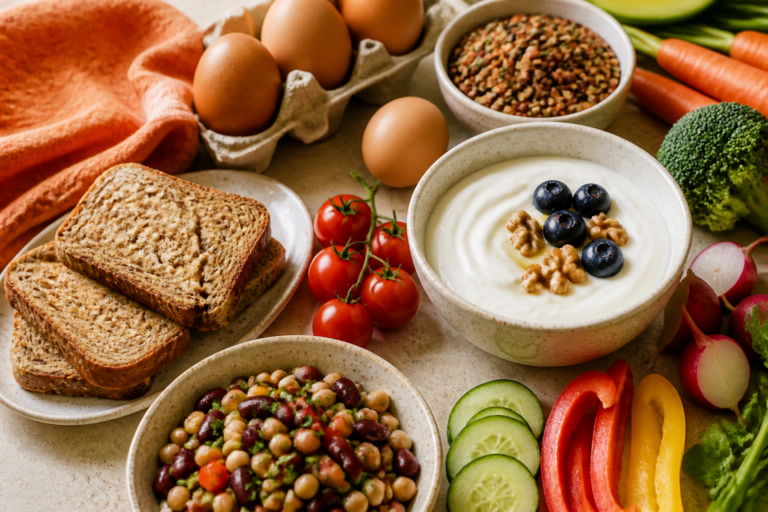
Aim for a palm to a fist of protein-rich food per meal (meat, fish, egg, yoghurt, tofu, legumes + grains), and repeat that 3–4×. After a hard session, the plate can comfortably move towards the top of 20–40 g. If you eat plant-based, combine legumes and grains or go a bit bigger — no shake obligation, but awareness of quality.
ISSN-style consensus and European sports nutrition texts (EFSA/Superior Health Council as a framework for general intake, sports reviews for athletes) still hold: total daily intake + progressive training > obsessing over one gram limit.
Practical Engy tip
Don’t count “forbidden grams” above 20. Check whether your three meals (plus a snack, if you have one) each contain a serious protein source. Done. That’s smarter than HLN headline anxiety.
Recommendations in bullets
- Spread portions of ~20–40 g; no hard 20 g wall for everyone.
- Age and protein quality (leucine) shift the sweet spot upwards.
- Surplus protein ≠ automatically fat; look at total energy.
- Hit your daily total first; timing is secondary.
- No powder pitch needed — food first, see the leucine and plant-based hubs.
Sources (selection)
- HLN / Wageningen popular science on protein portions (inspiration; put claims into perspective).
- Sports nutrition reviews / ISSN — per-meal MPS dose-response ~20–40 g depending on population.
- EFSA / Superior Health Council — general protein intake frameworks for Europe; sports needs higher with training.
- Engy: protein needs, leucine from food, plant-based proteins.