Psyllium and fibre: cholesterol, satiety — not a “natural Ozempic”
Disclaimer: Not medical advice. Psyllium and fibre supplements can interact with medication and are not suitable with some bowel diseases. Talk to a doctor or pharmacist if in doubt, during pregnancy or with chronic complaints. No “natural Ozempic” claim.
TLDR
- Psyllium is a soluble fibre: it can support satiety and the cholesterol context — it is not a replacement for weight-loss medication.
- Do: build up gradually with enough water, alongside dietary fibre. Don’t: hype doses without fluid, or with known bowel pathology without a doctor.
- Sels (UZA) and others: literacy over marketing; “natural Ozempic” is a slogan, not an equivalence of mechanism.
- See reading a supplement label, 5 questions for a longevity supplement and building up legumes.
On social media, psyllium is suddenly called “natural Ozempic”. As if a spoonful of fibre were the same as a course of medication. As a practitioner, I respect fibre — and I get annoyed by slogans that give people false certainty. Some perspective: psyllium can be useful in a low-fibre diet; it is not a miracle pill and not a product you “have to” buy.
What psyllium actually is
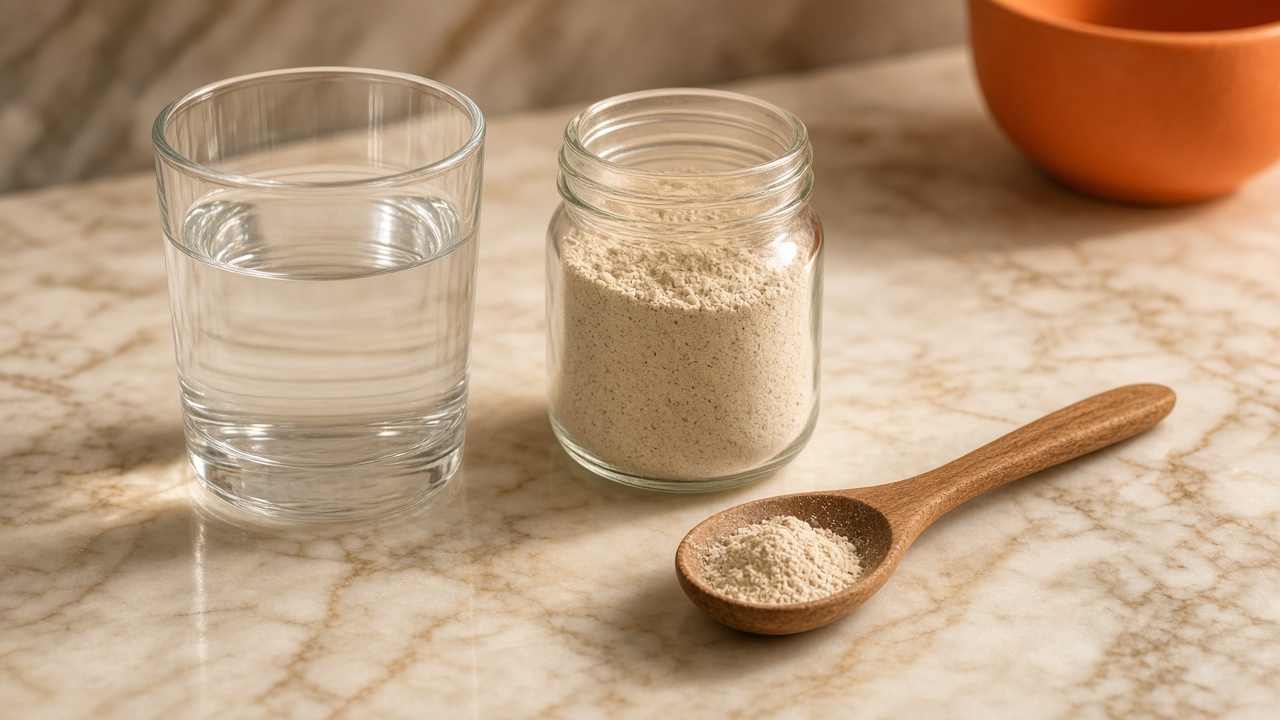
Psyllium (psyllium husk) swells with water into a gel. That gel can regulate bowel movements (milder for some, actually slowing things down for others if you drink too little), raise satiety somewhat and, in research settings, nudge LDL cholesterol — within a dietary and lifestyle framework, not as a stand-alone therapy.
That is a different story from GLP-1 medication. Marketing that lumps the two together sells attention, not literacy. Same reflex as with other longevity powders: first ask the five questions and learn to read a label.
When to consider it
- Fibre shortfall despite eating: you are structurally below recommendations and legumes/vegetables are slow going — then a small, standardised dose can help alongside (not instead of) food.
- Cholesterol context: as part of a broader pattern that a doctor/dietitian is looking at too — not as a self-diagnosis of “I’ll fix my lipids”.
- Comfort/regularity: some people find psyllium more predictable than chaotically adding “more bran”.
When not to / limits
- Too little water: gel without fluid can cause constipation or discomfort. Drink with it; follow the package leaflet.
- Building up too fast: start low; bloating and cramps are signals to cut back, not to double up.
- Medication: fibre can affect how medicines are absorbed — separate intake in time; ask your pharmacist.
- Bowel disease, swallowing problems, acute abdominal pain: no experiments; doctor first.
- No Ozempic replacement: no dose titration, no medical monitoring, no equivalent claim.
Food first, powder later
The Belgian Food Triangle already aimed for fibre through vegetables, fruit, whole grains and legumes. If you build up legumes gradually, you often need less of a “powder reflex”. Psyllium is a tool for gaps, not an identity.
EFSA and the Voedingscentrum frame fibre in grams-per-day guidance for adults; precise targets differ by source, but “almost nothing” is rarely ideal for an active week. Measure success by bowel comfort, energy and sustainability — not by viral before-and-afters.
Recommendations in bullets
- Increase dietary fibre first; psyllium only as a supplement.
- Low starting dose + enough water; build up over days/weeks.
- Keep it apart from medication intake; check with your pharmacist.
- Ignore “natural Ozempic” reels; don’t compare mechanisms with slogans.
- Complaints or a bowel diagnosis: see a professional, stop self-stacking.
Sources (selection)
- Sels (UZA) et al. — media literacy on fibre/psyllium vs hype (inspiration; cite fairly, do not copy verbatim).
- Voedingscentrum / EFSA — fibre intake and soluble fibre; framing cholesterol claims.
- Gezond Leven — Food Triangle: fibre-rich basic diet.
- Engy: supplement label, 5 questions for a longevity supplement, building up legumes.