
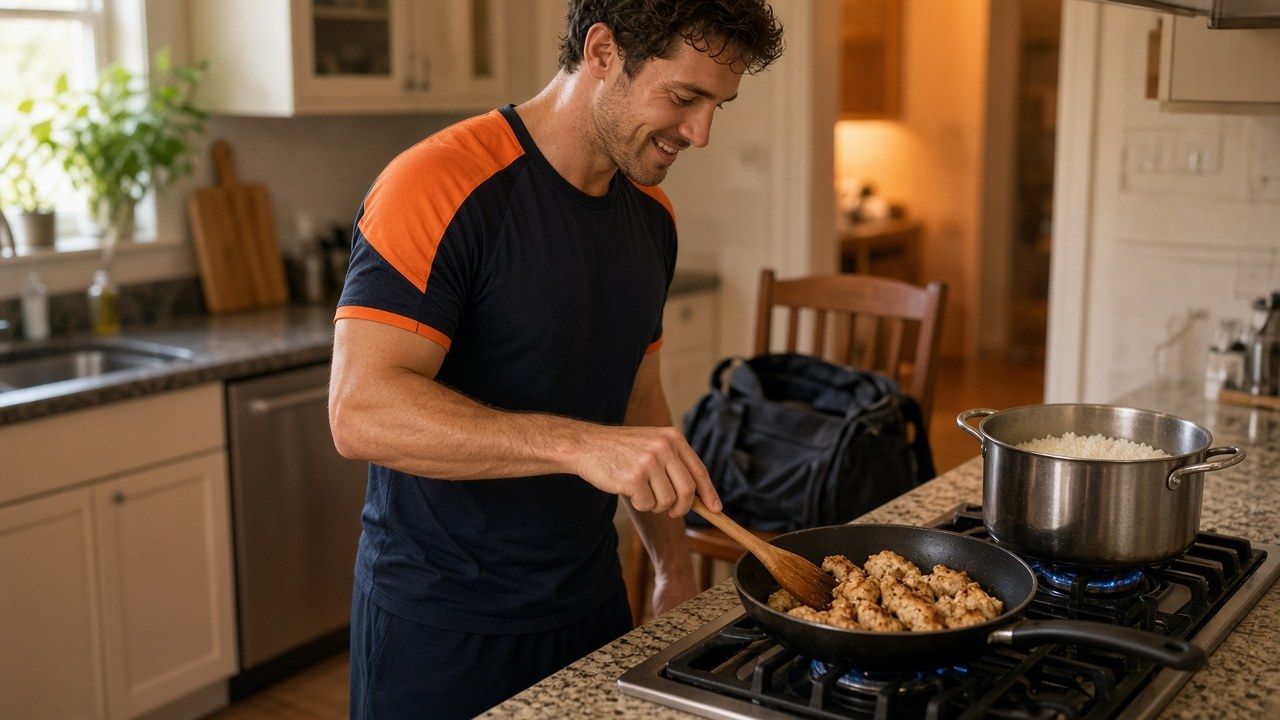
Eating around training: timing for amateurs (without diet drama)
Disclaimer: This article is informational and not medical advice or a diet prescription. For medical conditions, eating-disorder history or doubt: consult a doctor or dietitian.
TLDR: The classic amateur mistake is eating too little before training and being too chaotic afterwards. For most sessions: carbs on time beforehand, protein + carbs afterwards — with Belgian staple food, not shake religion.
In Belgian sports media it keeps coming back: meal timing around training. I read that as a practitioner, not a sports dietitian. What follows is a filter on what usually works for recreational to semi-serious athletes.
The classic timing mistake
Too little fuel beforehand → flat session, irritability, sometimes dizziness. Over-“compensating” afterwards → needlessly heavy, especially if you already ate enough. Guideline thinking (not dogma):
- Main meal: ideally ±2–3 hours before intense work.
- Snack: ±30–60 min before (banana, bread with jam, rice cake).
- Afterwards: within ±1–2 hours a meal or snack with protein + carbs.
The Dutch Nutrition Centre also warns: structurally training hard fasted is usually not a smart default for muscle building and energy.
Before: carbs as fuel
Carbs refill glycogen. For sessions >±60–90 min or high intensity, a familiar, light carb source helps. Less fibre/fat/protein right before a race or hard interval if your stomach is sensitive.
Belgian examples: pasta or rice at lunch before evening gym; white bread with honey; banana; pancake; oatmeal earlier in the day.
After: protein for recovery, carbs to refill
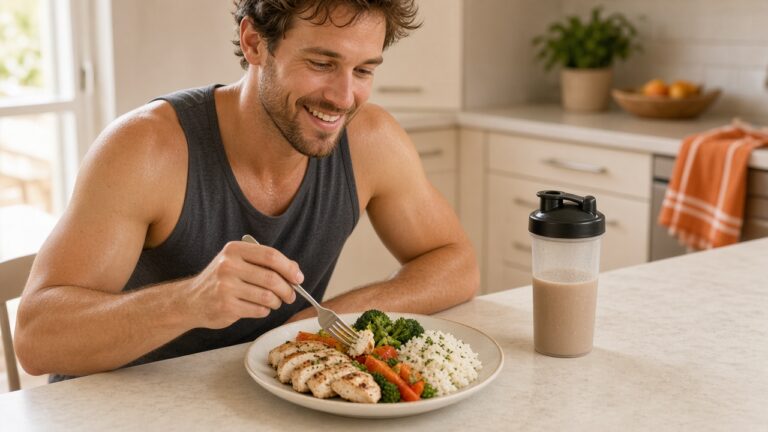
For muscle recovery, sports-nutrition literature often cites ±20–40 g protein per eating occasion as a practical band, spread over the day (ISSN position stands on protein). Combine with carbs after heavy sessions.
Practical: skyr/quark + fruit; eggs on toast; chicken with rice; chocolate milk as a simple recovery drink; yoghurt smoothie. Powder is optional, not required — see also protein ranges for active adults.
Hunger dip after an intense session
Sometimes you have little hunger right away, and more the next day. That is normal enough. Do not force a feast, but do drink/eat something with protein if the real meal still takes a while. Plan the next meal deliberately instead of “I’ll see” until 23:00.
Mini-protocol I use myself
- Do I know when I train? Then I shift carbs to the meal beforehand.
- Under 60 min? Small, familiar snack — no experiment.
- Afterwards: protein + carbs within reach, then a normal meal.
- Evening training? No caffeine boost “for the drive home” if sleep is already tight.
Race day vs. weekday gym
On a 10 km or Hyrox-like effort you eat lighter and more familiar than on a hypertrophy evening. Just before the start: little fibre/fat if your stomach protests. Midweek in the gym the meal can be more normal — timing matters more than copying “race nutrition” from Sporza kitchens.
Read also: Hydration & electrolytes: when water is enough (and when it is not) · Plant proteins for athletes: when they work (and when you fall short)
Sources
- Voedingscentrum — eating around sport (NL).
- Jäger R et al. ISSN position stand: protein and exercise. J Int Soc Sports Nutr.
- Thomas DT et al. ACSM/AND/DC joint position: nutrition and athletic performance.
- Vlaams Instituut Gezond Leven — staple nutrition & guidelines.




8 Comments