
Dairy products: how much per day according to the SHC?
General information, not medical advice. If you have symptoms, discuss them with your GP or dietitian.
Dairy products belong in the light-green zone of the food triangle: useful, but not unlimited. The Superior Health Council (SHC) advises in 2025 between 250 and 500 millilitres of milk a day as a contribution to calcium, vitamin B2 and B12. The Flemish Institute Gezond Leven takes that over and explains how yoghurt or cheese count as an equivalent.
Dairy products: what sits in the 250 to 500 millilitres?
Gezond Leven stresses that the SHC amount is about milk in liquid form. A glass of skimmed or semi-skimmed milk matches in calcium among other things a glass of buttermilk, a pot of plain yoghurt, a glass of calcium- and vitamin-fortified soya drink, or one portion of milk with breakfast cereals. Two small blocks of cheese or one slice of cheese (about 25 grams) and a pot of quark sit in their overview as other equivalents; yoghurt and other dairy products do get preference over cheese.
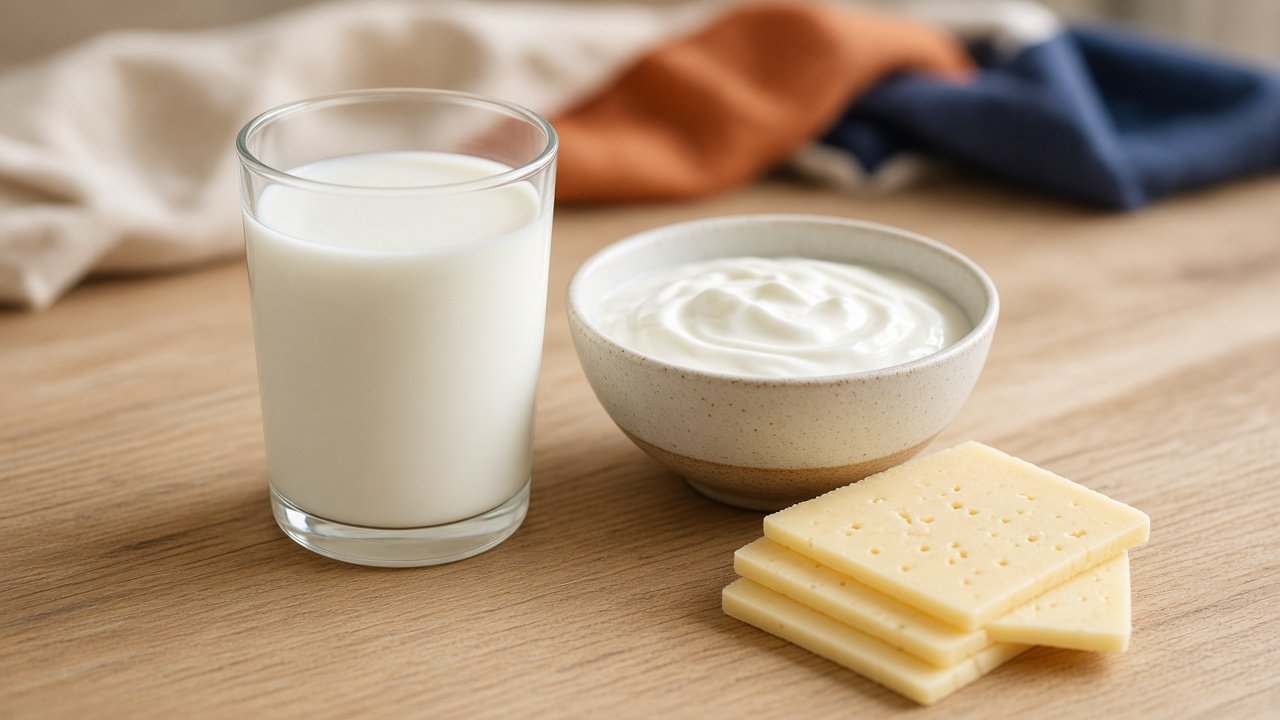
In the preference group sit plain milk, buttermilk, kefir, plain yoghurt, plain quark and fortified plain soya variants. Sweetened chocolate milk, fruit yoghurt with sugar or sweetener, puddings and cream sit lower or in the zone you take as little as possible.
What do Flemings eat?
According to Gezond Leven, the average Fleming eats and drinks about 162 grams of milk and dairy products a day (including cheese and milk-based desserts, excluding plant alternatives, butter and cream). About 15 per cent meet the recommendation. Drinking milk daily is about three in ten; yoghurt or quark about one in five daily.
A pot of plain yoghurt with oatmeal or next to eggs is a concrete way to move toward 250 millilitres without a dessert reflex. With bread, wholegrain bread fits better in the same meal logic than white bread. If you also watch salt, combine that with the tips from eating less salt, especially with cheese.
Full-fat, semi-skimmed or plant-based?
Gezond Leven passes on that the SHC does not necessarily advise against full-fat dairy: they contain more saturated fat, but also fill you more. If you need to limit saturated fat, for example with high cholesterol, choose skimmed or semi-skimmed. Fortified plain soya drink can sit close to milk in composition; oat, rice or nut drinks do not fully replace milk according to Gezond Leven, because protein quality or amount falls short, even with added calcium.
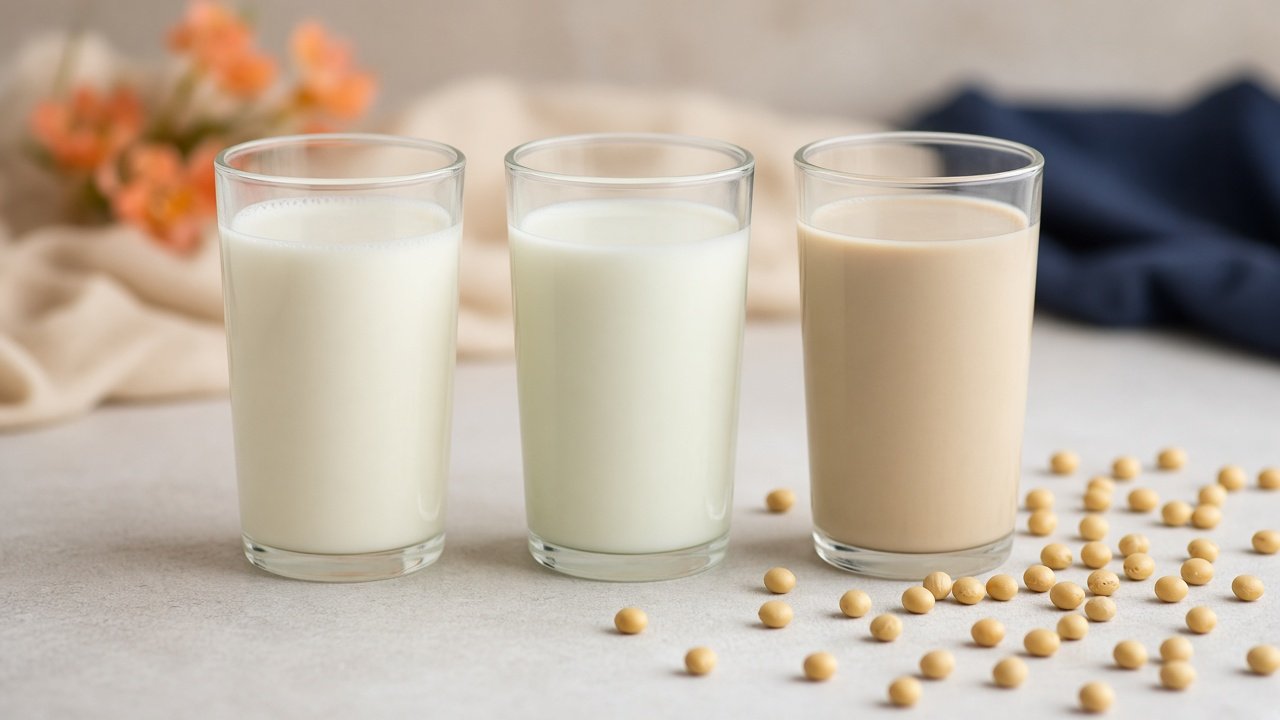
If you do not like milk, you do not need to force a litre. A pot of plain yoghurt at breakfast and a glass of fortified soya drink later in the day can already move toward 250 millilitres equivalent. Gezond Leven shows that the science on all health effects of dairy is nuanced: some links are probably favourable, others uncertain or less favourable. That is why the SHC’s concrete portion guideline stays useful without miracle stories.
Cheese is calorie-dense and salty; two blocks as a calcium equivalent do not mean an unlimited cheese board. Prefer yoghurt or milk as a base and keep cheese as a flavour accent. Sweetened milk drinks, according to Gezond Leven, can be diluted with ordinary milk if needed, or you switch to plain variants.
Dairy products supply proteins, B2, B12 and minerals such as calcium. Gezond Leven also warns for nuance: not every effect sits equally firmly in research, and “the” impact of all dairy products does not exist. With lactose intolerance, cow’s-milk protein allergy or a medical diet, discuss alternatives with your GP or dietitian.
Children up to three follow other milk advice via Kind en Gezin; this article targets adults according to SHC 2025. With high cholesterol, kidney problems or a prescribed diet, fat content and protein intake weigh more: align amount and type with your dietitian instead of only copying the general 250 to 500 millilitres.
Sources
- Vlaams Instituut Gezond Leven. Melk en alternatieven. gezondleven.be, accessed 16 October 2026.
- Vlaams Instituut Gezond Leven. Aanbevelingen van de Hoge gezondheidsraad met focus op voedingsmiddelen. gezondleven.be, 2025.
- Superior Health Council. Voedingsaanbevelingen voor de Belgische bevolking – 2025. Advice no. 9805-9807, 2025.