
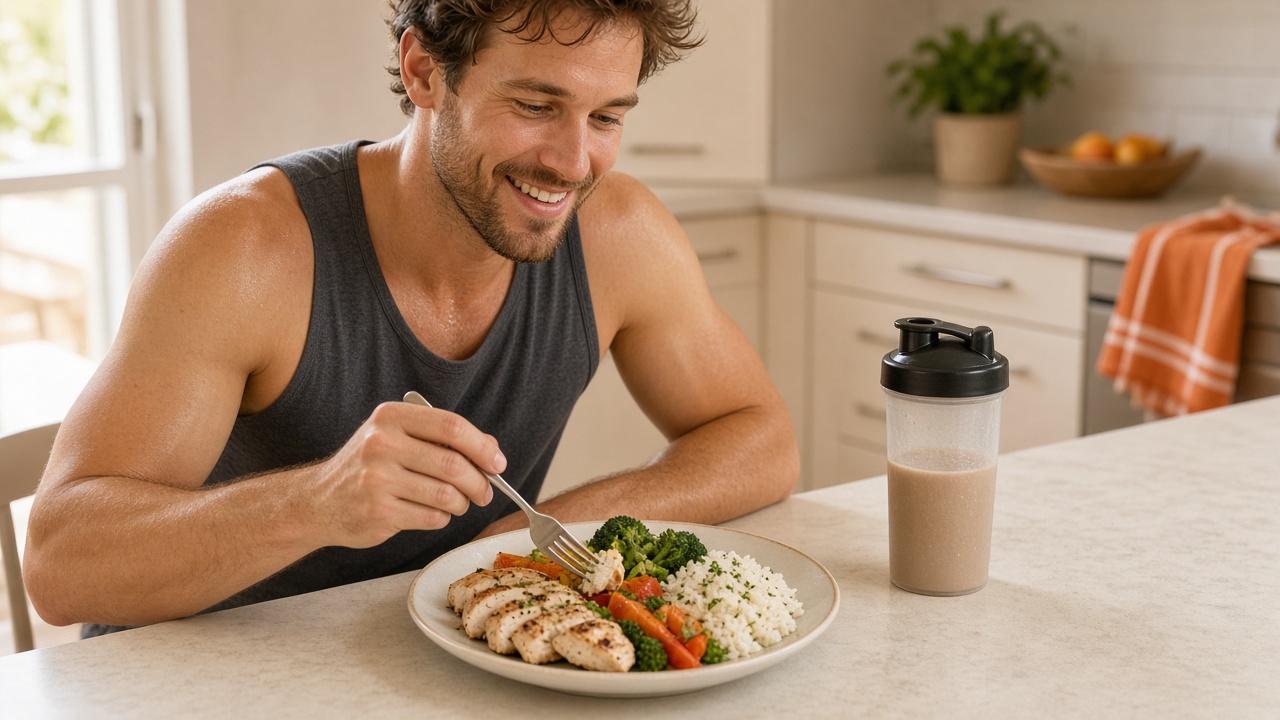
Recovery shake or meal: when powder helps — and when food wins
TLDR
- A recovery shake is handy if you will not get a real meal within ~1–2 hours — no magical “anabolic window” duty.
- Yes: fast protein + carbs after a hard session or when lunch/dinner comes late. No: shake as a stand-in for structured eating.
- Practical window: about two hours is plenty for most recreational athletes; immediate is comfortable, not a lab requirement.
- See also eating around training, protein needs and leucine from food.
After training the shaker is already ready as if the muscles otherwise “disappear.” Feeds promise a narrow twenty-minute anabolic window. As a practitioner I sometimes drink a shake myself — and I have also seen weeks where the shake was the only “meal” while lunch and sleep stayed messy. Relativise: a recovery shake is a logistics tool, not a cure.
Sporza IN FORM and sports-nutrition research (including UAntwerpen framing in popular coverage) push the same way: food-first where you can, shake where it helps. Marketing talk about “now or never” is bigger than the evidence for recreational athletes.
What a recovery shake actually does
Practically: you get quickly digestible protein (often 20–30 g) and sometimes carbs, without cooking. That supports muscle protein synthesis and tops up glycogen a bit after a hard or long session. It is not a faster “muscle-growth machine” than an ordinary meal with comparable macros — it is mainly faster and easier when the schedule is tight.
The classic “anabolic window” from older gym culture is strongly nuanced in reviews and ISSN-style consensus. For people who eat regularly and hit enough protein across the day, immediate post-workout is useful for comfort and routine, not a magic deadline. A practical window of about two hours fits how people actually live: shower, commute, then eat.
When yes
- No meal in sight: you train at midday and lunch comes late, or you still have an hour’s drive home.
- Hard or long session: leg work, intervals, or >75–90 minutes — fast protein/carbs help the transition into recovery.
- Low appetite: sometimes drinking is easier than chewing; better a shake than nothing until midnight.
When not / limits
- Not as an alibi: if you can eat a plate of pasta with chicken or legumes within the hour, food-first usually wins on micronutrients and satiety.
- Not as the only strategy: total daily protein outweighs “shake within 5 minutes.” See protein needs for active adults.
- Sugar-bomb check: some ready-to-drink shakers are more dessert than recovery — check added sugars, as with reading a supplement label.
- Not a sleep substitute: late caffeine shakes that keep you awake sabotage recovery within 24 hours.
Shake vs meal: honest comparison
A meal with ~25–40 g protein, carbs and vegetables often covers more than a shake: fibre, minerals, satiety. The shake wins on speed and portability. Anyone who drinks a shake every day after the gym “because they must,” while soup and sandwiches are ready, pays convenience with less food quality. Anyone who trained at 7 and only eats at 13 is missing that logistics — there the shake makes sense.
Leucine and protein quality matter (see leucine from food), but you do not need to “time” powder as if it were medication. Distribution across the day, total intake and the training stimulus remain the heavier levers.
Practical Engy tip
Ask yourself one thing after the session: will I get a normal meal within two hours? Yes → water, shower, eat. No → shake or yoghurt + fruit as a bridge, then eat anyway. No stopwatch drama.
Recommendations in bullets
- Food-first when the meal is soon; shake as a bridge, not a religion.
- Count on a ~2-hour practical window — not a mythical 20 minutes.
- Aim for 20–40 g protein post-session (shake or plate), fitting your day total.
- Check labels for sugar and serving size; no SKU obligation.
- Tie recovery to sleep and volume, not only to the shaker.
Sources (selection)
- Sporza IN FORM — recovery shake in sports practice (inspiration, not republication).
- ISSN / sports-nutrition reviews — protein timing: distributed intake > narrow “window” for most recreational lifters.
- UAntwerpen / sports-science popularisation — food-first framing around recovery nutrition.
- Engy frame: eating around training, protein needs, leucine from food, recovery within 24 hours.


One Comment