
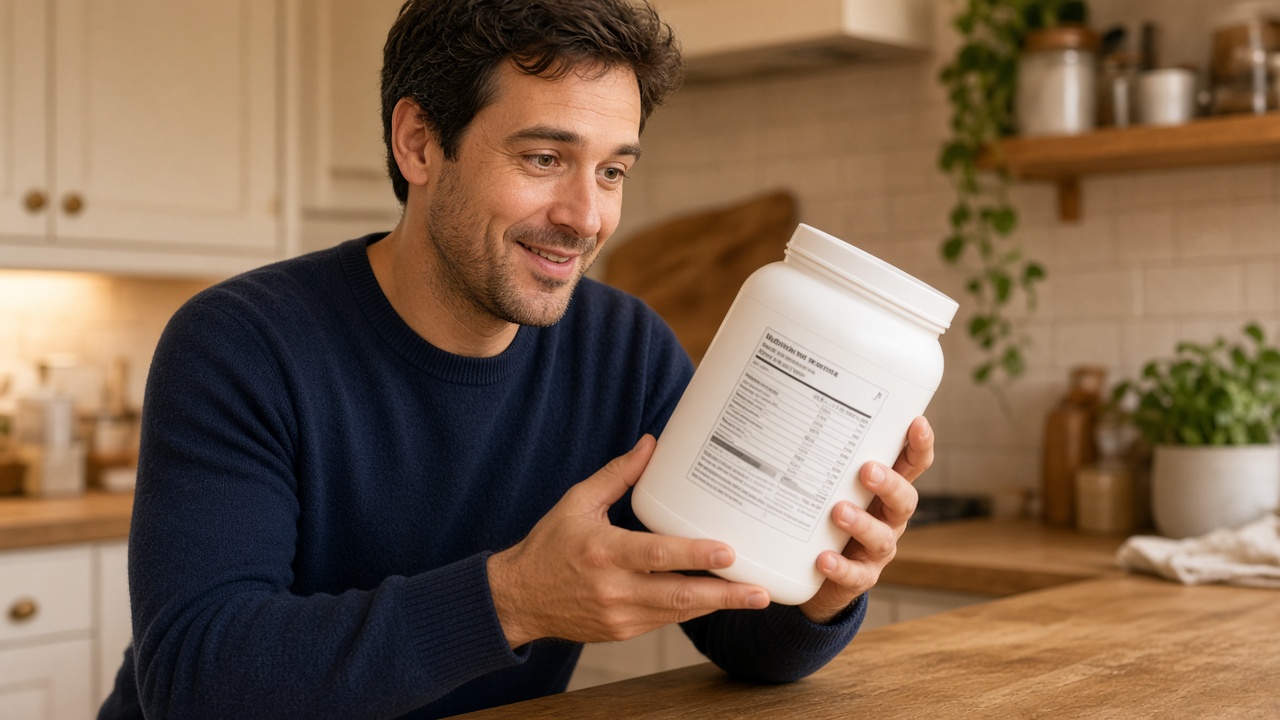
Protein powder literacy: when it helps — and when your plate wins
TLDR
- Protein powder is a gap-filler — handy when food falls short, not a requirement for muscle growth.
- Do: ~20–30 g protein per serving, little added sugar, a clear source (whey/plant-based). Don’t: use it to replace meals or think “more = better”.
- Whey vs plant: whey is leucine-rich and fast; plant-based works with larger/combined portions — see also plant-based proteins.
- Reading labels: how to read a supplement label; no product advice here.
On the high street and on Sporza IN FORM, protein powder pops up as a post-gym “must-have”. Feeds promise lean mass as if the powder does the training. As a practitioner, I sometimes use it when travelling or after a late session — and I also know people who knock back three scoops a day while their plates are missing legumes and yoghurt. Some perspective: powder is concentrated food convenience, not magic muscle dust.
When powder does make sense
When your daily protein target (often roughly 1.4–2.0 g/kg for strength/recreational training in sports reviews) is hard to reach with regular meals: early training, low appetite, plant-based without planning, or a long working day. A scoop in yoghurt or oatmeal is then a bridge, not a lifestyle in itself.
For post-training recovery, it’s the same story as with the recovery shake vs meal: handy when there’s no plate in sight. If you do eat within two hours, there’s no powder obligation.
When yes
- Gap-filler: you are structurally 20–40 g below your target despite normal meals.
- Logistics: office, train or a short break — drinkable protein > nothing.
- Plant-based help: a blend or pea/rice can help raise leucine without meat.
When not / limits
- Not as a meal replacement: micronutrients, fibre and chewing disappear when everything comes out of a shaker.
- Not “more scoops = more muscle”: surplus above your needs is mostly calories; training remains the stimulus.
- Sugar and sweetener check: “mass gainer”-style mixes are sometimes dessert. Look at protein per 100 g and per serving, added sugars, and whether the serving size is realistic.
- Medical context: kidney disease, a prescribed diet — doctor/dietitian, not an influencer dose.
Label literacy in 60 seconds
Look for: protein per recommended serving (~20–30 g is typical for whey), a short ingredient list, little added sugar. A “proprietary blend” without grams of protein is a red flag. Whey isolate/concentrate differ mainly in lactose and speed — for most recreational athletes a simple product is enough. Plant-based: check whether one serving delivers enough leucine/protein or whether you combine it with food.
EFSA frameworks deal with claims and the safety of substances; sports practice (ISSN etc.) with usefulness as a supplement. Sciensano/the Superior Health Council remind us: supplements add to, but don’t replace, a basic diet. No brands here — literacy, not shopping advice.
Practical Engy tip
Write down what you eat for one week. Are you structurally short on protein? Only then consider powder. Hitting your target with yoghurt, eggs, legumes and fish? Leave the tub on the shelf and save your money.
Recommendations in bullets
- Powder = gap-filler, not the foundation of your diet.
- Aim for ~20–30 g protein/serving, little sugar, a clear source.
- Whey is fast/leucine-rich; plant-based works through portion size/combination.
- Read labels as you would for other supplements — no product pitch.
- Link it to protein needs and food-first timing.
Sources (selection)
- Sporza IN FORM — protein powder in sports practice (inspiration).
- ISSN position stands — protein supplements as a convenient adjunct.
- EFSA / Sciensano / Superior Health Council — claims, safety, food first.
- Engy: supplement label, protein needs, plant-based proteins, recovery shake vs meal.




One Comment