
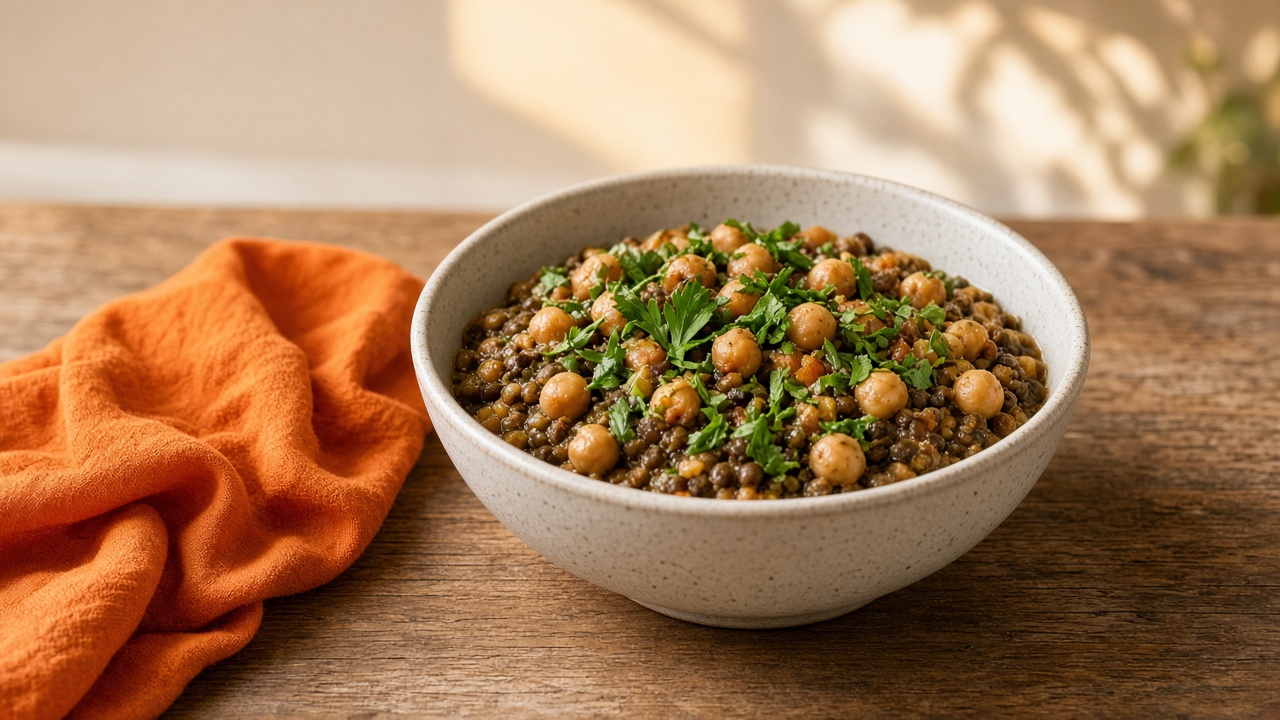
Eating more legumes: what the guidelines say and how to build up gradually
General information, not medical advice. If you have digestive problems, discuss them with your GP or a dietitian.
Eating more legumes is a simple step towards a healthier diet, but many people dread the wind that can come with it. Beans, lentils and chickpeas sit in the dark green zone of the food triangle used by Gezond Leven, the Flemish institute for health promotion. Yet according to Gezond Leven, only just over one in ten Flemish people eat legumes more than once a week.
How many legumes to eat: what the guidelines say
In its 2025 dietary recommendations, Belgium’s Superior Health Council (HGR) put legumes third in a list ranked by importance: eat legumes several times a week, such as lentils, white and brown beans, split peas, chickpeas and soybeans. Cooked dried legumes and cooked legumes from a tin or jar are preferred, in hot meals, soups, salads or sandwich spreads.
The Belgian council gives no amount in grams, but the Dutch Health Council (Gezondheidsraad) does: in December 2025 it advised eating 250 grams of prepared legumes a week. That figure comes from research in which favourable effects on the risk of chronic diseases, especially heart disease, were seen at 250 to 300 grams a week. The Netherlands Nutrition Centre (Voedingscentrum) translates this into about two small tins per person per week. It is a Dutch guideline; in Belgium the recommendation remains “several times a week”.
Why legumes can cause wind
Legumes contain a lot of fibre and oligosaccharides, sugars that your own digestion cannot break down. In your large intestine, bacteria ferment them, which produces gas. According to the Voedingscentrum, switching to a high-fibre diet can cause extra wind at first, but the effect is temporary.
In three American studies, Winham and Hutchins (2011) followed adults who ate half a cup of beans, about 120 millilitres, every day for eight to twelve weeks. In the first week, fewer than half reported more wind. Of those who had symptoms, seventy percent or more found that they faded after two to three weeks. A small group did remain bothered. These were the participants’ own reports, not measured gas.
Letting your gut adjust gradually
The researchers suggest starting with smaller portions or half a portion, and trying different types, because not every legume suits everyone equally well. The Gezondheidsraad points out that legumes can replace meat in a hot meal, but also fit into small portions, such as hummus on bread or in a soup or salad. If you are not yet used to plant-based meals, Gezond Leven advises starting with one such meal and building up step by step. A lentil soup or a pasta sauce with some lentils instead of meat is a manageable start.
Preparation matters too, because oligosaccharides dissolve in water. In a laboratory study by Han and Baik (2006), soaking reduced the amount of oligosaccharides in lentils, chickpeas, peas and soybeans. Researchers at Monash University in Australia write that tinned legumes, or legumes you boil and drain, tend to contain less of these sugars, because some of them stay behind in the liquid you pour away. Whether that makes a difference for you is something to try for yourself.
Dried legumes must always be cooked thoroughly. They contain lectins, natural defence substances of the plant that can cause gut problems when eaten raw and are made harmless by heating. Legumes from a tin, jar or pouch have already been heated enough and can be used straight away. The Gezondheidsraad prefers versions with no or little added salt.
Legumes as a source of protein
If you train, legumes are also interesting because they provide protein alongside fibre, iron and vitamin B1. That way they contribute to the amount of protein you need when you train. According to the Voedingscentrum, combining legumes with grains improves the protein quality of a meal, which matters most if you eat a vegetarian diet.
If your gut is sensitive
If you have gut problems, the Voedingscentrum says you can eat smaller amounts of legumes or none for a while. If wind is very bothersome or comes with other symptoms, the Voedingscentrum advises discussing it with your GP. A dietitian can help you find out which food is the cause.
Sources
- Hoge Gezondheidsraad (2025). Voedingsaanbevelingen voor de Belgische bevolking (2025). Advice no. 9805-9807, Superior Health Council (HGR).
- Vlaams Instituut Gezond Leven. Aanbevelingen van de Hoge Gezondheidsraad met focus op voedingsmiddelen. Gezond Leven (accessed 15/10/2026).
- Vlaams Instituut Gezond Leven. Peulvruchten. Gezond Leven (accessed 15/10/2026).
- Vlaams Instituut Gezond Leven. Tips bij de voedingsdriehoek. Gezond Leven (accessed 15/10/2026).
- Gezondheidsraad (2025). Richtlijnen goede voeding: eiwitbronnen en voedingspatronen 2025. No. 2025/19, Health Council of the Netherlands, The Hague.
- Voedingscentrum. Peulvruchten. Voedingscentrum (accessed 15/10/2026).
- Voedingscentrum. Winderigheid. Voedingscentrum (accessed 15/10/2026).
- Winham DM, Hutchins AM (2011). Perceptions of flatulence from bean consumption among adults in 3 feeding studies. Nutrition Journal, 10, 128. PMID 22104320.
- Han IH, Baik BK (2006). Oligosaccharide content and composition of legumes and their reduction by soaking, cooking, ultrasound, and high hydrostatic pressure. Cereal Chemistry, 83(4), 428–433.
- Collins L (2016). Including legumes on a low FODMAP diet. Monash University.
- Tuck C (2018). Cooking legumes. Monash University.




6 Comments