
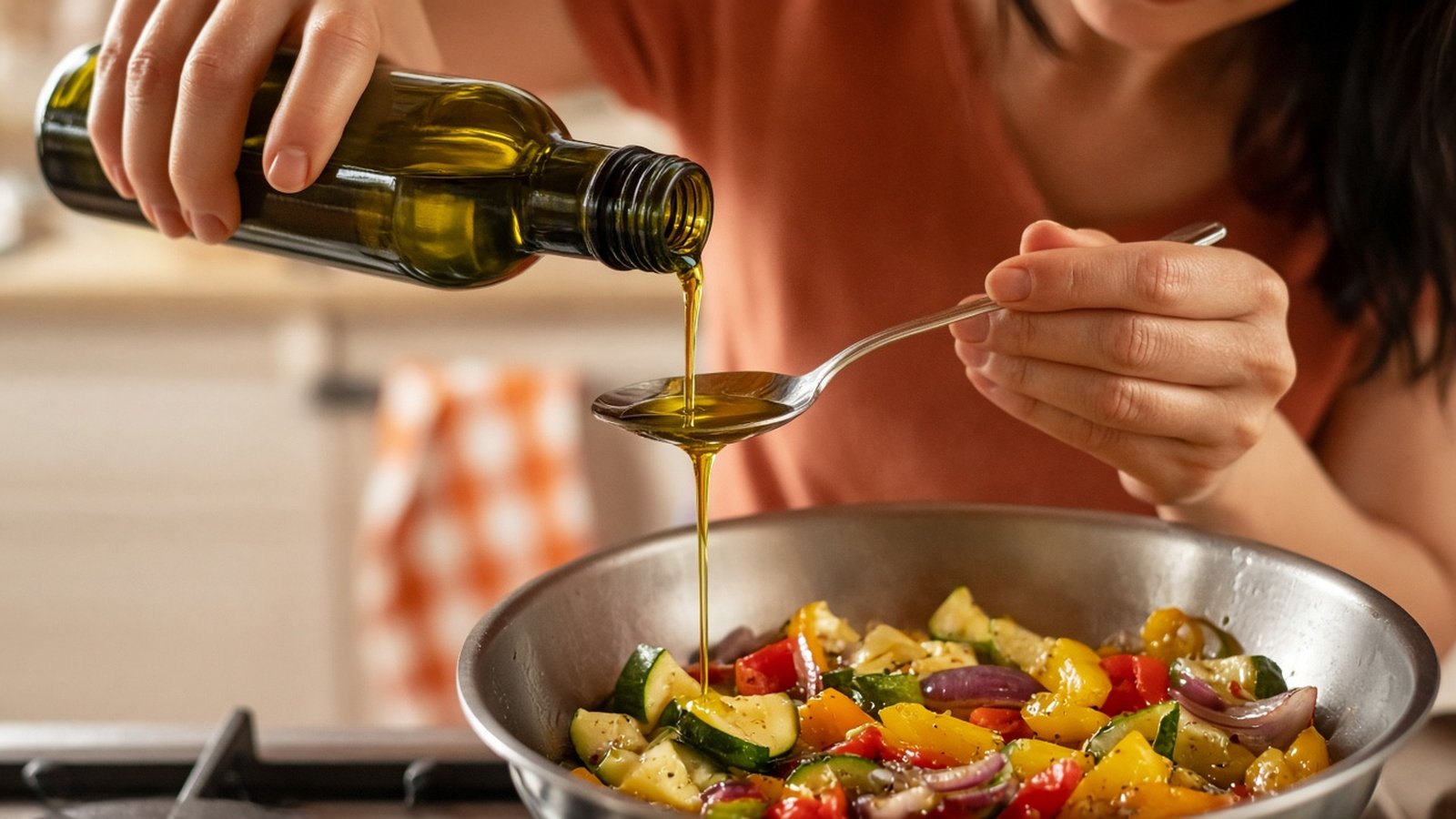
A drizzle of olive oil every day: what does the research really say?
TLDR
- In large American cohort studies, a little more than half a tablespoon of olive oil a day was linked to a lower risk of death. That’s an association, not proof of cause and effect.
- Most of the benefit seems to come from what olive oil replaces: butter, margarine, mayonnaise or dairy fat.
- In the Spanish PREDIMED trial, a Mediterranean diet with extra virgin olive oil led to fewer cardiovascular events than low-fat advice.
- Cooking over medium heat with extra virgin olive oil is fine. Just watch the amount: one tablespoon is about 120 kcal.
At our place, butter went into the pan by default for years. Steak, eggs, vegetables: everything in a knob of butter. Olive oil was in the cupboard, but mostly for salads. Until I read how much research has actually been done on olive oil. I wanted to know what holds up and what’s marketing.
What the big studies found
In 2022, Marta Guasch-Ferré and colleagues at Harvard published an analysis of more than 90,000 American nurses and health professionals, followed for almost thirty years. Those who used more than half a tablespoon of olive oil a day were about 19 percent less likely to die during that period than those who rarely or never used it.
I found another detail even more interesting. When the researchers calculated what happens if you replace about 10 grams a day of butter, margarine, mayonnaise or dairy fat with olive oil, the estimated risk dropped every time. So it’s not about an extra drizzle on top of everything else, but about a swap.
One caveat: this is observational research. People who use a lot of olive oil often also eat more vegetables and smoke less. The researchers adjusted for that, but you can never rule it out completely.
PREDIMED: a real trial
Stronger evidence comes from Spain. In the PREDIMED study, more than 7,000 adults at increased cardiovascular risk followed either a Mediterranean diet with extra virgin olive oil, a Mediterranean diet with nuts, or advice to eat low-fat. After a few years, both Mediterranean groups had about 30 percent fewer serious cardiovascular events. The study was criticised over its randomisation, then reanalysed and republished in 2018. The conclusion largely held.
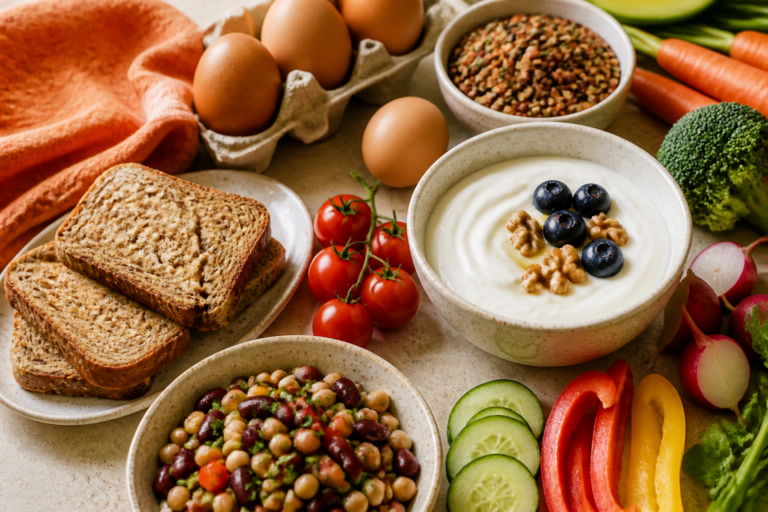
Important: this was a whole eating pattern, with plenty of vegetables, legumes and fish. Olive oil was just one part of it. I wrote about that in my piece on green Mediterranean eating, and the nut arm comes up in a handful of nuts a day.
Extra virgin or regular olive oil?
Extra virgin olive oil is cold-pressed and contains more polyphenols, plant compounds that largely disappear in refined oil. EFSA approved a health claim for olive oil polyphenols, but only for oil with at least 5 mg of hydroxytyrosol and related compounds per 20 grams. Not every bottle reaches that, and it’s rarely on the label.
My takeaway: choose extra virgin, and don’t get fixated on pricey “high-polyphenol” labels.
Can you cook with it?
Yes. Extra virgin olive oil is more heat-stable than often thought, thanks to those antioxidants. For vegetables, fish or an omelette over medium heat, it’s now my default. For deep-frying it’s mostly an expensive choice, and a chip is still a chip.
Engy’s practical tip
- First replace the butter in the pan and the mayonnaise on your plate; don’t just add extra oil.
- Measure with a tablespoon for a week. Most of us easily pour twice what we think.
- Buy a dark bottle or tin, check the harvest date and store it somewhere cool and dark. Use an opened bottle within a few months.
- Pair it with oily fish and little processed meat. See also my piece on processed meats.
This article is for information only and is not medical advice. If you have high cholesterol or follow a specific diet, talk to your doctor or dietitian.
Sources (selection)
- Guasch-Ferré M et al. (2022). Consumption of olive oil and risk of total and cause-specific mortality among U.S. adults. Journal of the American College of Cardiology, 79(2), 101–112.
- Estruch R et al. (2018). Primary prevention of cardiovascular disease with a Mediterranean diet supplemented with extra-virgin olive oil or nuts. New England Journal of Medicine, 378(25), e34.
- EFSA NDA Panel (2011). Scientific opinion on the substantiation of health claims related to polyphenols in olive. EFSA Journal, 9(4), 2033.




2 Comments