Visible in the dark: why a driver only sees you at 20 metres in dark clothes
General information, not medical or legal advice. For the exact traffic rules, the Belgian highway code applies.
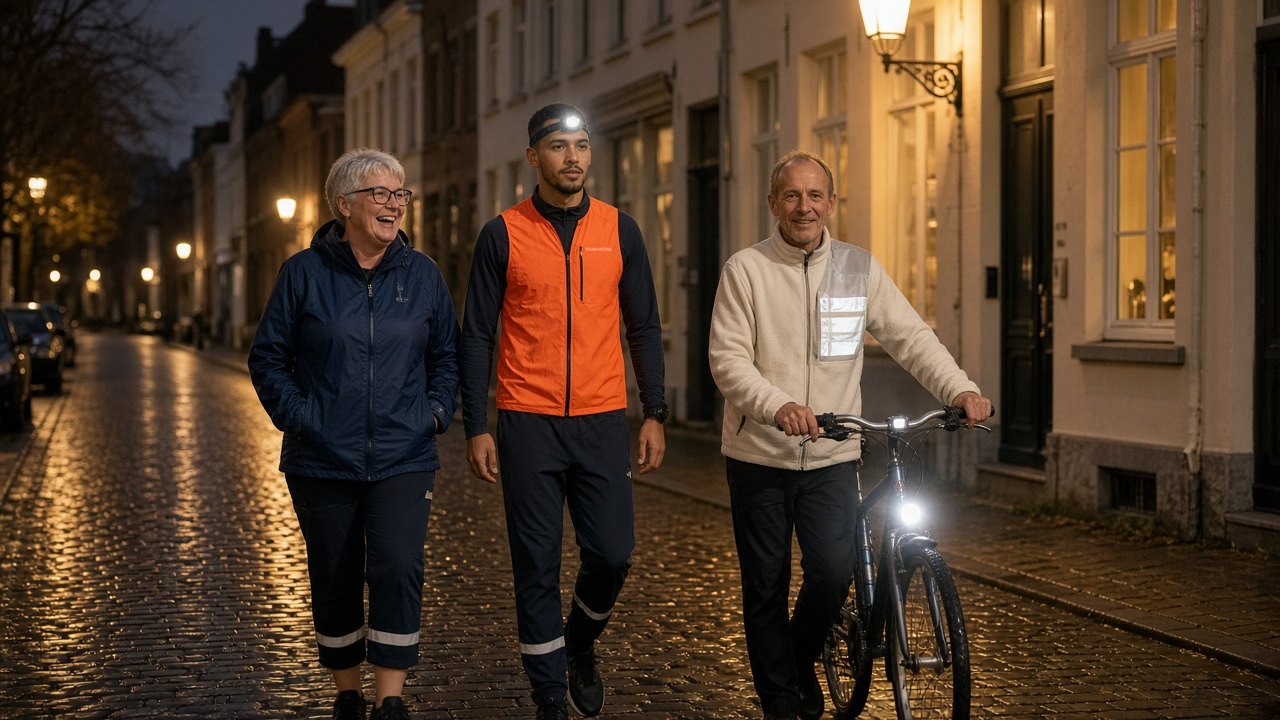
After the switch to winter time, you walk, run or cycle in the dark more often in the evening. What matters most then is being visible in the dark. According to Vias institute, the Belgian road safety knowledge centre, drivers only see you in dark clothes from 20 metres away. With reflectors and lights you are noticed much earlier.
What the new Vias figures show
Vias institute looked at accidents in Belgium from 2016 to 2025. From October to November, the number of injury accidents involving pedestrians in the evening rush hour rises by 39 percent. The number of accidents with at least one person seriously injured or killed even rises by 73 percent.
For cyclists, November sees about four times as many accidents at dusk and dawn as June, for example. Sunrise and sunset then coincide with rush hours. That is no reason to stay indoors, but it is a reason to stand out.
Visible in the dark: 150 metres versus 20 metres
In reflective clothing you are noticed up to 150 metres away, according to Vias. In dark clothing, drivers only see you from 20 metres. Vias immediately adds that a car at 50 kilometres per hour on a dry road needs at least 26 metres to come to a stop.
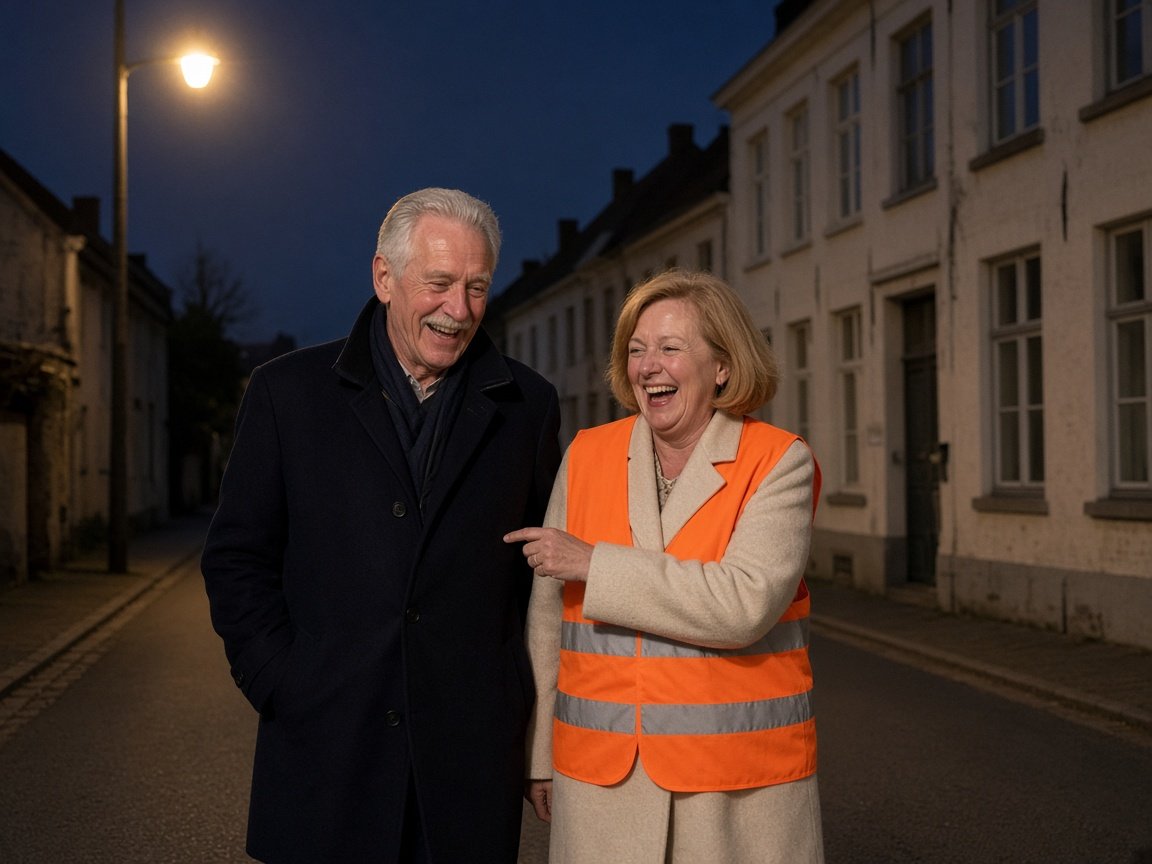
According to Wegcode.be, a Belgian website that explains the traffic rules, drivers of cars and lorries mainly look at the zone lit by their own headlights. Their eyes adapt to that strong light, so they no longer see grey tones outside the beams. As a result, a cyclist without lights is not noticed in time.
What research says about reflectors and lights
A 2006 Cochrane systematic review, an overview of all available studies, brings together 39 trials on how drivers respond to aids that make pedestrians and cyclists more visible. Fluorescent colours in yellow, red and orange help during the day. At night, lamps, flashing lights and retroreflective material, which bounces light back towards the driver, mean you are noticed and recognised sooner. The same goes for a so-called biomotion setup: reflectors on moving joints such as ankles and knees, so a driver recognises the movement of a human being. Whether these aids also prevent accidents is unknown according to the review, because the authors found no studies on that.
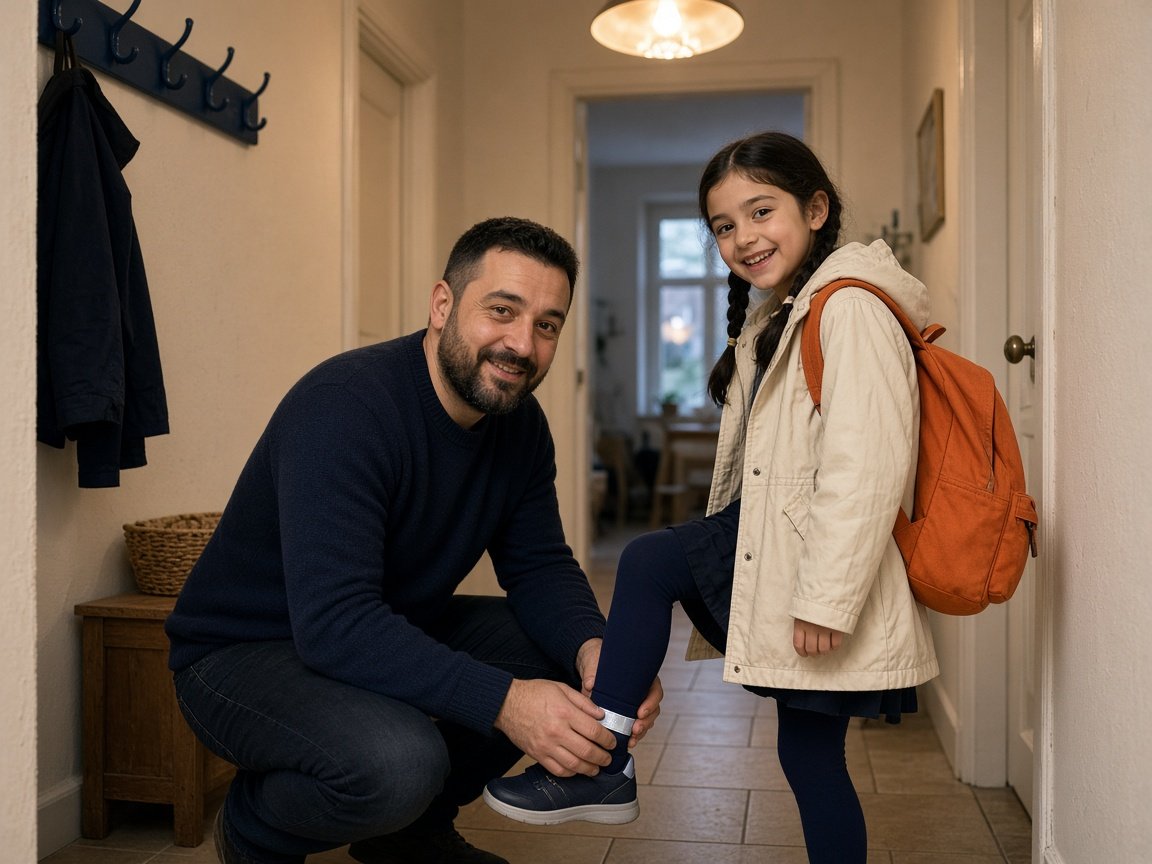
A 2012 Australian experiment on a closed course fits with this. Twelve younger and twelve older drivers drive around at night and indicate when they recognise a cyclist pedalling on the spot. With a reflective vest plus reflectors on ankles and knees, they recognise him at a clearly greater distance than with the vest alone or in black clothing. Older drivers respond less often and at a shorter distance than younger ones.
A steady or flashing lamp on the handlebars does not make the cyclist easier to recognise in that trial. Cyclists with a lamp may therefore overestimate their own visibility, the researchers warn. Lights are still mandatory at night, so combine them with reflection.
You still see few high-visibility vests in Belgium. For a Vias observational study, observers counted cyclists by the roadside during the day in May and June 2024: 6.4 percent wore a high-visibility vest, 5.1 percent in Flanders. Because the counts took place in daylight, the researchers say this figure probably underestimates use in the dark.
What the highway code says about bike lights
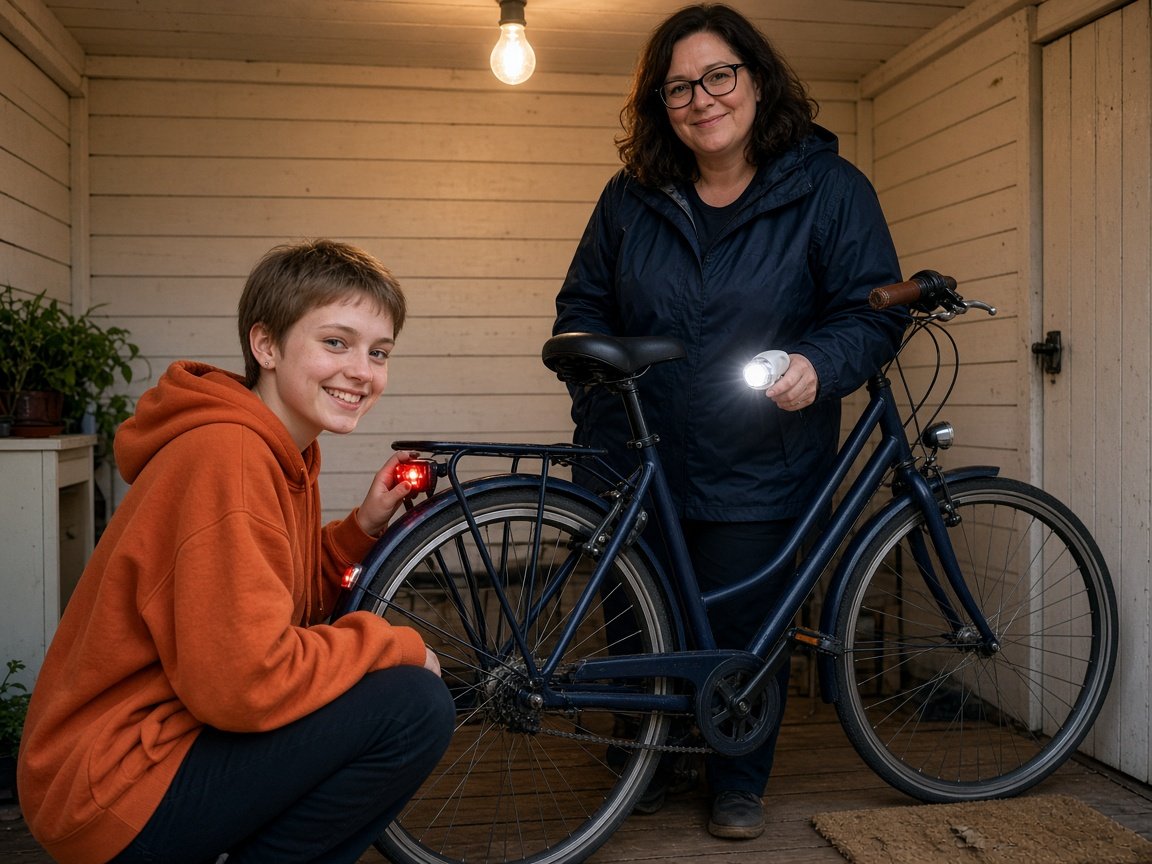
On a bike, lights are mandatory according to Wegcode.be at night and whenever you cannot see clearly up to about 200 metres, for example in fog. They may be steady or flashing, but not dazzling, and you may also wear them yourself, as long as a backpack or coat does not hide them. At the front the light is white or yellow, at the rear red.
How to stay visible on your evening walk or run
- Wear reflectors on your ankles and knees, so drivers see your joints moving.
- Take a small light that you wear yourself.
- Choose a fluorescent rain jacket or backpack cover, and combine fluorescent colours with reflection in the evening.
- Use a pedestrian crossing if there is one within 20 metres, because according to Vias the highway code requires it.
- Only cross when you are sure the driver has stopped, because headlights often make eye contact difficult.
That way you can keep exercising outdoors in autumn and winter, and your evening walk simply counts towards your daily steps.
Sources
- Vias institute. Aantal ernstige ongevallen met voetgangers stijgt met 73% na de overgang naar wintertijd. Press release (in Dutch), 22 October 2026.
- Moreau N, Vervoort M, Boets S, Silverans P, Verwee I. Het dragen van een fietshelm, een fluohesje en andere fluorescerende uitrusting op de fiets. Welke prevalenties in België? Vias institute, report 2026-R-02-NL, 2026 (observational study, in Dutch).
- Kwan I, Mapstone J. Interventions for increasing pedestrian and cyclist visibility for the prevention of death and injuries. Cochrane Database of Systematic Reviews, 2006 (systematic review).
- Wood JM, Tyrrell RA, Marszalek R, Lacherez P, Carberry T, Chu BS. Using reflective clothing to enhance the conspicuity of bicyclists at night. Accident Analysis & Prevention, 2012 (experimental study).
- Wegcode.be. Fietsers en de wegcode (cyclists and the highway code, in Dutch). Accessed in October 2026.