Oral health as you get older: how to look after your teeth and gums
General information, not medical advice. If you have problems with your teeth or gums, talk to your dentist.
Your oral health depends on what you do every evening and on how often you see the dentist. Here is how to brush well, what bleeding gums mean and how the Belgian dental care pathway works.
Brushing and cleaning between your teeth
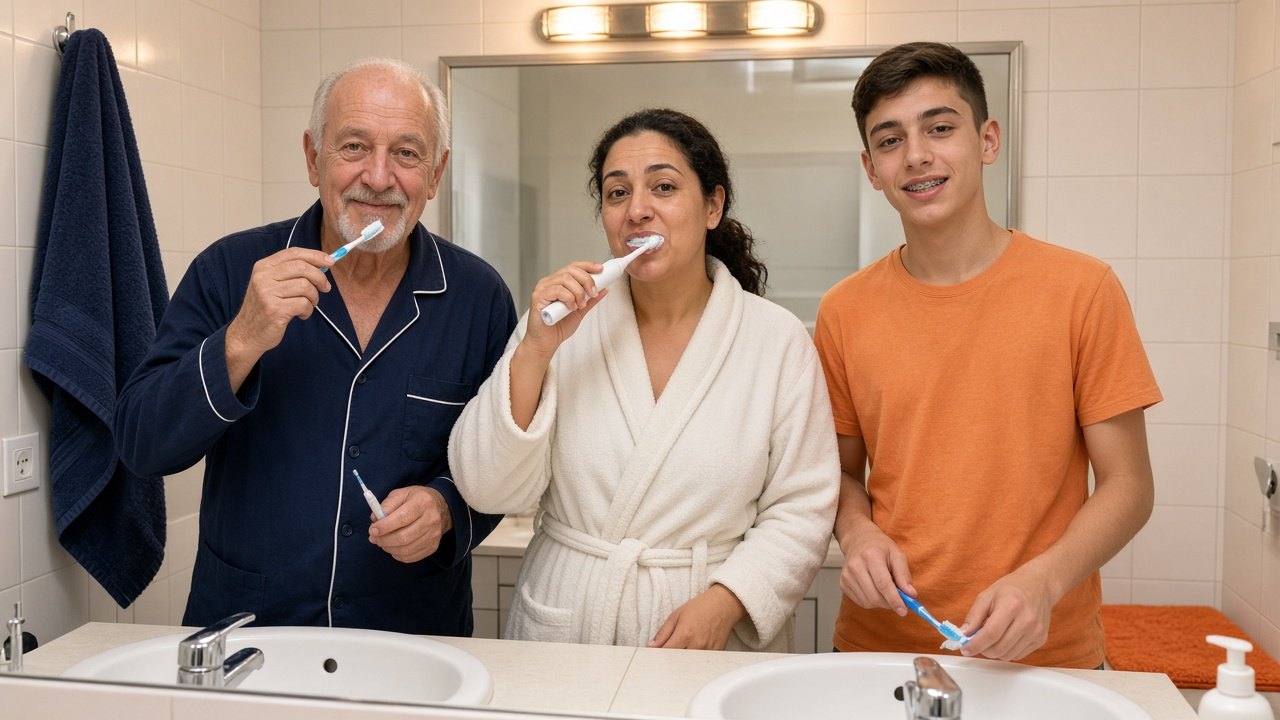
Gezonde Mond, the Flemish Institute for Oral Health, advises brushing at least twice a day for two minutes, and in any case once before going to bed. After that, you eat or drink nothing except water. Also clean between your teeth at least once a day, preferably before brushing, because plaque (the sticky layer full of bacteria) also builds up where your brush cannot reach.
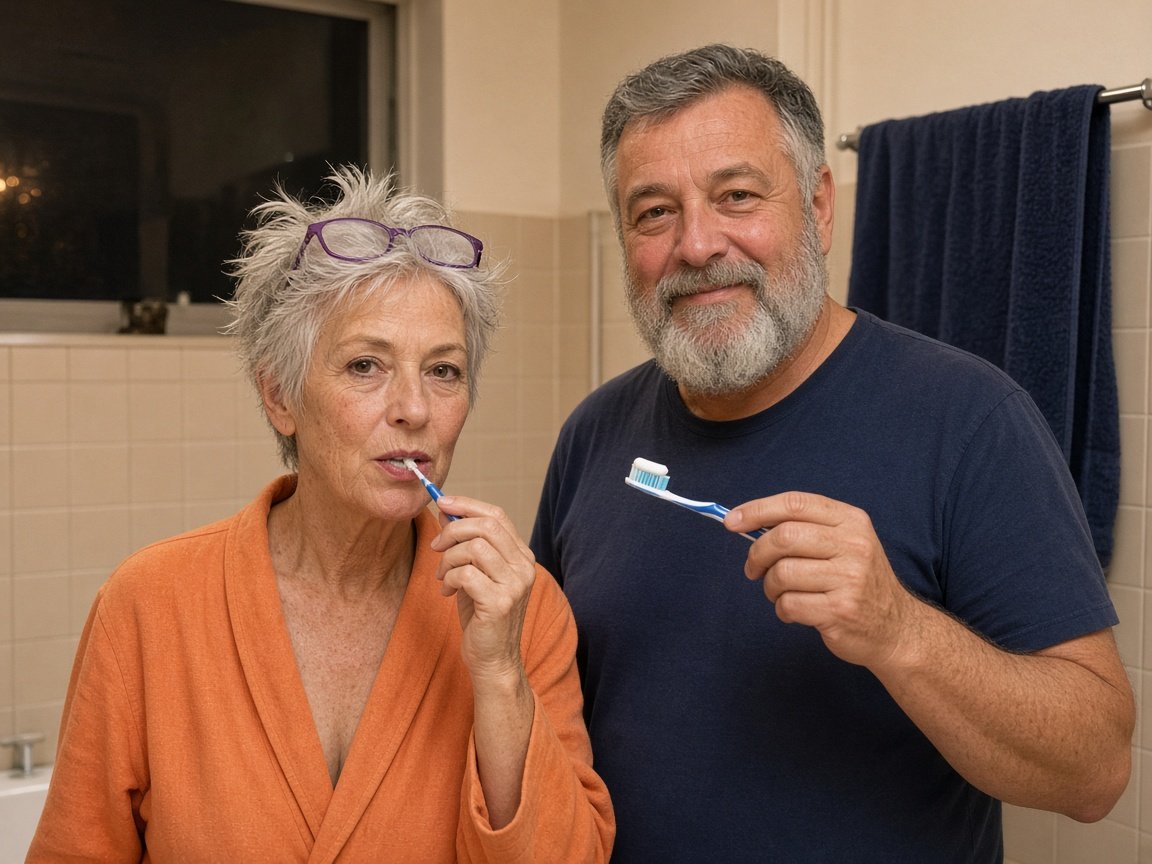
Use a fluoride toothpaste, which gives extra protection against tooth decay. From the age of 6, Gezonde Mond recommends 1450 ppm fluoride (parts per million) and a strip of 1 to 2 centimetres. After brushing, spit out the excess foam and do not rinse with water or mouthwash.
Choose a brush with a small head and fine, soft bristles, and replace it as soon as the bristles no longer stand neatly parallel. An electric toothbrush removes plaque more efficiently, but with a good brushing technique a manual brush also removes enough plaque.
Bleeding gums are a signal
Healthy gums are pink and do not bleed when you brush. With gingivitis, an inflammation of the gums, they become redder, swell and can bleed, including while brushing. It rarely if ever hurts. So do not stop brushing, but brush thoroughly twice a day for at least a week. Once your teeth are free of plaque, the bleeding usually stops within two weeks, according to Gezonde Mond.
Without treatment, the inflammation can spread to the tissues around the tooth and even the jawbone. This is called periodontitis. According to the World Health Organization (WHO), the gum can then come away from the tooth and bone, so that teeth become loose and sometimes fall out. Poor oral hygiene and tobacco use are the main risk factors, the WHO says.
How often you eat and drink matters too
Gezonde Mond recommends no more than 5 meals a day. Soft drinks also count as a meal moment, including light or zero versions, and between meals it is best to drink only water. If you cut back on sugary drinks, it is easier to keep that number low. About an hour after eating or drinking, the enamel, the hard outer layer of your teeth, can recover. After fruit juice or a soft drink, wait at least 30 minutes before brushing.
Oral health and your general health
According to Gezonde Mond, diabetes and periodontitis affect each other: periodontitis makes blood sugar harder to control. People with periodontitis are more likely to have cardiovascular problems. Poor oral health is also a risk factor for pneumonia caused by inhaling food or saliva, especially among residents of care homes, and there is growing evidence of a higher risk of dementia. For heart problems and dementia, this is a higher risk, not a certainty. Many types of medication also affect saliva production, and too little saliva makes tooth decay progress faster. Gezonde Mond calls the mouth a gateway to the rest of the body, so it also counts towards your years in good health.
Going to the dentist in Belgium
In 2024, 42% of Belgians did not go to the dentist, reports the Belgian health insurer Independent Health Insurance Funds, based on data from the InterMutualistic Agency. Between 2022 and 2024, 58% went regularly, compared with 50% ten years earlier. Gezonde Mond recommends a check-up 1 to 2 times a year with a dentist or dental hygienist.
The dental care pathway of RIZIV-INAMI, Belgium’s National Institute for Health and Disability Insurance, rewards regular visits. From the age of 19 you join it automatically, and you get better reimbursement for most dental care if you received reimbursed dental care in the previous calendar year. For consultations, preventive care and X-rays, among others, it makes no difference. The rule that halved the reimbursement for scaling after a year without reimbursed dental care was abolished on 1 June 2026.
Caring for dentures
WHO estimates that 23% of people aged 60 or older worldwide have lost all their teeth. If you have dentures, clean them with a special denture brush and neutral liquid soap, not with toothpaste, which makes the acrylic rougher. In the evening, before going to bed, take the dentures out of your mouth.
References
- Gezonde Mond. Mondhygiëne (in Dutch). Flemish Institute for Oral Health, accessed October 2026.
- Gezonde Mond. Meest voorkomende mondaandoeningen (in Dutch). Flemish Institute for Oral Health, accessed October 2026.
- Gezonde Mond. Mondvriendelijke voeding (in Dutch). Flemish Institute for Oral Health, accessed October 2026.
- Gezonde Mond. Belang van mondzorg (in Dutch). Flemish Institute for Oral Health, accessed October 2026.
- RIZIV. Het mondzorgtraject: betere terugbetaling bij regelmatig tandartsbezoek (in Dutch; also available in French). National Institute for Health and Disability Insurance, accessed October 2026.
- Onafhankelijke Ziekenfondsen. Mondgezondheid in België: duidelijke vooruitgang, maar nog steeds ongelijkheid (in Dutch). News item, 23 March 2026.
- World Health Organization (WHO). Oral health. Fact sheet, 17 March 2025.