Fasted training with 16:8: what works and what does not?
TLDR
- An easy morning run or zone 2 (an easy endurance pace at which you can still talk comfortably) fasted is fine for most healthy people.
- Heavy intervals and strength training usually go better with something in your stomach. Plan them inside your eating window.
- Fasted training burns a bit more fat during the session, but over weeks you do not see clear extra fat loss.
- Open your eating window with a solid protein portion, especially after training.
I have been doing 16:8 intermittent fasting for about a month: I eat roughly between 12 and 20, outside that water, coffee or tea. It suits me, I snack less in the evening and my day feels calmer. But soon the question: can I still train in the morning if I only eat at noon? I dug into the literature and tried it myself. This is what I keep.
What happens when you train fasted
After a night without food, liver glycogen stores are a bit lower and insulin is low. The body then pulls a bit more energy from fat. A meta-analysis by Vieira and colleagues (2016) confirms that: in aerobic exercise in the fasted state, fat oxidation during the session is higher than after a meal.
Sounds good, but that effect during training does not simply translate into more fat loss over weeks. In a study by Schoenfeld and colleagues (2014), two groups lost the same amount of fat whether they did cardio fasted or after a shake, as long as total energy intake was equal. Fasted training is therefore not a secret fat burner. It is simply a practical choice that fits your schedule — or not.
Easy and long: fine fasted
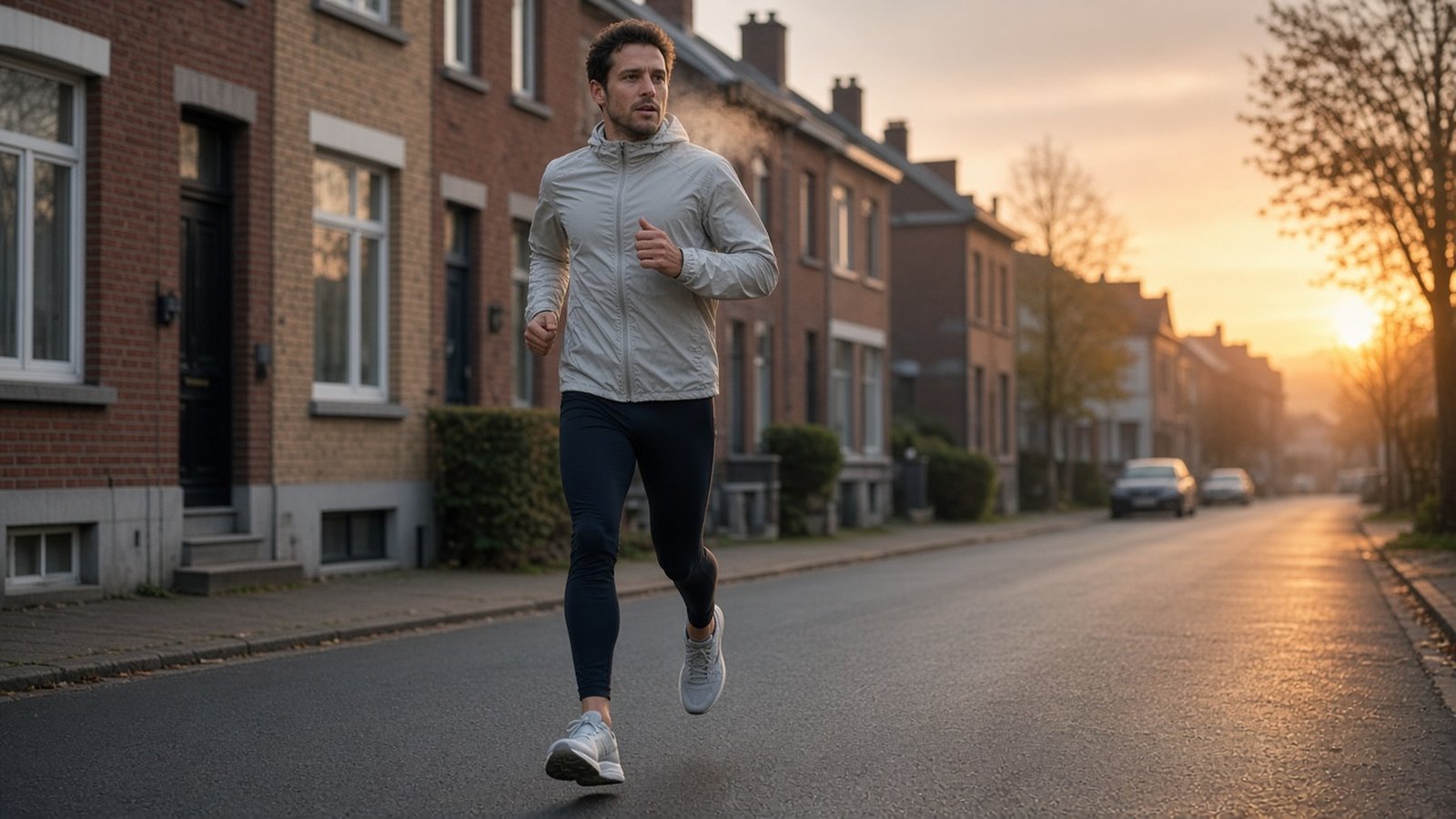
An easy run, a bike ride or a walk in zone 2 leans heavily on fat as fuel. You barely need fast carbs for that. My experience: 40 to 60 minutes of easy running before work goes smoothly, as long as I drink a large glass of water first. On hydration before coffee I already wrote earlier.
What I notice: the first ten minutes feel a bit stiff, then it goes. If the session lasts longer than an hour and a half, or you get dizzy or light-headed, fasted is not for you. Then shift the session later or eat something small first.
Intense or heavy: better after eating
For intervals, sprints or heavy strength training it is different. That effort runs mainly on glycogen. A meta-analysis by Aird and colleagues (2018) found that performance in longer endurance efforts was better after a meal than fasted. For short, intense efforts the difference was less clear, but fasted training did not help in any case.
My fix is simple: strength and intervals I plan in the afternoon or early evening, when I already have one or two meals in. That fits my window and I have enough fuel. On eating around training there is more in a separate piece.
And coffee?
A cup of black coffee does not really break your fast and can make a fasted run feel lighter. Stick to one or two cups and skip sugary pre-workout drinks. Those do break the fast and are not needed for an easy session anyway.
The first eating moment counts
If you train fasted in the morning, it can be hours until the first meal. That is no disaster, but I make sure that first meal is solid, with 30 to 40 grams of protein: eggs, Greek yoghurt or quark, bread with chicken or cheese, legumes. The ISSN position stand on protein and exercise (Jäger and colleagues, 2017) cites roughly 20 to 40 grams per meal, spread across the day, as a good guideline for people who train.
In an eight-hour window that works with two or three eating moments. If with 16:8 you struggle to hit total protein, a slightly wider window is also fine. A 12:12 window already gives much of the benefit of stable meal times.
Practical Engy tip
Start with one easy fasted session per week and see how you feel, during and after. Note energy, hunger and sleep. If it goes well, build carefully. If you have diabetes, use medication that affects blood sugar, or are pregnant, talk to your doctor first.
Recommendations
- Easy zone 2 fasted: fine, with water beforehand.
- Strength and intervals: plan inside the eating window.
- First meal: 30 to 40 g protein.
- Do not expect extra fat loss — expect ease and structure.
Sources (selection)
- Vieira AF et al. (2016). Effects of aerobic exercise performed in fasted v. fed state on fat and carbohydrate metabolism in adults: a systematic review and meta-analysis. British Journal of Nutrition, 116(7), 1153–1164.
- Aird TP, Davies RW, Carson BP (2018). Effects of fasted vs fed-state exercise on performance and post-exercise metabolism: a systematic review and meta-analysis. Scandinavian Journal of Medicine & Science in Sports, 28(5), 1476–1493.
- Schoenfeld BJ et al. (2014). Body composition changes associated with fasted versus non-fasted aerobic exercise. Journal of the International Society of Sports Nutrition, 11, 54.
- Jäger R et al. (2017). International Society of Sports Nutrition position stand: protein and exercise. Journal of the International Society of Sports Nutrition, 14, 20.