
Processed meats and training: limits without panic
TLDR
- Charcuterie (salami, bacon, ham, sausage) is processed meat — more often = more risk context, not “one sandwich = dramatic.”
- Yes: portion- and frequency awareness in an active week; food-first with legumes, fish, poultry, eggs.
- Not: panic after every BBQ, or “I train so unlimited is fine.”
- Practical: see green Mediterranean for athletes and whole grains & legumes.
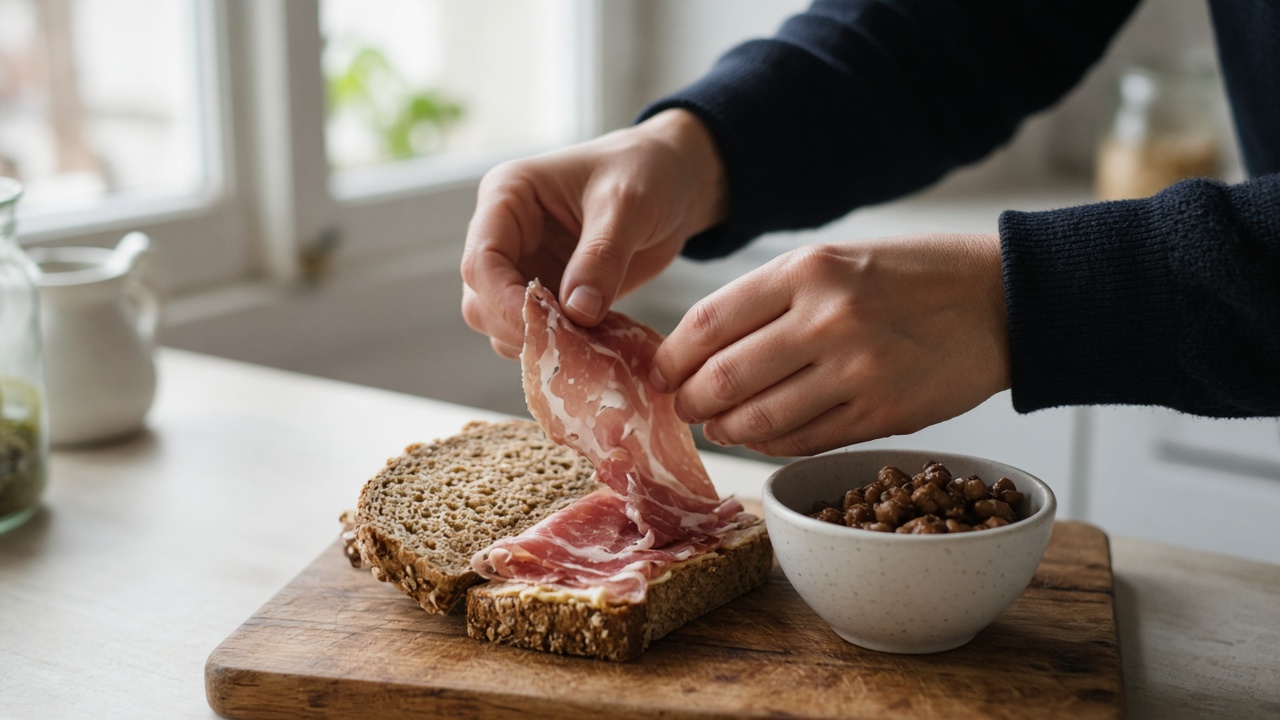
I like a solid topped sandwich after a morning ride. Relativise: charcuterie is comfort food and a category where guidelines have said “less often” for years. Not because eating should be boring — because processed meat scores structurally differently from a piece of chicken or lentils. Literacy without guilt.
What “processed meat” means here
Think products that are salted, smoked, cured or otherwise preserved: salami, bacon, ham, hot dogs, a lot of sausage. Organisations such as WCRF and national dietary frameworks (Superior Health Council/Sciensano) link higher intake to higher long-term risks. That is dose- and frequency framing — not a moral verdict on your Sunday brunch.
For recreational athletes the trap is: “I burn it off anyway.” Training protects a lot, but it does not replace a dietary pattern. See also the junk-food exercise-away myth.
When to really watch
- Daily charcuterie as default topping: then “now and then” quietly becomes “always.”
- Large portions + little veg/legumes beside them: the plate misses fibre and plant protein.
- Race week ≠ free pass: recovery needs quality, not only calories — see eating around training.
- You already stack red meat + alcohol + little sleep: then charcuterie is one lever among several.
When to relativise
- One slice on a wholegrain sandwich with tomato: context > panic.
- Party/BBQ/travel: enjoy, and make the rest of the week food-first.
- You already have a legume/fish pattern: charcuterie as an exception fits faster.
- Protein need: get the base from dairy, eggs, poultry, legumes, fish — see protein needs for active adults.
Practical Engy approach
My default: charcuterie is “sometimes,” not “standard breakfast topping.” I rotate with egg, cheese, hummus, mackerel or leftover chicken. After hard training I pick a real meal sooner than a sausage stash — not from dogma, because recovery benefits from more than salt and fat. Building legumes stays the quiet winner; see building up legumes.
Labels help: “smoked,” “poached,” “dry sausage” — not every meat product is equally processed, but the category stays recognisable. I mainly look at habit: is bacon on the plate every morning, or weekend topping? That distinction is more practical than a calorie app.
For strength or endurance weeks protein still matters; charcuterie is an inefficient route once you also take salt, nitrite context and saturated fat into account. Prefer a pot of cottage cheese, a tin of tuna or lentil stew — boring, but scalable. Anyone wanting plant-forward without dogma finds support in the Mediterranean frame on Engy.
Practical Engy tip
Two-week experiment: note how many days you eat charcuterie. The goal need not be zero — just “not every day.” Replace three days with a legume spread, egg or smoked mackerel. Do not measure guilt; measure habit.
Recommendations in bullets
- Processed meat = frequency and portion issue, not single-bite drama.
- “I train” does not replace a food-first pattern.
- Charcuterie as exception; protein base elsewhere.
- Link to Mediterranean/legumes and the junk-food myth on Engy.
Sources (selection)
- WCRF / IARC — processed meat and cancer risk framing (dose/frequency; no panic copy).
- Superior Health Council / Sciensano — Belgian dietary guidelines (moderate red/processed meat).
- Engy: groen-mediterraan-voor-sporters, volkoren-peulvruchten-actieve-week, eiwitbehoefte-actieve-volwassenen, junkfood-wegsporten-mythe.






One Comment