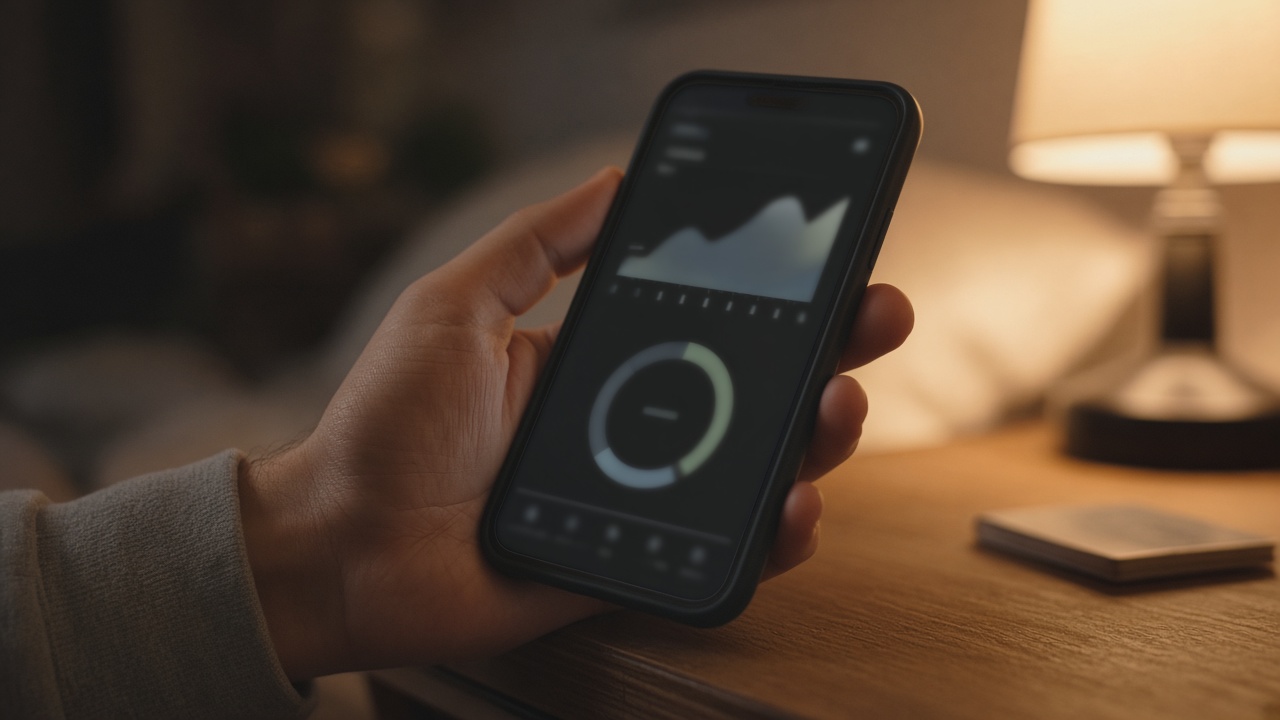
Orthosomnia: when your sleep app steals your night
TLDR
- Orthosomnia = worrying over “perfect” sleep data from apps/wearables — ironically often sleeping worse.
- Useful: trends over weeks, rough total sleep time, and linking to how you feel.
- Not: overnight scores as a training decision, or panic over one “bad” night.
- Practical: see also sleep as a recovery checklist and screen time & sleep.
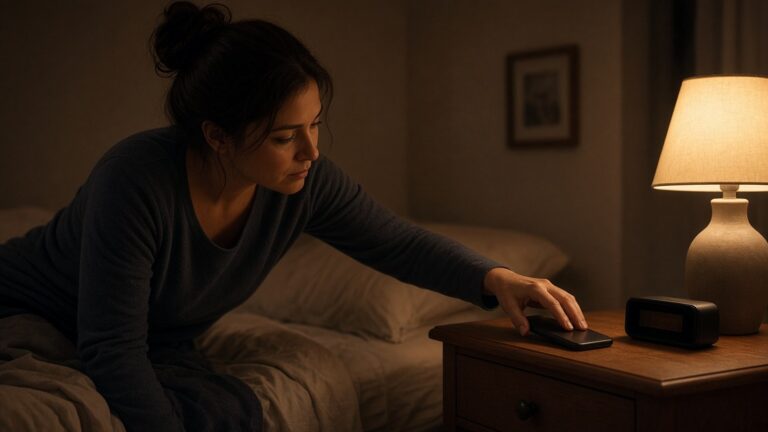
I know the ritual: alarm, coffee, and straight to the sleep score. 72. “Bad night.” The day already starts with a verdict — while I feel fine. Relativising helps. Wearables measure movement and heart rate; they guess sleep stages. Handy as a trend, dangerous as a report card. Literacy first, app second.
What orthosomnia means here
The term came from tracker case reports: people chasing a perfect score so hard that rumination undercuts sleep itself. It is not an official DSM label — it is a recognisable pattern. Consumer devices are decent for total sleep duration, weaker for deep/REM stages. One low night says little; a week of short nights or midnight scrolling says more.
For active people the trap is double: readiness scores that cancel training on an inaccurate estimate, or pushing through when the body truly asks for rest. Data without context is not coaching.
When the app does help
- Trends over 2–4 weeks: structurally too short, or weekend catch-ups — see catching up sleep debt.
- Linking patterns: late eating, alcohol, late caffeine — see caffeine later vs pre-workout and evening meals & recovery.
- You treat scores as a hypothesis, not a verdict: “I feel heavy + three short nights” ≠ “score 68, so I am broken.”
- You check at most once in the morning, not at midnight while lying awake.
When to relativise (or switch off)
- You ruminate because of the score: then the measurement is part of the problem — sleep tracking off, steps can stay.
- You adjust every session to one night: readiness without feel/context is too sharp.
- You chase 90+ every night: perfection is not a recovery strategy.
- Supplements before causes: rhythm, light, caffeine, screens first — see sleep supplements: cause first.
Practical Engy approach
My default: fixed bed/wake times matter more than a fancy stage chart. I sometimes look at a weekly average, never at an overnight percentage as a moral score. Do I feel alert and is training planned? Then I train — unless I truly feel sick or broken. Signals of too little recovery stay human: mood, motivation, resting-heart-rate trend, performance — not only the app. See signals of too little recovery.
Practical Engy tip
One-week experiment: switch sleep tracking off or only check the weekly overview on Sunday morning. Note three things on paper: bedtime, wake time, how fresh you felt at 11. Often that is enough to see whether your rhythm or your app is the problem.
Recommendations in bullets
- Orthosomnia = data anxiety that can worsen sleep; spot it early.
- Use trends and feel; distrust overnight “report cards.”
- Fixed rhythm > perfect score; screens and caffeine first.
- Decide training on context, not one readiness number.
- Link to the sleep checklist, screen time and sleep-supplement literacy on Engy.
Sources (selection)
- Baron et al. — orthosomnia / sleep tracker obsession (Journal of Clinical Sleep Medicine, 2017).
- VRT NWS / Flemish sleep-clinic context (incl. Declercq) — wearables vs sleep quality (frame, do not copy).
- AASM / sleep medicine literacy — consumer trackers ≠ polysomnography.
- Engy: slaap-als-recovery-checklist, schermtijd-slaap-herstel, slaapschuld-inhalen-limieten, slaapsupplementen-oorzaak-eerst.