Candles and indoor air: why a candle flickering in a draught mainly gives off soot
General information, not medical advice. If you have asthma or another lung disease and notice symptoms with candles or incense, discuss this with your GP.
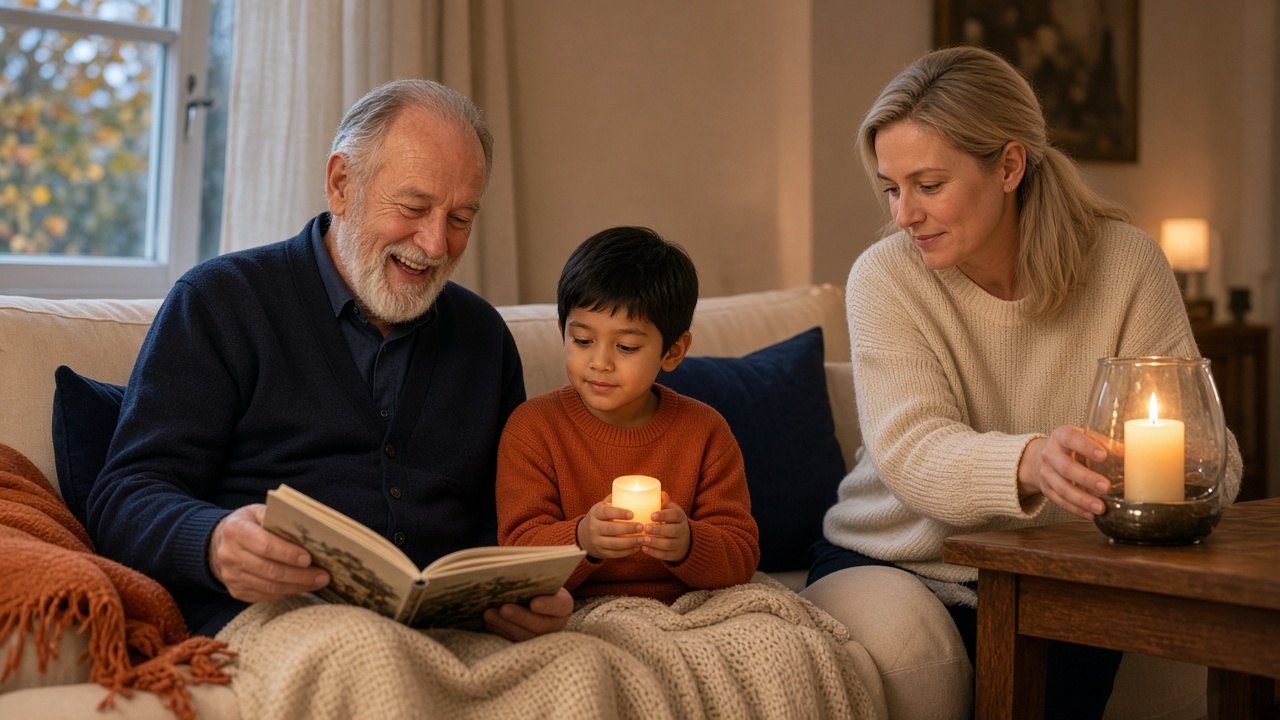
For many families a candle belongs to dark autumn evenings, but candles and indoor air are more connected than you might think. Belgian health services advise avoiding or limiting candles indoors. Laboratory research also shows that a candle flickering in a draught mainly emits soot. With airing, a good spot and possibly LED candles, you limit fine particulate matter, the very small particles in the air that you breathe deep into your lungs.
What Belgian services say about candles and indoor air
Belgian advice points the same way everywhere. The Flemish government’s Departement Zorg advises on its page about particulate matter not to use tea lights, candles, scent sticks or incense. The 2024 Flemish brochure Gezonde binnenlucht (healthy indoor air) asks you to avoid air fresheners, scented or plain candles and incense, because they release harmful substances into the air. Sciensano, the Belgian scientific health institute, advises not to burn scented candles and incense at home. The Belgian FPS Public Health lists scented candles and incense among the sources of substances that can lead to irritation, allergies, asthma or more serious respiratory conditions.
Departement Zorg also gives a figure for particulate matter from all sources combined, so not for candles alone: a Flemish person loses on average 15 months of healthy life due to exposure to particulate matter. Long-term exposure affects the airways, blood vessels and heart. Children, including unborn children, older people and people with respiratory or cardiovascular disease are especially sensitive.
Why a flickering candle mainly produces soot
How much is released depends partly on how the candle burns. In a 2021 Swedish-Danish laboratory study, five types of pillar candles burn in a test chamber where the researchers deliberately make the airflow fluctuate. This creates what they call stressed burning: a candle that burns unevenly and flickers because of air movement, as in a draught.
For all candle types, the particle emissions then consist mainly of soot. Just above the flame, the researchers measure short, strong peaks of soot particles. The composition of the wax and wick strongly influences emissions of soot and fine particles. The study does not say which wax is better, only that the composition matters. The researchers conclude that you breathe in less pollution if you prevent flickering.
Another chamber study nuances the picture
A test chamber is not a living room, and the study does not measure how much you breathe in at home. A second chamber study from 2021 gives a calmer picture. In 24 experiments, 20 with scented candles and four with unscented candles, the calculated concentrations mostly stay well below the guidance values, the recommended limits for air quality. For nitrogen dioxide, acrolein and benzo(a)pyrene there are exceptions in some cases. The researchers point out that particularly high concentrations can arise when you use open flames indoors without ventilation.
Do note who helped design that study: it was designed together with candle manufacturers and fragrance houses, and one of the authors works for the European Candle Association, the European trade body of candle makers. You cannot draw firm conclusions for your own home from either study, but both point the same way as the Belgian advice: prevent flickering and make sure you have fresh air.
Habits for a safer candle evening
If you still light candles, a few habits limit emissions and the fire risk:

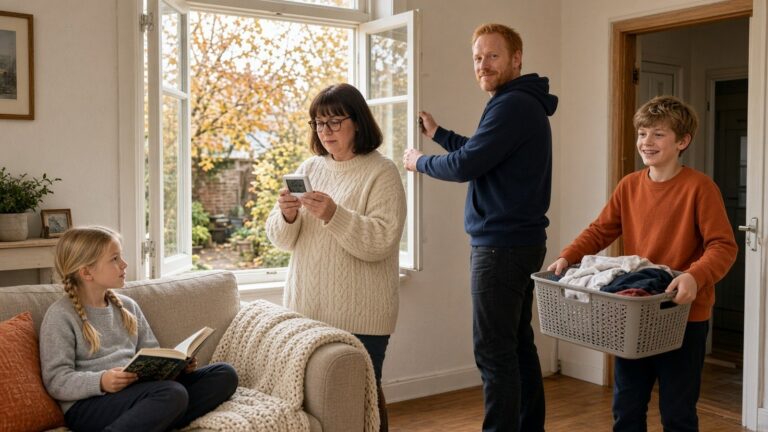
- Air your home twice a day for 15 minutes, morning and evening, as Sciensano advises.
- Keep the candle out of draughts, so it burns steadily without flickering.
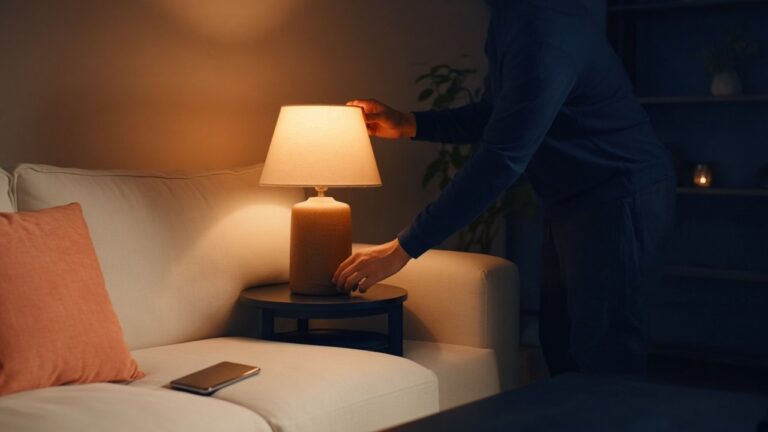
- Never leave candles unattended and put them out when you leave the room, especially before you go to sleep.
- Use a heat-resistant holder on a stable surface, away from flammable materials and out of reach of children and pets.
That last point matters especially now. Brandweer Westhoek, a Flemish fire service zone, points out that candles are one of the common causes of house fires. Halloween, St Martin’s Day, St Nicholas and Christmas often involve lighting candles, which increases the fire risk. The fire service calls flameless LED candles a much safer alternative, and without a flame nothing can flicker.
If a stove or fireplace also burns in your home, read how to place a CO detector in the heating season. And if you like exercising outdoors in autumn and winter during the day, you get a good dose of fresh air at the same time.
Sources
- Departement Zorg, Flemish government. Fijn stof (particulate matter, in Dutch). Accessed in October 2026.
- FPS Public Health. Invloed van de binnenluchtkwaliteit op je gezondheid (in Dutch). Accessed in October 2026.
- Sciensano. Luchtvervuiling binnenshuis: preventie (in Dutch). Accessed in October 2026.
- Departement Zorg, Flemish government. Gezonde binnenlucht (healthy indoor air, in Dutch). Brochure, 2024.
- Andersen C, Omelekhina Y, Rasmussen BB, e.a. Emissions of soot, PAHs, ultrafine particles, NOx, and other health relevant compounds from stressed burning of candles in indoor air. Indoor Air, 2021 (laboratory study).
- Salthammer T, Gu J, Wientzek S, Harrington R, Thomann S. Measurement and evaluation of gaseous and particulate emissions from burning scented and unscented candles. Environment International, 2021 (chamber study, co-designed with the candle industry).
- Brandweer Westhoek. Hoe kaarsen veilig te gebruiken (using candles safely, in Dutch). Accessed in October 2026.