How much water should you drink per day? What Belgian experts advise
General information, not medical advice. If you have symptoms, discuss them with your GP or dietitian.
How much water do you actually need in an ordinary week? Gezond Leven (the Flemish Institute for Healthy Living) puts tap water at the top of its food triangle, the Flemish food guide, and calls it the best drink to quench your thirst. According to the same page, adults lose about 2 to 3 litres of fluid each day. Food already supplies 1 to 1.5 litres. That is why Gezond Leven recommends drinking about 1 to 2 litres a day, including at least 1 litre of water if you also drink coffee or tea.
How much water should you drink? What Belgian health experts advise
Gezond Leven notes that the average person in Flanders drinks about 850 millilitres of water a day, roughly four glasses, and that only about one in three reaches the recommended minimum of 1 litre of water. Unsweetened coffee and tea count towards your fluid intake, but water remains the first choice. Gezond Leven’s 2025 summary of the advice from the Belgian Superior Health Council (SHC) gives 1 to 2 litres a day for water, tea and coffee combined, again with water as the preferred option.
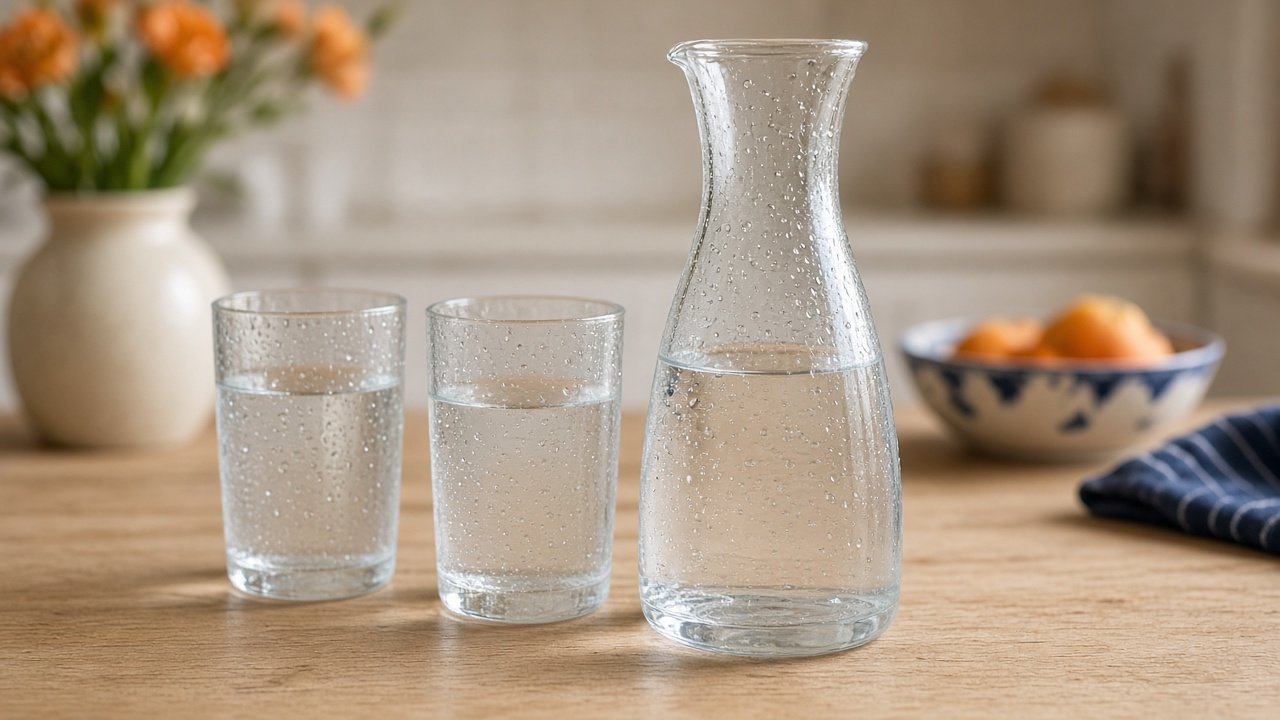
Gezond Leven suggests a simple check: the colour of your urine. Pale yellow usually means you are drinking enough; dark yellow is a sign to drink more often. According to Gezond Leven, you need extra fluid in hot weather, after heavy effort, during illness with fever or diarrhoea, during pregnancy or breastfeeding, and with a very fibre-rich diet.
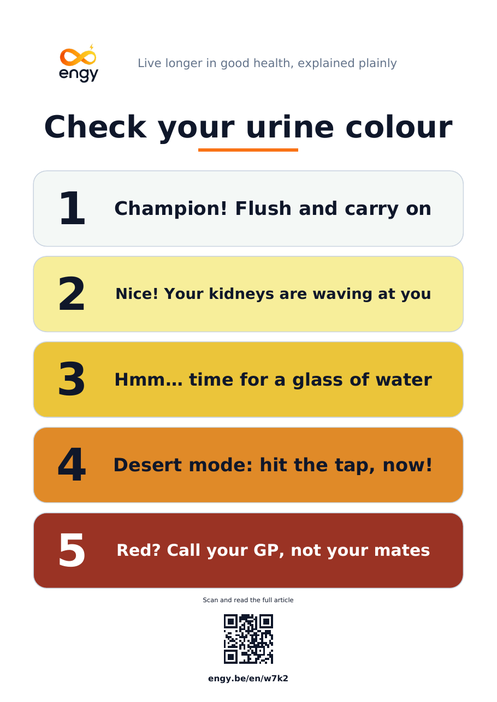
Free poster for your toilet
Check your urine colour in 5 seconds. Print it, stick it up, done.
⬇ Download the poster (A4, pdf)What does EFSA count?
The European Food Safety Authority (EFSA) works with total water intake: drinking water, all beverages and moisture from food. In its 2010 press release, EFSA considers 2.0 litres a day adequate for women and 2.5 litres for men, at moderate temperatures and moderate activity levels. That figure is higher than Gezond Leven’s 1 to 2 litres of drinks because it includes food. The two sources do not contradict each other; they simply measure different things.
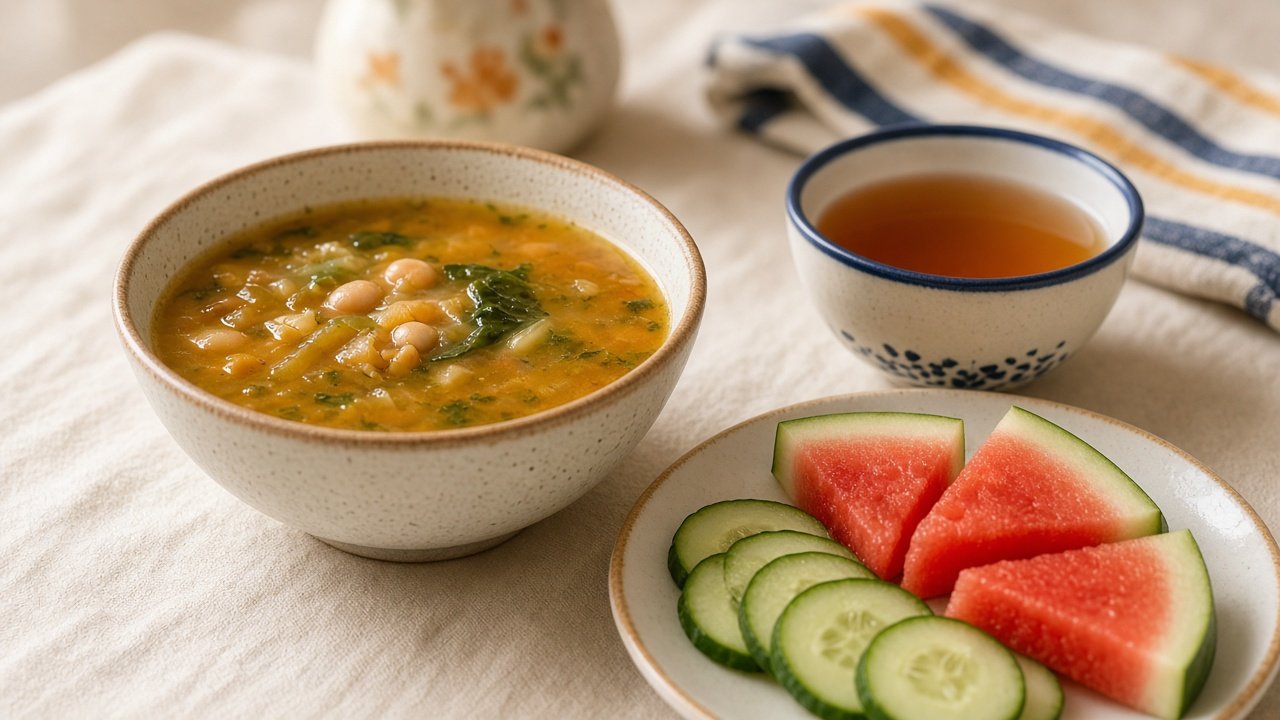
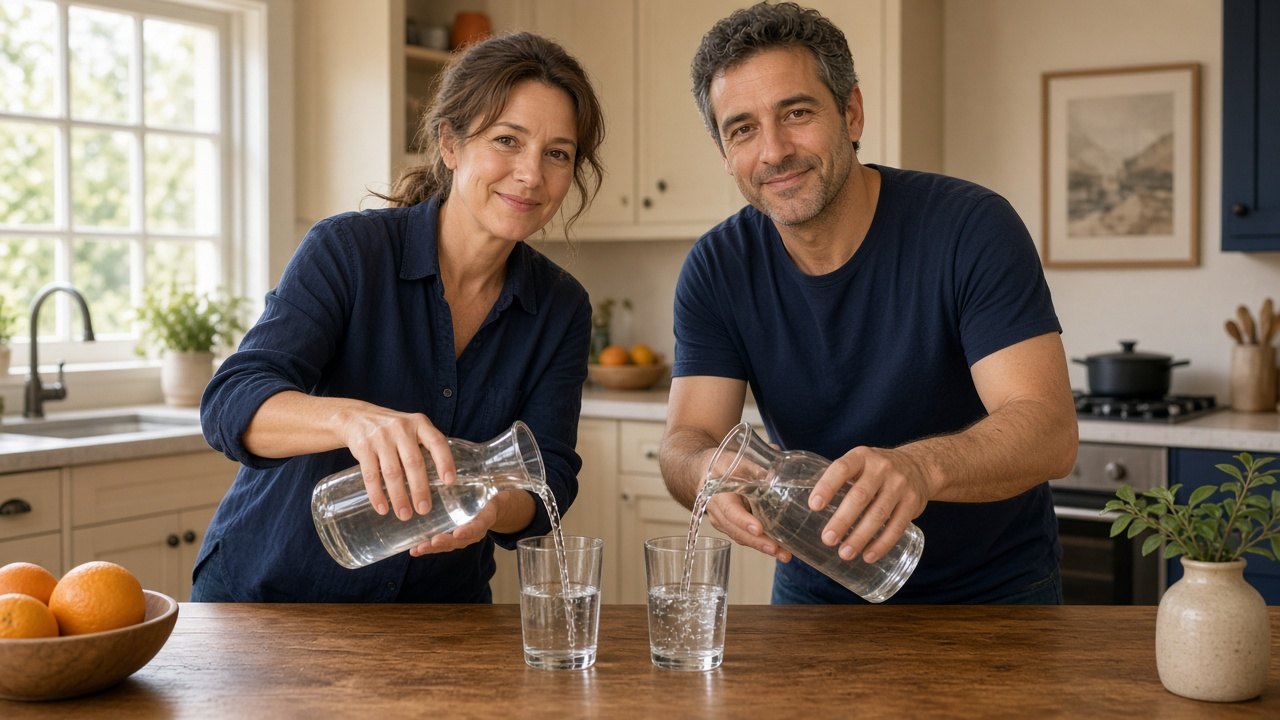
If you want to drink more water, start with a carafe on the table or your desk, as Gezond Leven suggests. Alternate with unsweetened tea or coffee if plain water does not appeal to you. According to Gezond Leven, soft drinks and sweetened milk drinks do not fit into this pattern; read more in our article on cutting back on sugary drinks.
Keeping it practical
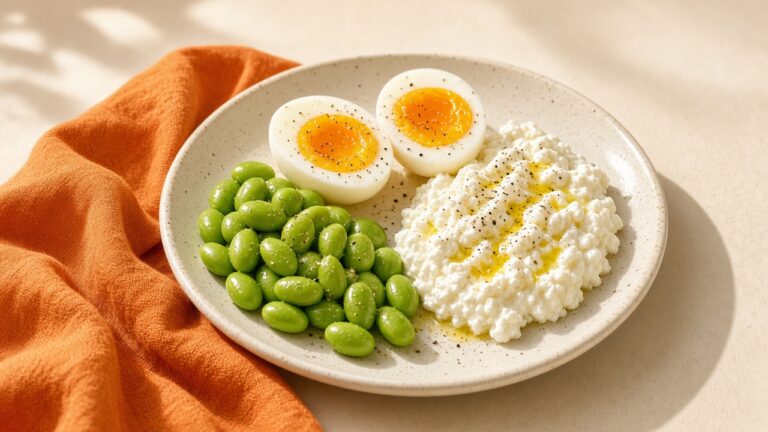
There is no need to force down litre bottles if you already drink regularly and your urine stays pale. Build up gradually: first a glass with every meal, then a bottle when you are out and about. Gezond Leven prefers tap water to bottled water for environmental and cost reasons. At mealtimes, water goes just as well with eggs as a quick protein source or with a meal you also check for salt, as explained in eating less salt.
If you mainly drink coffee and think water is unnecessary, you are missing the point of the food triangle, says Gezond Leven: water sits on its own at the top because it is the only essential thirst quencher. Unsweetened coffee and tea contribute to your fluid balance, but they do not replace tap water as your everyday drink. Nor are diet soft drinks an equivalent alternative if you want to drink more, according to Gezond Leven.
According to Gezond Leven, children and older adults more often need a reminder, because their sense of thirst is less reliable. Offer a glass at set times rather than waiting until they feel thirsty. At work, a reusable bottle within sight helps more than a vague intention to “drink more”. Be realistic: a hot day or a training session may call for a little more for a while, without going to extremes afterwards.
In short: following Gezond Leven and the SHC, aim for about 1 to 2 litres of drinks a day, including at least 1 litre of water if you also have other drinks, and read the EFSA figures as a total that includes food. That keeps you close to the Belgian guidelines without miracle claims about “eight glasses” or fixed formulas that are not in these sources.
If you have kidney stones, heart failure or a fluid restriction from your doctor, follow that advice and discuss amounts with your GP or dietitian. For most healthy adults, the advice from Gezond Leven and the SHC is enough, with the EFSA figures as the overall picture including food.
Sources
- Vlaams Instituut Gezond Leven. Voldoende water drinken? Zo doe je het! gezondleven.be (in Dutch), accessed 16 October 2026.
- Vlaams Instituut Gezond Leven. Aanbevelingen van de Hoge gezondheidsraad met focus op voedingsmiddelen. gezondleven.be (in Dutch), 2025.
- Belgian Superior Health Council (SHC). Voedingsaanbevelingen voor de Belgische bevolking – 2025. Advice no. 9805-9807 (in Dutch), 2025.
- European Food Safety Authority. EFSA sets European dietary reference values for nutrient intakes. Press release, 26 March 2010.
- EFSA Panel on Dietetic Products, Nutrition and Allergies. Scientific Opinion on Dietary Reference Values for water. EFSA Journal 2010;8(3):1459.