

Protein after fifty: food-first doses that actually count — without powder panic
TLDR
- After fifty, protein matters more for keeping muscle: slightly higher doses per meal, spread across the day — food-first first.
- Leucine-rich sources (dairy, egg, meat/fish, soy, legumes+combo) help the muscle signal; powder is optional, not panic-duty.
- Pair protein with strength training after forty — food alone doesn’t save sarcopenia prevention.
- See also protein needs and leucine from food.
Around fifty you hear more often: “you need more protein.” I long dismissed that line as powder marketing. Let’s reframe: there’s a core of truth — keeping muscle gets harder with age, and protein + a strength stimulus help. But “more” doesn’t mean “shakes until you drop.” It means better portions, more often, from food you actually like.
Why the dose shifts up
With the years, muscle mass often falls if you do nothing (sarcopenia risk). Muscles also respond a bit more “dull” to the same protein stimulus — anabolic resistance in jargon. Sports-nutrition consensus (ISSN-style; for us next to EFSA/WHO and national older-adult frames) often nudges active 50+ a bit above the classic 0.8 g/kg, especially with strength training. Exact grams differ by study; practically: aim for solid protein sources at every meal instead of everything in the evening.
Leucine — an amino acid in protein — plays as a “start signal” for muscle building. You get it from ordinary food; see the leucine piece above. Powder is a handy net when a meal falls short, not a religion.
When yes
- Strength 2–3×/week + conscious protein portions: the combo that counts. Walking alone is gold for health, but doesn’t replace load on muscle — see 90–120 minutes of strength.
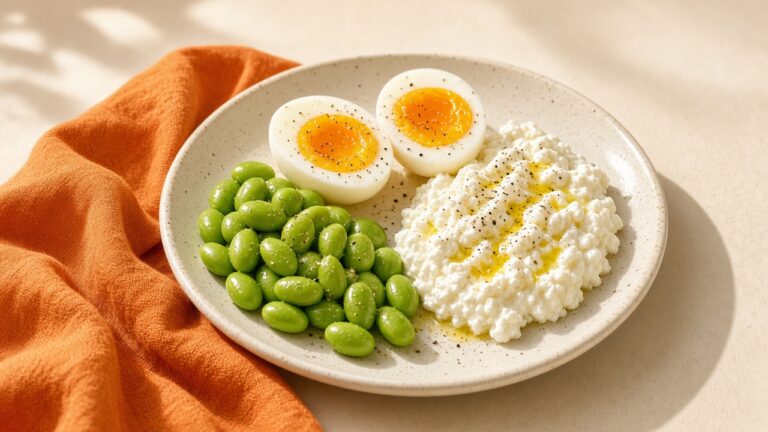
- Food-first doses that actually land: 25–40 g protein per main meal as a rule-of-thumb direction (not dogma); cottage cheese, eggs, fish, meat, tofu, legumes + grain.
- Powder as a bridge: travel, poor appetite, late training without time — optional, label-aware (protein powder literacy).
When not / limits
- Not powder panic without a strength stimulus: shakes without training don’t structurally fix muscle loss.
- Don’t dump everything in one shake: spreading across the day usually works better than one mega dose.
- Kidney issues / medical context: align protein advice with a clinician or dietitian — literacy ≠ individual prescription.
- Not “more = always better” without total calories: for weight goals, portions count; week-menu quality stays the guide. Plant-based can: see plant proteins.
Food-first without drama
My week plate: breakfast with egg or yoghurt, lunch with legumes or fish, dinner with a clear protein source, and after heavy strength maybe a simple snack. No product pitch — just the question “is there something at every meal that actually delivers protein?” The myth that one shake is “enough portion” for the whole day, we leave aside; see protein per serving.
Practical Engy tip
Write three fixed protein sources you like on your shopping list. Plan two strength moments. Powder only as plan B.
Recommendations in bullets
- 50+: slightly larger, spread protein portions + strength.
- Food-first and leucine via ordinary food.
- Powder optional — not panic-duty.
- Medical limits: check in with kidney/illness.
- Link to strength-after-forty, protein needs, leucine, powder literacy.
Sources (selection)
- ISSN / sports nutrition — protein for older adults & resistance training.
- EFSA / WHO / national older-adult frames — protein in the total pattern.
- Nieuwsblad/Sporza-style 50+ protein pieces — inspiration; reframe.
- Engy: krachttraining-na-veertig, eiwitbehoefte-actieve-volwassenen, leucine-via-voeding, proteinepoeder-literacy, eiwit-per-portie-mythe, plantaardige-eiwitten-sporters, kracht-90-120-minuten-week.




One Comment