Do something useful with your pumpkin: soup and roasted seeds instead of the bin
Informational, not medical advice.
TLDR
- Halloween falls on Saturday 31 October this year. Lots of pumpkins get hollowed out, sit outside for a week and then end up in the food waste bin.
- Yet pumpkin is a light vegetable, rich in beta-carotene and potassium. The seeds provide magnesium, zinc, protein and mostly unsaturated fats.
- For cooking, you’re better off with an eating squash such as red kuri (potimarron) or butternut. Proper carving pumpkins are edible, but watery and bland.
- Below: a simple pumpkin soup and roasted pumpkin seeds, step by step.
- Carving anyway? Roast the seeds and cook the scooped-out flesh the same day.
I completely get the appeal of a glowing pumpkin on the windowsill. Kids with a spoon up to their elbows in stringy pulp, a candle inside, spooky teeth: it’s part of autumn. So this isn’t a case against Halloween. It’s an invitation to get something tasty out of it this year as well. Literally.
Where those pumpkins end up
A hollowed-out pumpkin usually only lasts a few days outdoors. Then it goes soft, gets mouldy and is thrown away. I couldn’t find reliable figures for Belgium. In the UK, the environmental charity Hubbub has been tracking this for years: in its 2023 poll, people said that more than half of the pumpkins bought for carving the previous year were not eaten. That’s a survey, not a weighing of bins, but the direction is clear. And it’s a shame, because a pumpkin holds several meals.
What pumpkin brings to your plate
I’ll keep the claims modest: pumpkin isn’t a superfood, but it is a thoroughly decent vegetable.
- Light: raw flesh contains around 26 kcal per 100 grams; it’s mostly water.
- Beta-carotene: the orange colour comes from carotenoids, which your body partly converts into vitamin A. A 100-gram portion covers roughly half of the daily reference intake.
- Potassium: about 340 mg per 100 grams.
- Fibre: modest in regular pumpkin, a bit more in butternut and red kuri. It adds to your total, but it’s no champion.
The seeds are a different story. A handful of hulled, roasted pumpkin seeds (30 grams) provides over a third of the reference intake for magnesium, about a fifth for zinc, some 8 grams of protein and mostly unsaturated fat. If you roast your own seeds with the shell on, you get slightly fewer minerals per gram but more fibre. They sit nicely alongside a handful of nuts a day.
Which pumpkin for the pan?
- Red kuri (potimarron, hokkaido): my favourite. Nutty, firm, and you simply eat the skin.
- Butternut: sweet and creamy, ideal for soup. Best peeled.
- Muscade de Provence or other red-orange French varieties: large, beautifully orange and tasty in soup. They look great as a table decoration too.
- Carving pumpkin: bred for size and thin walls, not for flavour. Edible, but watery and stringy. In a soup with some extra spices, it works fine.
One safety note: small ornamental gourds are for looking at, not eating. And if a pumpkin or courgette tastes noticeably bitter, don’t eat it.
Recipe: simple pumpkin soup (4 bowls)
- 1 kg pumpkin, diced (red kuri with skin, butternut peeled)
- 1 onion and 1 clove of garlic, finely chopped
- 1 tablespoon olive oil
- about 900 ml vegetable stock, preferably low-salt
- pepper, nutmeg and optionally a piece of fresh ginger
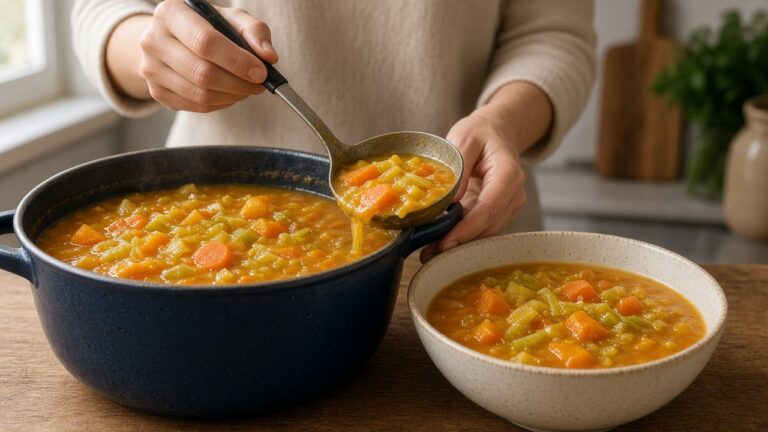
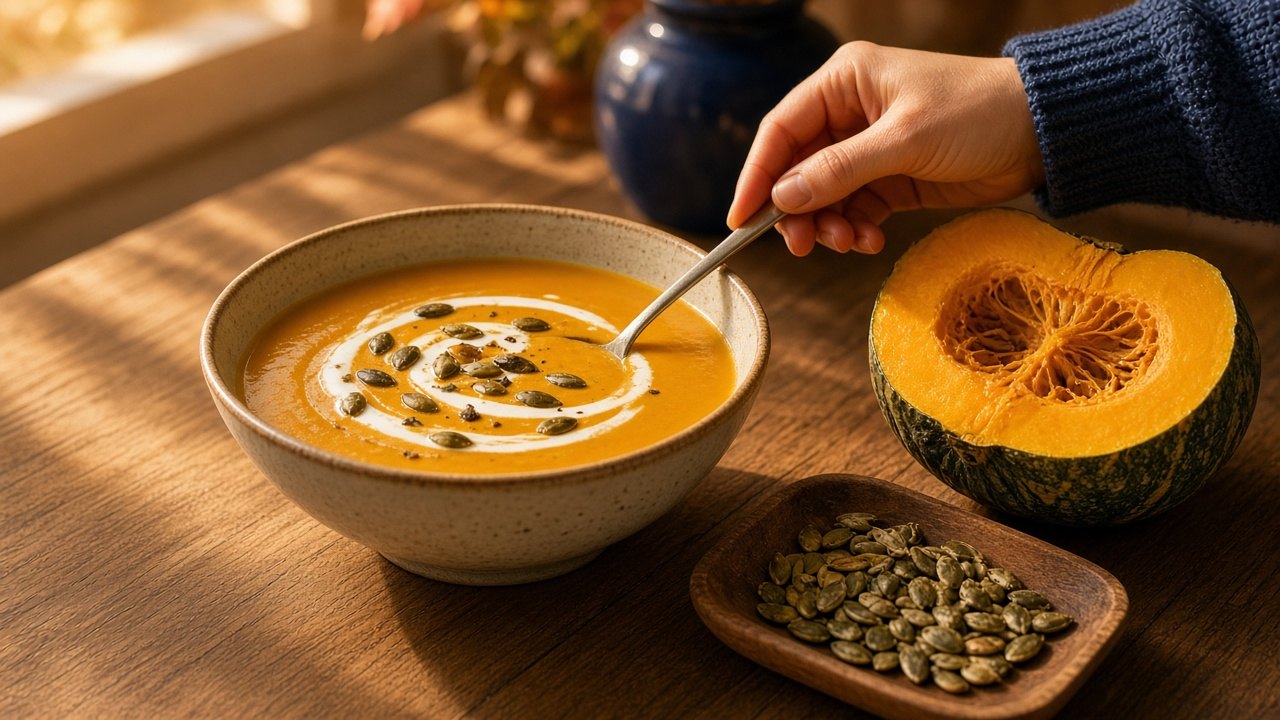
Gently soften the onion and garlic in the oil for five minutes. Add the pumpkin and ginger, let them sweat briefly, then pour in the stock. Simmer for 20 minutes until the pumpkin is completely soft. Blend until smooth and season. I serve it with a spoonful of yoghurt and a handful of roasted seeds. To turn it into a meal soup, cook 100 grams of red lentils along with it. More ideas beyond soup in pumpkin in the autumn kitchen.
Step by step: roasting pumpkin seeds
- Scoop out the seeds and put them in a bowl of water. The strings sink, the seeds float: easy to fish out.
- Rinse them and pat them thoroughly dry with a tea towel. The drier they are, the crunchier they get.
- Toss with a teaspoon of oil, a pinch of salt and, if you like, paprika, cumin or cinnamon.
- Spread them in a single layer on a baking tray lined with baking paper.
- Roast for 15 to 25 minutes at 160 °C, stirring halfway. They’re done when golden and lightly crackling.
- Let them cool and store them in a sealed jar. They stay good for about a week.
The middle ground: carve and cook
Still want a lantern? Hollow out the pumpkin on the day you use it and cook the flesh and seeds right away. A carved pumpkin that has been outside for days belongs in the compost rather than the soup. An alternative I like: paint an eating pumpkin instead of carving it. It then keeps for weeks and still ends up in the pot after Halloween.
My Halloween plan
- Buy one extra eating pumpkin for soup, or pick a pumpkin from the start that you can eat after the festivities.
- Never throw the seeds away: twenty minutes in the oven and you have a snack.
- Cook scooped-out flesh the same day or freeze it.
- Enjoy the party: a spooky pumpkin and a bowl of soup go perfectly well together.
This article is informational and not medical advice. If you follow a prescribed diet, have an allergy or kidney problems (potassium), check with your doctor or dietitian.
Sources (selection)
- USDA FoodData Central (SR Legacy). Pumpkin, raw (FDC 168448) and Pumpkin and squash seed kernels, roasted, without salt (FDC 170557). US food composition database, used here as a guide value.
- Regulation (EU) No 1169/2011, Annex XIII: reference intakes for vitamins and minerals (vitamin A 800 µg, magnesium 375 mg, zinc 10 mg).
- Hubbub (2023). Eat Your Pumpkin: polling and press release, 11 October 2023 (Censuswide survey of 2,006 UK adults).
- Flemish Institute for Healthy Living (Vlaams Instituut Gezond Leven). Vegetables in the food triangle. gezondleven.be (in Dutch).