Pumpkin in the autumn kitchen: an easy vegetable win without soup repetition
Informational, not medical advice.
TLDR
- Pumpkin is fully in season in autumn and helps you move toward the 300 grams of vegetables a day Belgium’s Superior Health Council keeps for adults.
- You do not need to repeat soup: roasting, stir-frying, curry or a bake work just as well.
- Frozen cubes or pre-cut pumpkin count; fresh is not a must if the preparation is sound.
- Pair with legumes or a protein source, otherwise it stays mostly carb-heavy vegetable volume.
After three weeks of vegetable soup, I was done. Not because soup is bad — see my piece on vegetable soup as a daily veg win — but because my taste buds were bored. Pumpkin turned out to be the easiest reset: one squash, lots of edible flesh, and preparations that do not taste like “soup again”.
Why pumpkin counts in autumn
Gezond Leven puts seasonal vegetables at the centre of the food triangle. Pumpkin (and related winter squashes) typically belongs to the autumn offer. The Superior Health Council keeps at least 300 grams of vegetables a day for adults. A 150–200 gram portion of roasted pumpkin is already a serious bite of that target.
Pumpkin is mostly water, fibre and carbohydrate, with some vitamin A precursors (carotenoids) depending on the variety. I use Nubel or USDA nutrition values only as orientation, not as a promise.
Without soup repetition: four preparations I repeat
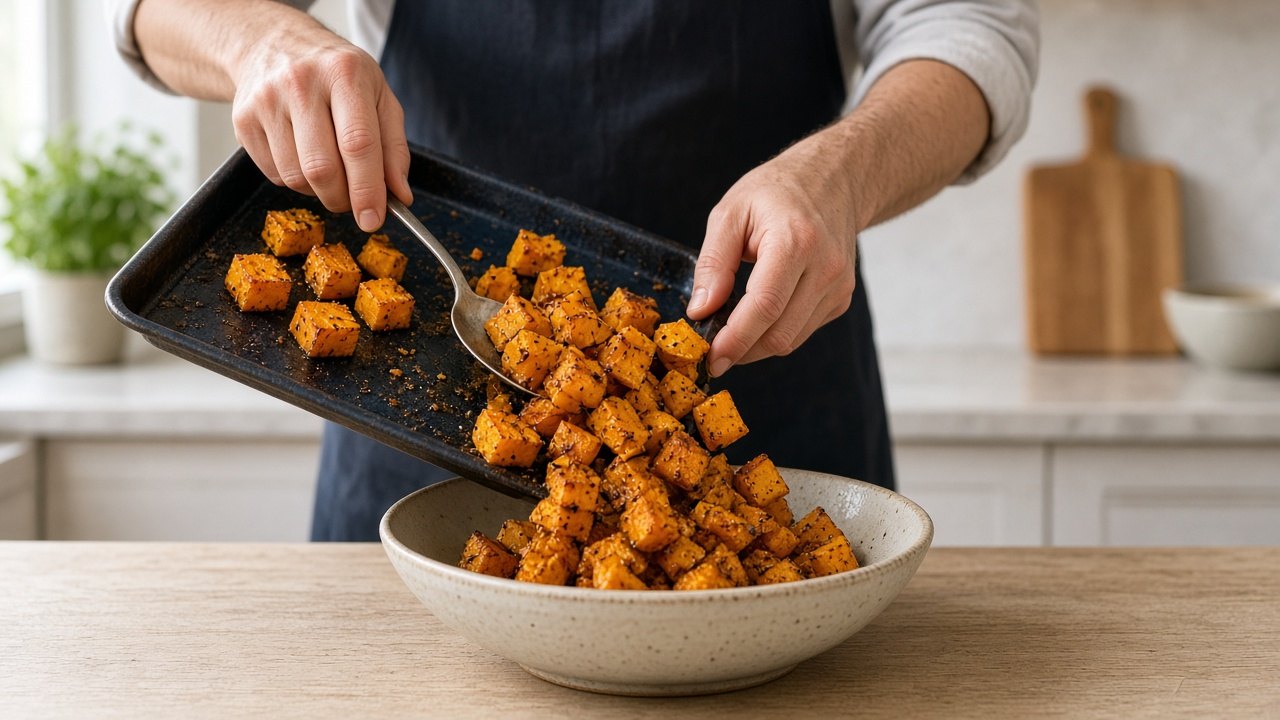
- Roast: cubes with a splash of oil, pepper, garlic powder; 25–35 minutes at 200 °C until the edges caramelise.
- Wok or pan: thin slices with onion and spinach; done in fifteen minutes.
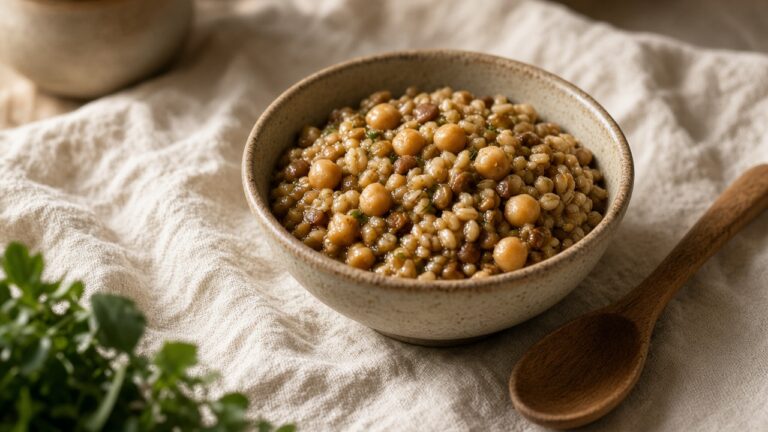
- Curry or stew: pumpkin plus chickpeas or lentils — see building up legumes gently.
- Bake: layers of pumpkin, tinned tomato, a little cheese or yoghurt when serving.
Frozen pumpkin or pre-packed cubes are fine. How frozen compares to fresh, I explain in frozen vegetables vs fresh.
Practical choices in the shop
I pick a pumpkin that feels heavy for its size, with intact skin. Hokkaido you eat with the skin; butternut you usually peel. A whole pumpkin keeps cool and dry; cut pieces go in the fridge and I use them within a few days.
For ready-made puree I check salt and added cream. Mashing it myself with herbs keeps control on my side.
Where pumpkin falls short
Pumpkin alone is not a meal. Protein and some fat make it filling. I often add lentils, white beans, egg, yoghurt or a piece of fish or meat. Without that add-on I am hungry again within the hour — not a moral failure, a predictable effect of mostly starchy vegetable volume.
My autumn routine
- Cut one pumpkin on Sunday; roast half, keep half raw or freeze it.
- Roasted leftovers in a lunch salad, wrap or as a side in the evening.
- No soup obligation: if I want soup, I make it separately and alternate.
- Rotate spices (cumin, curry, rosemary) so it does not taste the same every day.
This article is informational and not medical advice. With a prescribed diet or allergy, check with a doctor or dietitian.
Sources (selection)
- Vlaams Instituut Gezond Leven. Vegetables (food triangle) and seasonal calendar. gezondleven.be.
- Superior Health Council of Belgium. Dietary recommendations (via Gezond Leven). gezondleven.be.
- Nubel / food composition tables: indicative pumpkin values (raw/cooked).