Tennis, padel, badminton: racket sport as a healthspan tool
TLDR
- Tennis, padel and badminton combine cardio, direction changes, reaction and social stimuli — strong healthspan candidates.
- Yes: regularity, warm-up, strength alongside for shoulders/legs; injury prevention > hero role.
- Not: weekend-only hero without base fitness; or racket sport as an excuse to skip strength.
- Link strength as a longevity tool and cardio + strength.
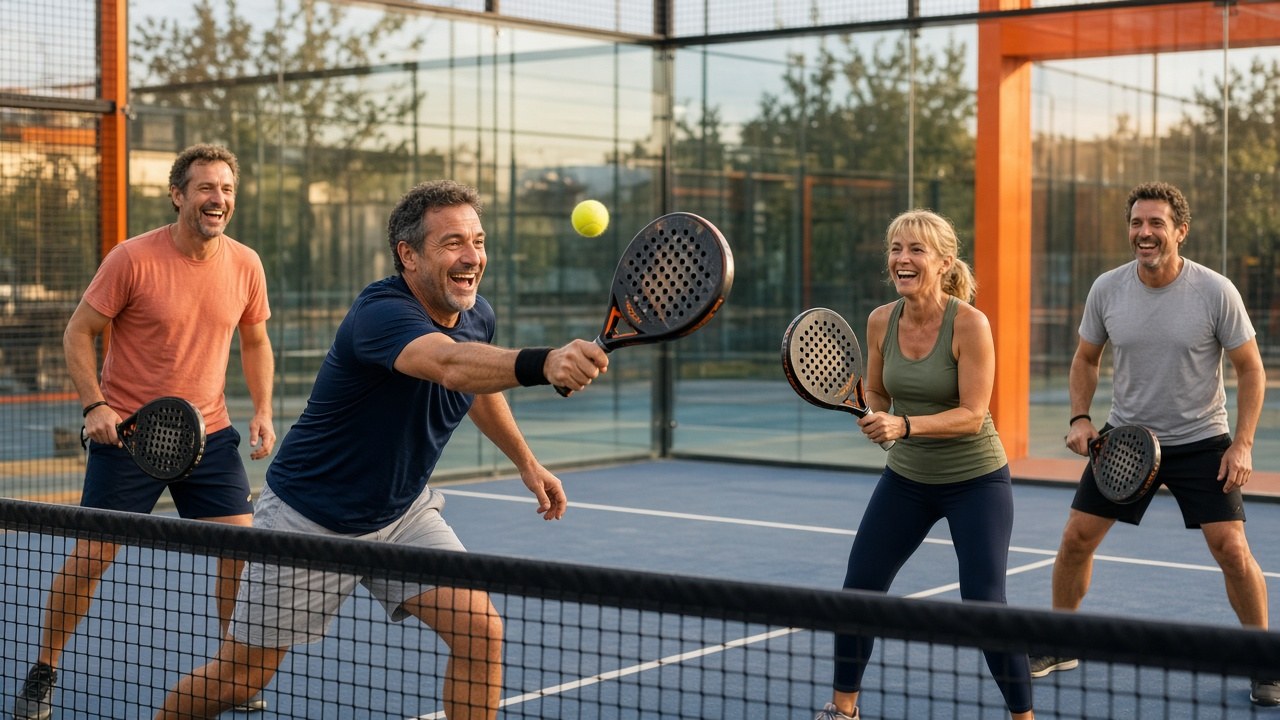
I see more and more padel courts and evening tennis as “serious movement without boredom.” Relativise: racket sport is not a magic longevity pill, but it scores on several levers at once — aerobic stimulus, short accelerations, eye-hand coordination and especially: making plans with people. That social piece often keeps you loyal longer than solo zone-2 (an easy endurance pace at which you can still talk comfortably) on a dull Tuesday.
Why racket sport hits healthspan
Observational studies (including cohort work on racket sports and mortality, often cited in the literature) suggest favourable associations — correlation, not proof that “padel saves you.” Mechanistically it is plausible: interval-like bursts, lateral movement, and cognitive load. WHO movement guidelines ask for aerobic + muscle-strengthening activity; Sciensano translates that into enough moderate to vigorous movement per week. Racket sport can hit both — if you also keep doing strength.
For the bigger frame: healthspan vs lifespan and longevity for athletes.
When yes to use it
- You drop off cardio machines: play + appointment = higher adherence.
- You want “solid” without only running: stop-start + rotation, with build-up.
- Social network is your weak spot: club hour weighs more than perfect HR zones.
- You combine with 1–2 strength sessions: see 90–120 min strength/week.
When not / limits
- Acute shoulder, knee or Achilles issues: load tolerance first; doctor/physio if in doubt.
- Only Sunday hero matches without a base: injury risk rises faster than VO₂.
- Hard surface + no warm-up: lateral cuts ask for preparation.
- Racket sport ≠ full strength stimulus: grip and leg work help, but also lift separately.
Practical week build
My mix: 1–3 racket hours + at least one full-body strength + walking/NEAT. Zone-2 stays useful on quiet days: zone-2 explained. Recovery after intense sets: sleep and food before “extra foam-roll myth”; see 24h recovery and foam roller limits.
Taking grip strength along as a functional signal fits racket and longevity: functional grip strength.
Small reality check: two hours of padel after a sitting week feels productive, but without base fitness and strength maintenance, single-sided ankle or shoulder stimuli stack fast. Build play time like a running plan: dose minutes and intensity, plan rest days, and after late evening matches protect sleep. That keeps racket sport a longevity friend, not an injury factory.
Shoes with grip, light mobility for hips and ankles, and water at hand make more difference than an expensive racket upgrade. After intense sets: protein-rich meal and early wind-down instead of late caffeine. Longevity is loyalty over months, not one heroic tiebreak.
Practical Engy tip
Book one fixed hour/week of racket + one strength block. Measure loyalty over 8 weeks, not “perfect technique day one.”
Recommendations in bullets
- Racket = cardio + agility + social — strong healthspan mix.
- Build-up, warm-up and strength alongside; no weekend-only hero.
- Correlation ≠ guarantee; keep moving in several ways.
- Take injuries seriously; adapt intensity.
- Tie to strength-longevity, cardio-strength week and grip strength on Engy.
Sources (selection)
- WHO — movement guidelines (aerobic + muscle-strengthening).
- Sciensano — movement & health.
- Cohort literature on racket sports & longevity (associations; interpret carefully).
- Engy: krachttraining-als-longevity-tool, cardio-kracht-combineren-week, healthspan-vs-lifespan-5-hefbomen, zone-2-training-uitgelegd.