
Quitting smoking: what changes in your body and what help is available in Belgium
General information, not medical advice. If you take medication or have a heart or lung condition, discuss quitting with your GP or pharmacist.
Quitting smoking pays off at any age. Your body starts to recover within the hour and after a few years much of the extra risk has gone. This article sets out what changes according to the World Health Organization and what help you can get in Belgium.
What changes when you are quitting smoking
The World Health Organization (WHO) describes a timeline of what happens after your last cigarette. Within 20 minutes your heart rate and blood pressure drop. After 12 hours the carbon monoxide level in your blood is back to normal. Carbon monoxide is a toxic gas from cigarette smoke that takes the place of oxygen in your blood. If you measure your blood pressure at home, you will see one of the first effects.
After 2 to 12 weeks your circulation and lung function improve. After 1 to 9 months you cough less and are less short of breath. After one year your risk of coronary heart disease, a narrowing of the blood vessels of the heart, is about half that of a smoker.
In the longer term the gains continue. After 5 to 15 years your risk of stroke is the same as that of someone who never smoked. After 10 years your risk of lung cancer is about half that of a smoker and the risk of cancer of the mouth, throat, oesophagus, bladder, cervix and pancreas also falls. After 15 years your risk of coronary heart disease is the same as that of a non-smoker.
It is never too late
The WHO also calculates how many years of life you gain. Quitting at around 30 gains almost 10 years of life expectancy. Quitting at around 40 gains 9, at around 50 it is 6 and at around 60 still 3. Even after a heart attack it helps: according to the WHO, quitting cuts the chance of another heart attack by 50 percent.
Quitting also helps the people around you. Your children and housemates no longer breathe in second-hand smoke, the smoke others inhale without choosing to.
Several attempts are normal
If it does not work straight away, you are not alone. Gezond Leven, the Flemish expertise centre for health promotion, writes that more than 70 percent of smokers have tried to quit at some point. On average it takes 5 to 7 attempts before someone quits for good. Each attempt teaches you something about what works for you.
Quitting on your own is possible, but according to Gezond Leven the chance of relapse is higher. With support from a tobacco specialist, a healthcare professional trained to help smokers quit, you are 4 times more likely to become smoke-free.
What help is available in Belgium
Gezond Leven lists six methods you can choose or combine:
- support from a tobacco specialist;
- help from your GP and pharmacist;
- Tabakstop, the free Flemish quitline on 0800 111 00, open from 3 pm to 7 pm;
- stop-smoking medication, such as nicotine replacement;
- an e-cigarette with nicotine;
- the Allen Carr method.
Gezond Leven is cautious about e-cigarettes. Based on international research and the Superior Health Council, the Belgian government’s scientific advisory body, they can help smokers quit, but their long-term effects are not yet known. They are meant as an aid to quitting, not as a permanent alternative.
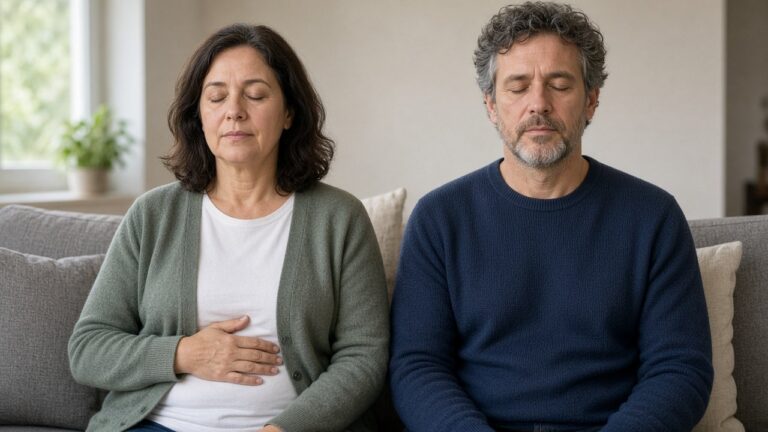
The people around you can help too. Tell family and friends that you are quitting and ask them not to smoke near you. When a strong urge to smoke hits, a short breathing exercise can help ease the tension. How to do that is covered in the article on calm breathing when you feel tense.
Sources
- World Health Organization (WHO). Tobacco: Health benefits of smoking cessation. 25 February 2020.
- Gezond Leven. Stoppen met roken. Accessed November 2026, in Dutch.
- Gezond Leven. Hoe stoppen met roken?. Accessed November 2026, in Dutch.




One Comment