Exercise-induced asthma in winter: why about 1 in 10 people without asthma also get symptoms during exercise
General information, not medical advice. If you suddenly become very short of breath, have chest pain or do not get better with rest, stop immediately and seek medical help. Always discuss medication with your doctor.
Do you cough during or right after a run in the cold, or hear yourself wheezing? Exercise-induced asthma may play a part, even if you do not otherwise have asthma. With a good warm-up and a calm pace, you can often keep exercising outdoors.
What is exercise-induced asthma and why does cold air matter?
Your airways are the tubes that carry air from your nose and throat to your lungs. With asthma they overreact to certain triggers. According to the patient guideline on asthma from Gezondheid en Wetenschap, the Flemish health website of the Belgian Centre for Evidence-Based Medicine (Cebam), exercise and cold air are such triggers, as are smoke and air pollution. Shortness of breath after exercise mainly occurs in cold weather.
The Belgian website gezondheid.be also writes that problems arise less quickly in a humid, warm environment than in a dry, cold one. It estimates that about 90% of people with asthma and 40% of people with nasal allergies are affected. Among people without any form of asthma, the figure would be about 10%.
How to recognise exercise-induced asthma
The symptoms come on quickly after exercise: shortness of breath, wheezing and a coughing fit. Sometimes there is chest pain as well. The symptoms are usually at their worst after about ten minutes, then ease off and have usually gone within the hour. To diagnose exercise-induced asthma, Gezondheid en Wetenschap mentions an exercise test, which checks whether exertion triggers symptoms.
Warming up: start calmly, then add short bursts
Gezondheid.be recommends a slow, thorough warm-up of 10 to 15 minutes, which according to the site can even help prevent an attack. After exercise, a slow cool-down helps avoid a delayed reaction.
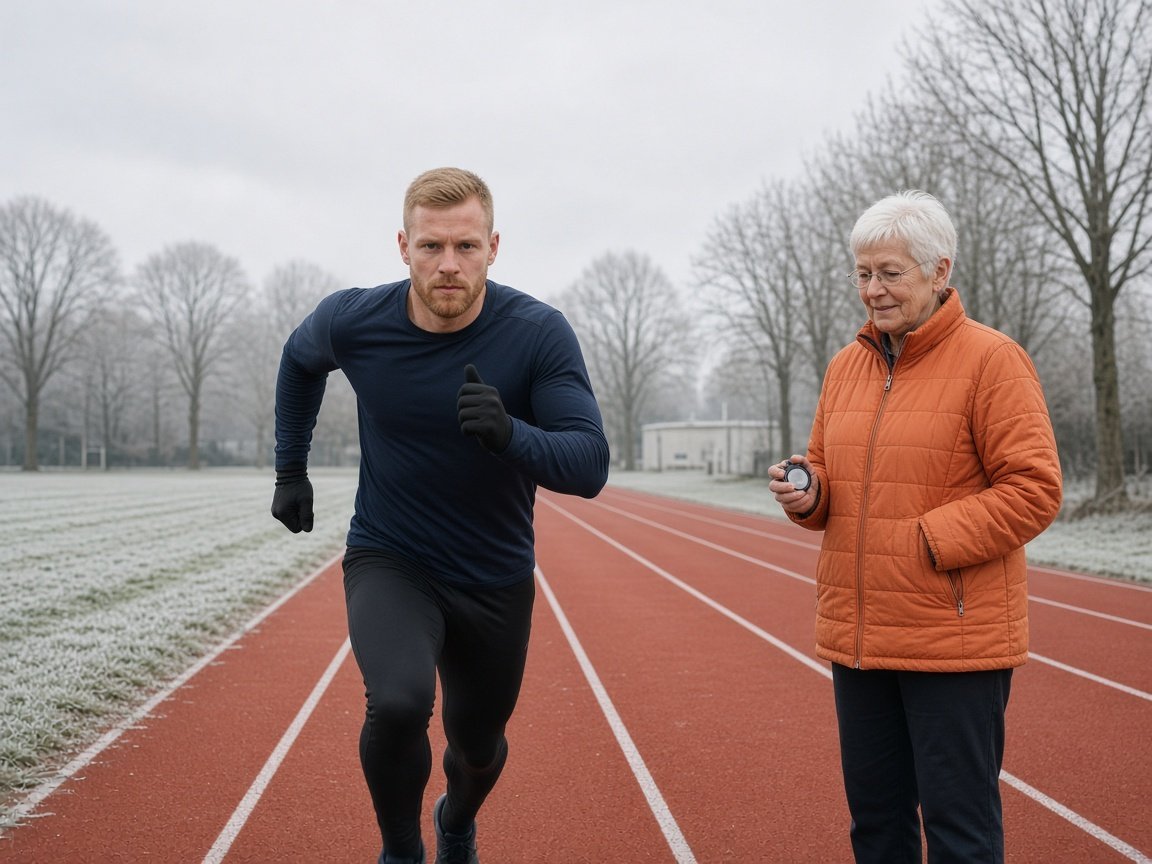
A Canadian systematic review with meta-analysis from 2012 pools seven randomised studies, in which a draw decides who does which warm-up. Lung function was measured as the amount of air you can forcefully blow out in one second. A warm-up with short, intense sections or with varying intensity reduced the drop in that value after exercise. A steady warm-up, easy or hard, gave no statistically clear reduction. According to the researchers, a warm-up with at least some intense effort can help, without medication.
These pieces of advice do not rule each other out. For competitive athletes, gezondheid.be itself describes a long warm-up alternated with short intense efforts. This makes use of the refractory period: about half of people with exercise-induced asthma stay free of symptoms for 2 to 3 hours after a first attack. According to the site, this approach is learned under medical supervision. For an ordinary training run, you can start calmly and add a few short bursts later in your warm-up.
Exercising outdoors in the cold with exercise-induced asthma
Gezondheid.be gives three more tips:

- Breathe through your nose as much as possible, because the air is warmed, moistened and cleared of most dust on the way.
- In cold weather, wear a scarf over your nose and mouth, because it sometimes helps prevent an attack.
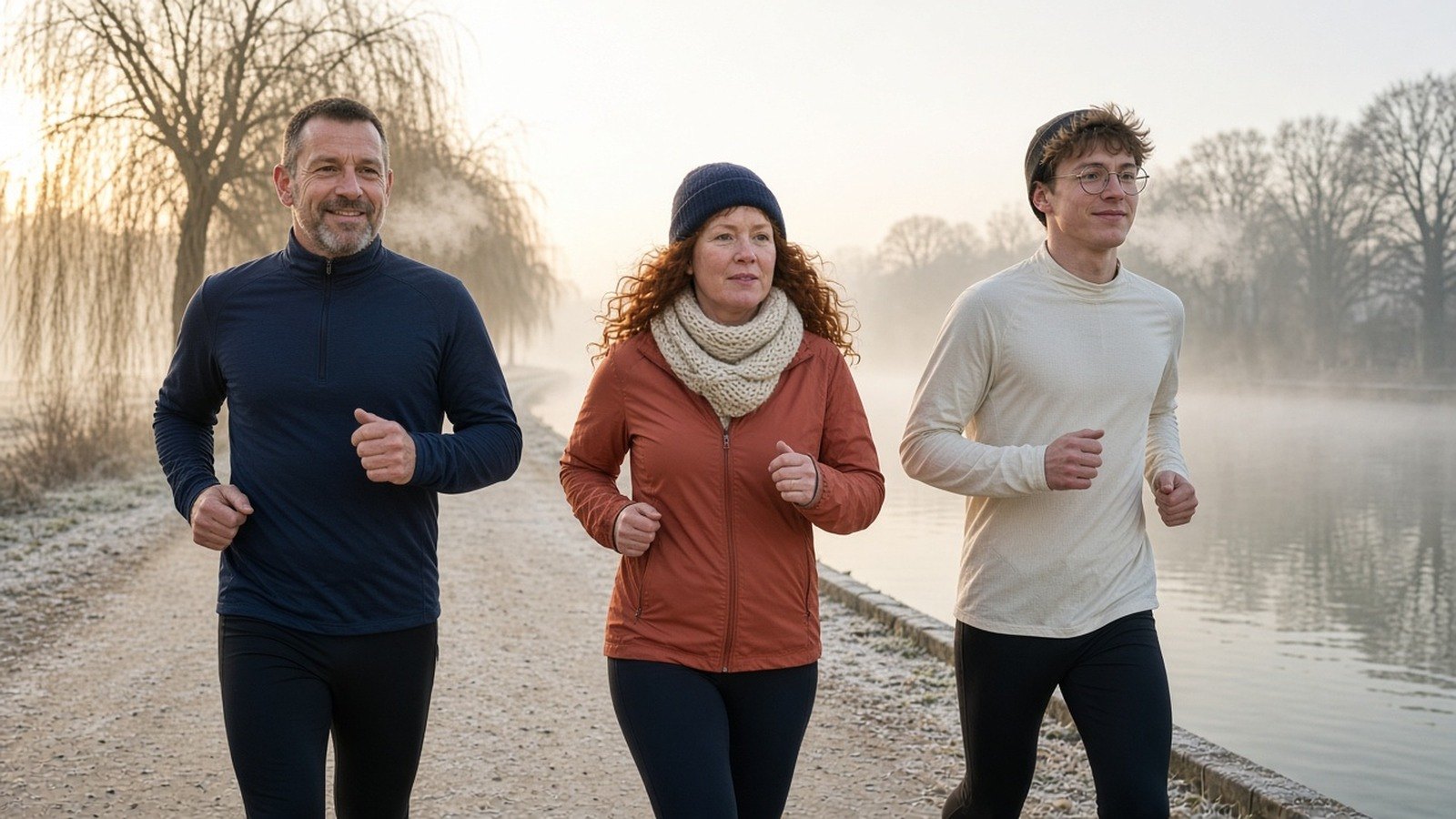
- Choose a pace at which you can keep talking calmly without getting out of breath.
If you are just starting out, you will find that pace by building up gradually with running. More ideas are in the article on exercising outdoors in autumn and winter.
An inhaler beforehand
A short-acting bronchodilator is a medicine you inhale that relaxes the small muscles around your airways. According to Gezondheid en Wetenschap, you can use such a medicine preventively for exercise-induced asthma, for example before you start exercising. Gezondheid.be mentions a quarter of an hour before exercise.
The 2013 guideline of the American Thoracic Society, an American association of lung specialists, also strongly recommends such a medicine before exercise for everyone with exercise-induced asthma, although the quality of the evidence ranges from low to high.
When to skip exercise or stop
Do not exercise with a fever, a cold or another infection, or if you feel unwell because of asthma symptoms, writes gezondheid.be. After an infection or fever, it is better to wait a week before starting again. For an ordinary cold, read the article on exercising with a cold. If you do have an attack, stop exercising immediately and try to breathe as calmly as possible.
Sources
- Gezondheid en Wetenschap (Cebam). Astma. Patient guideline, last updated on 18 May 2026 (in Dutch).
- gezondheid.be. Praktische tips bij inspanningsastma. Last updated in December 2024 (in Dutch).
- Stickland MK, Rowe BH, Spooner CH, Vandermeer B, Dryden DM. Effect of warm-up exercise on exercise-induced bronchoconstriction. Medicine & Science in Sports & Exercise, 2012 (systematic review with meta-analysis of 7 randomised studies).
- Parsons JP e.a. An official American Thoracic Society clinical practice guideline: exercise-induced bronchoconstriction. American Journal of Respiratory and Critical Care Medicine, 2013 (clinical practice guideline).