Mould in the house: why families are best off aiming for 40 to 60 percent humidity in autumn
General information, not medical advice. If you have health complaints that you link to damp or mould in your home, discuss them with your GP.
You can recognise mould in the house by small black spots in the bathroom, behind a cupboard or around a window. Together with damp patches and a lot of condensation on windows and walls, it is a sign that there is too much moisture in your home. The Departement Zorg, the health department of the Flemish government, advises aiming for a humidity level between 40 and 60 percent from October to April. Families, tenants and owners are best off tackling the problem at the source.
Why moisture lingers more during the heating season
During the heating season, windows are closed more often to keep the warmth in. At the same time, your family keeps producing moisture. According to the Departement Zorg, this happens when you sleep, shower or bathe, cook without a good extractor hood, iron with steam, clean, have visitors and dry laundry indoors. Ventilation removes that moisture, which helps you avoid mould, dust mite problems and unpleasant smells, writes the Flemish government. If you hang your laundry indoors and the windows stay closed, most of that moisture stays in the house.

Preventing mould in the house: the Flemish reference values
The Departement Zorg gives reference values for a healthy home. The temperature is at least 15°C. Humidity is between 40 and 60 percent from October to April, and between 30 and 70 percent from May to September. With a hygrometer, a small device that measures humidity, you can see whether you stay within those limits.
What damp and mould can do to your health
According to the Departement Zorg, too much moisture can cause coughing and wheezing, trigger asthma attacks and worsen rheumatic complaints. Mould can irritate the mucous membranes of the eyes and airways and cause allergic reactions. People who are more sensitive because of an allergy, a respiratory disease or a weakened immune system are at greater risk. How often you spend time in the affected room and how large the affected surface is also play a role.
International research points in the same direction. A meta-analysis, a study that combines the results of earlier studies, by the American Lawrence Berkeley National Laboratory from 2007 found that damp and mould in homes go hand in hand with about 30 to 50 percent more respiratory symptoms and asthma-related problems. In its European guidelines of 2009, the World Health Organization concludes that respiratory symptoms, allergies and asthma are more common and that the immune system can also be disturbed. These are associations, not proof that mould is the cause in your case. Nobody knows from what amount of mould complaints start. That is why the Departement Zorg advises limiting any exposure as much as possible.
How to keep moisture under control
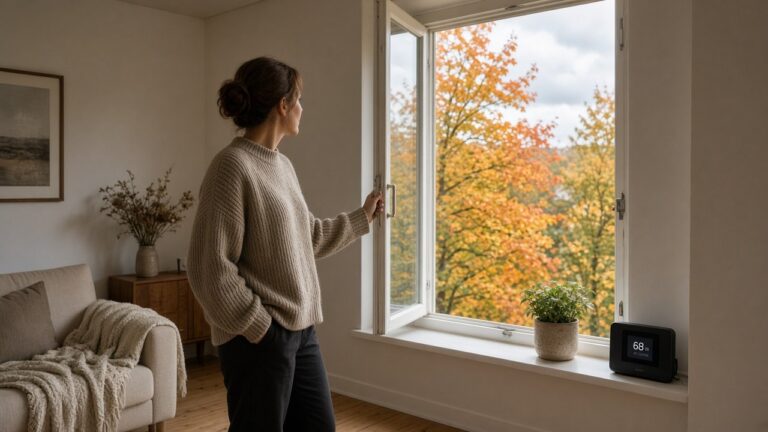
Let fresh air in every day, through windows, trickle vents or a ventilation system, and do so even more during the damp activities above. To air your home, open the windows wide for a quarter of an hour, writes the Flemish government. In cold or windy weather you limit energy loss by opening a window slightly or tilting it open. What candles do to your indoor air is covered in the article on candles and indoor air.
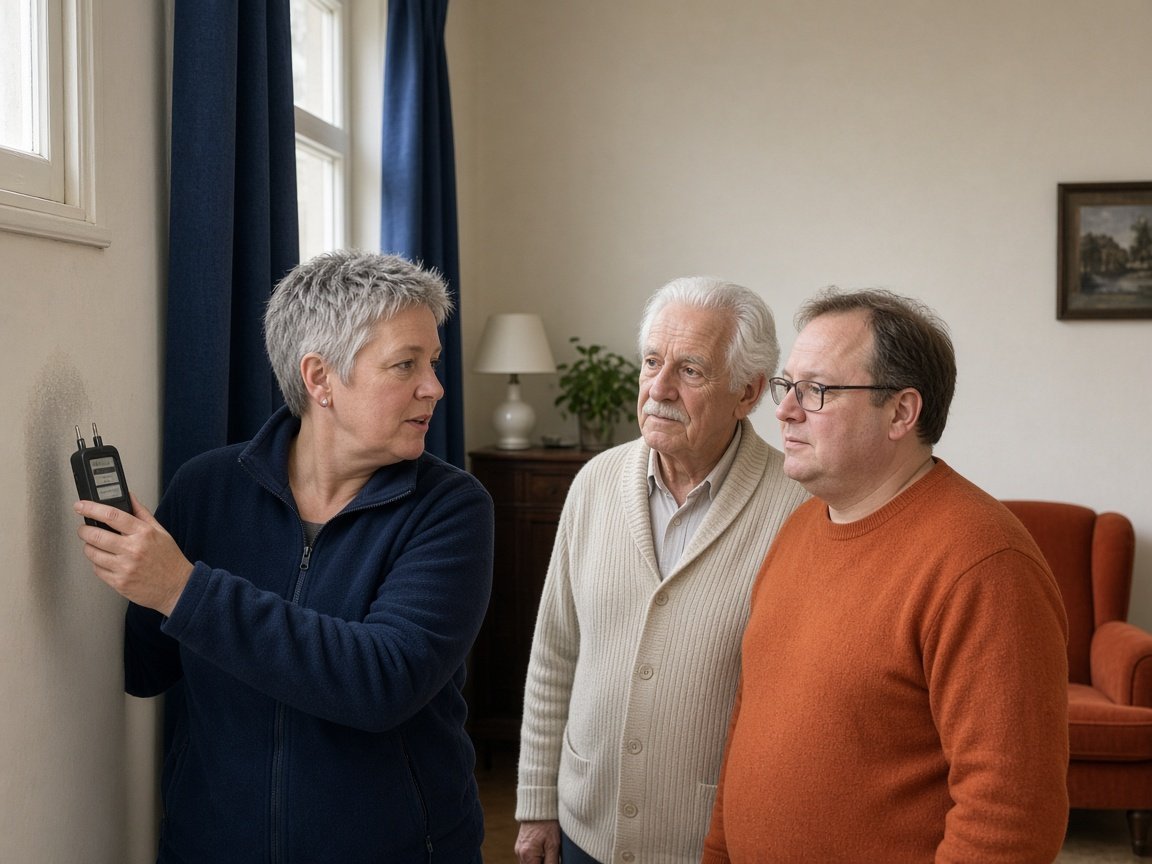
The Departement Zorg also advises tackling building problems:
- construction faults such as thermal bridges, spots where heat escapes to the outside more easily;
- outdated materials or techniques, such as single glazing or outer walls without a cavity;
- defects, such as a leaking water pipe or a broken gutter.
Tackle the source of the moisture, otherwise the mould will easily come back. If you heat with wood or gas, also read where to place a CO detector.
Who should not remove mould themselves
If you have breathing problems or are allergic to mould, do not remove it yourself. Pregnant women and children are also better off leaving it. With severe contamination you sometimes need to repeat the cleaning, each time a few days apart. If you cannot get rid of the mould yourself, call in professional help.
Free assessment in Flanders
If you live in Flanders and have health complaints that may be related to the indoor environment of your home, a care professional can request an assessment. Your GP, the housing officer of your municipality or a nurse or social worker of the OCMW, the public social welfare centre, submits the request to the Medisch Milieukundige of your region, an environmental health specialist of the Flemish authorities. The assessment is free.
Sources
- Departement Zorg (Flemish government health department). Vocht en schimmel (damp and mould, in Dutch). Accessed in October 2026.
- Flemish government (Vlaanderen.be). Verluchting en ventilatie (airing and ventilation, in Dutch). Accessed in October 2026.
- Fisk WJ, Lei-Gomez Q, Mendell MJ. Meta-analyses of the associations of respiratory health effects with dampness and mold in homes. Indoor Air, 2007 (meta-analysis, Lawrence Berkeley National Laboratory).
- World Health Organization, Regional Office for Europe. WHO guidelines for indoor air quality: dampness and mould. 2009 (guidelines).
- Flemish government (Vlaanderen.be). Aanvraag tot onderzoek van het binnenmilieu in een woning of openbaar gebouw (request for an indoor environment assessment, in Dutch). Accessed in October 2026.