Dancing after 65: why dance classes go hand in hand with a 37 percent lower risk of falling
General information, not medical advice. If you have fallen before or have dizziness, heart or joint problems, talk to your GP or physiotherapist first.
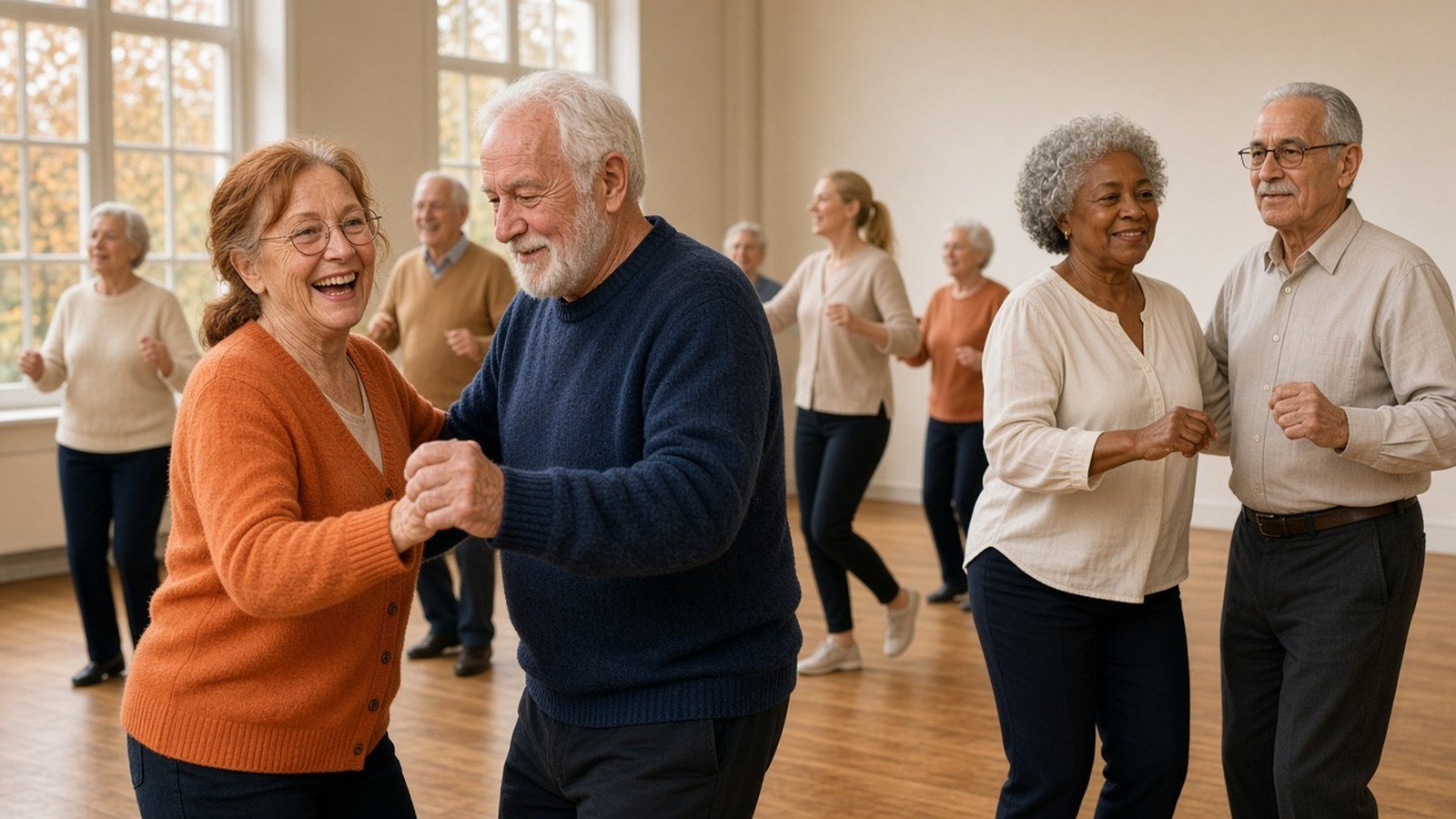
Dancing after 65 is more than a pleasant pastime. Research in healthy older adults links dance-based exercise to fewer falls, better balance and stronger legs. It is all about music, rhythm and moving together. Below you can read what the studies found, what they cannot tell you and how to start gently.
Dancing after 65 and falls: what 29 randomised studies found
A meta-analysis pools the results of many separate trials. In a randomised study, a draw decides which group each person ends up in. That makes the comparison between people who dance and people who do not fairer.
Researchers at the University of Zurich pooled 29 such studies in healthy older adults living independently, with an average age of at least 65. They published their work in 2020 in JAMA Network Open. Dance-based exercise was associated with a 37 percent lower risk of falling, based on 8 studies with 1579 participants. The number of falls was 31 percent lower, based on 7 studies with 2012 participants. Balance, mobility and leg strength also improved, but arm strength did not.
In a subgroup analysis, the link with a lower risk of falling was clearest in studies with at least 3 sessions a week. It remains an association, not a guarantee for you personally.
What dance-based means and who it applies to
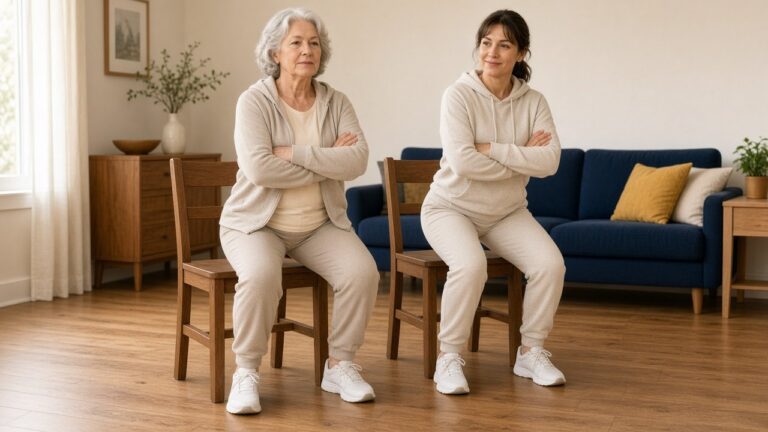
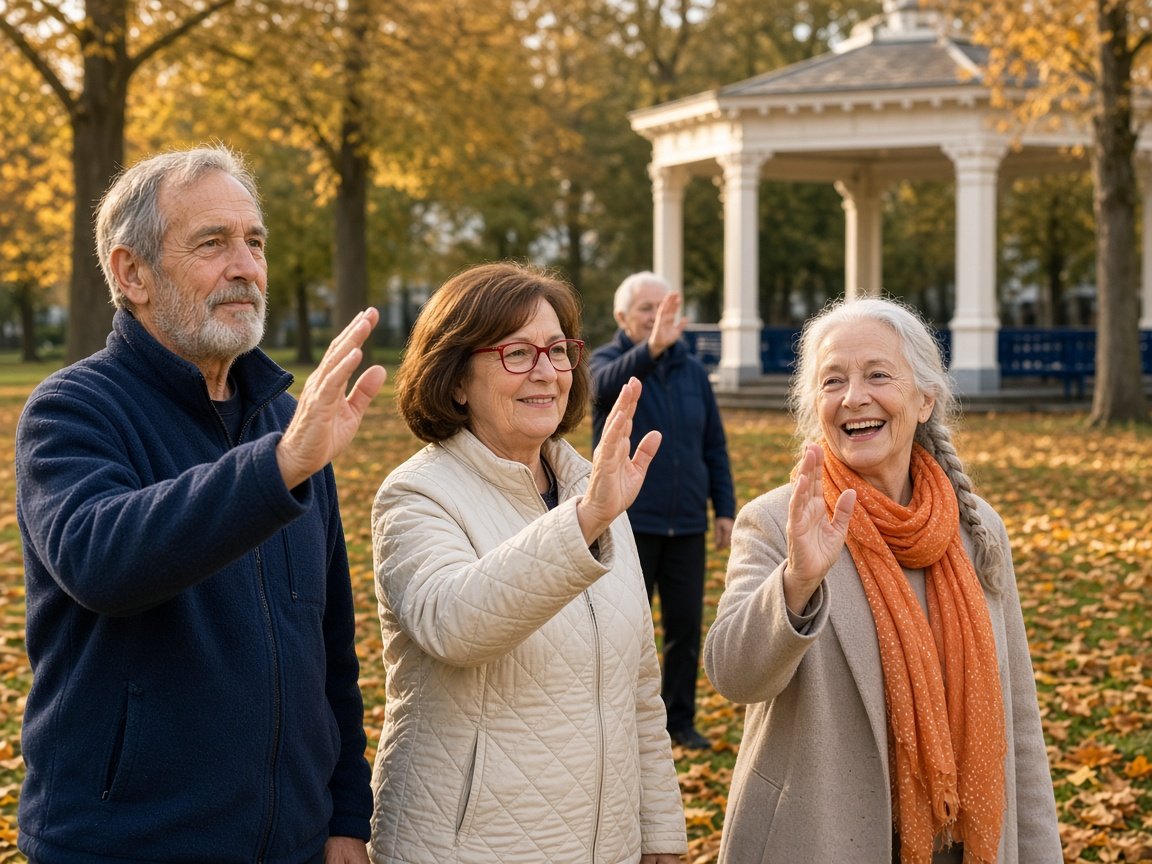
The researchers mean coordinated movements in an upright position, with a focus on balance while you move. They are done to music or an inner rhythm, such as your breathing, with instruction or choreography and with social contact. Stepping on a dance platform was excluded, precisely because the social contact was missing. Tai chi also fits this definition: 13 of the 29 studies tested dance styles such as ballroom or folk dance, the other 16 tai chi.
The participants were healthy older adults without conditions that raise the risk of falling. So the result does not automatically apply to people who already fall often. What else you can do for strong bones, you can read in the article on bone density and fall prevention.
Dancing and thinking skills: a modest gain
A second meta-analysis by Canadian researchers (McMaster University, Age and Ageing, 2021) pooled 11 randomised studies with 1412 participants aged 55 and over. Dancing probably improves overall thinking skills and executive functions, the ability to plan and adjust your behaviour. For complex attention there is little difference, and for learning and memory the evidence points to little effect. Whether dancing offers more than other exercise still needs to be studied. This study says nothing about dementia.
How dancing fits into Belgian physical activity advice
The Vlaams Instituut Gezond Leven, the Flemish health promotion institute, advises people over 65 to do activities for muscles, balance or flexibility 3 times a week. They reduce the risk of falling, increase your independence and count towards your weekly amount of exercise. A dance class is such an activity for your balance. In addition, the WHO recommends 150 to 300 minutes of moderate-intensity activity a week for all adults, or 75 to 150 minutes of vigorous activity. A researcher from Ghent University also contributed to these guidelines.
How much strength training the WHO recommends on top of that is covered in the article on strength training per week. The WHO also stresses that some activity is better than none, and Gezond Leven advises starting small and building up gradually.
How to start dancing after 65
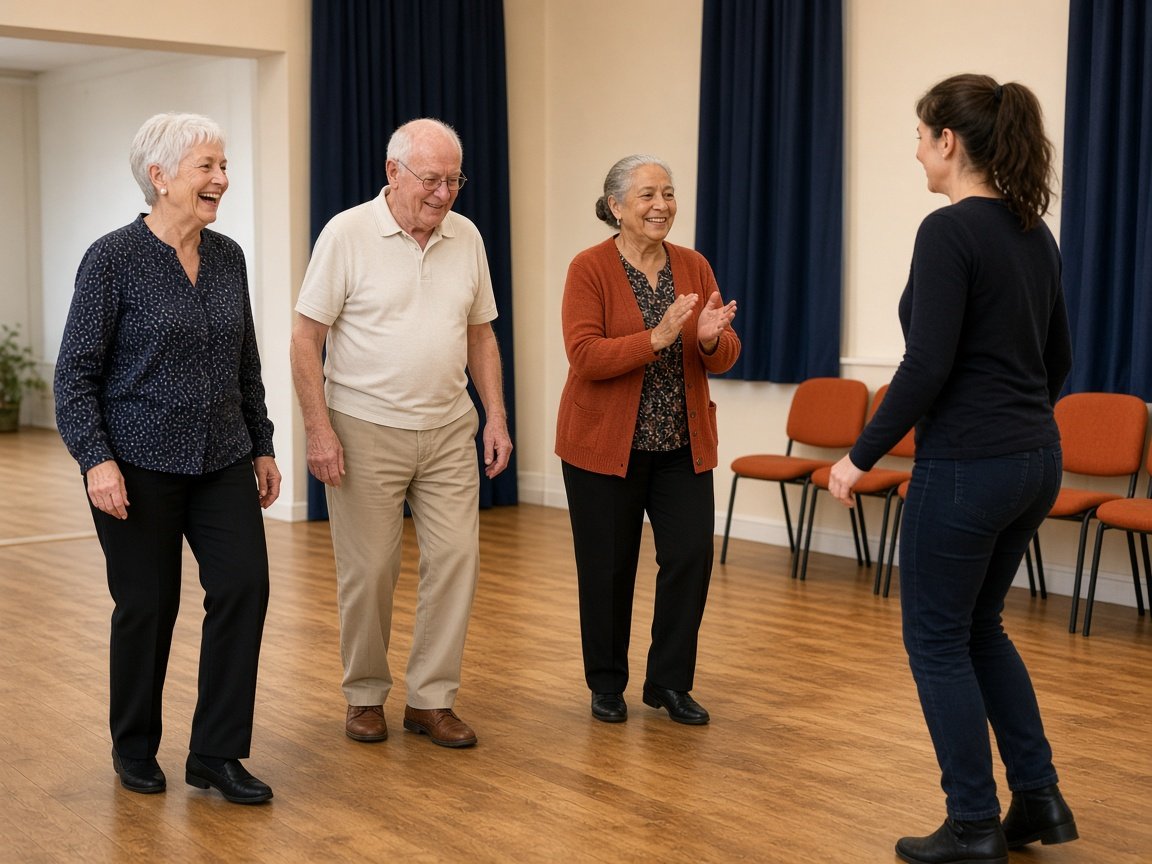
The studies included ballroom dancing, folk dance, line dance (dancing the same steps side by side in rows), tango and tai chi. Dance with your partner, a friend or in a group, because social contact is part of the study’s definition.
- Choose a dance style that appeals to you, so you enjoy going.
- Start gently and build up gradually, as Gezond Leven advises.
- Choose a class with an instructor who explains the steps, because instruction is part of the study’s definition.
- Over time, build up to 3 times a week, the rhythm at which the association in the studies was clearest.
- Ask a partner or friend to come along if taking the first step alone feels hard.
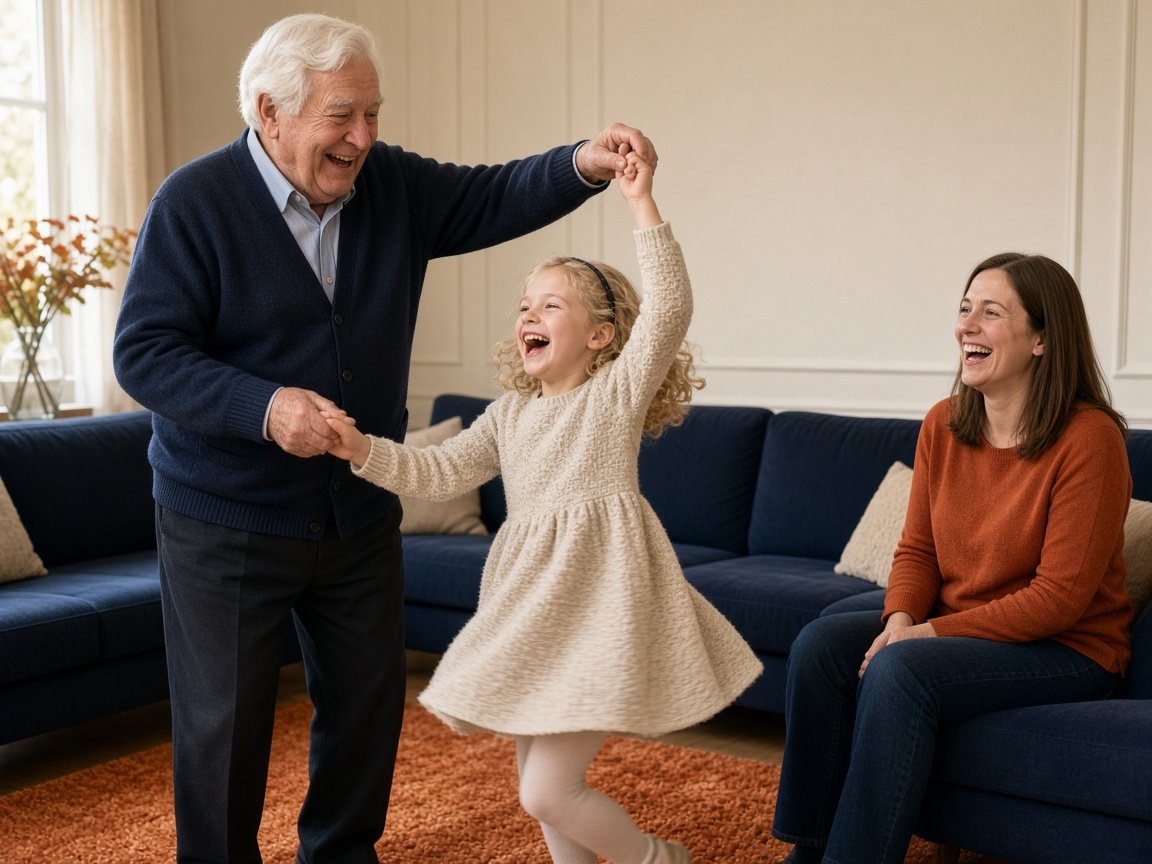
An easy first opportunity is a little dance with your grandchildren, for example while being active with children during the autumn break.
Sources
- Mattle M, Chocano-Bedoya PO, Fischbacher M, et al. Association of Dance-Based Mind-Motor Activities With Falls and Physical Function Among Healthy Older Adults: A Systematic Review and Meta-analysis. JAMA Network Open, 2020 (meta-analysis, University of Zurich).
- Hewston P, Kennedy CC, Borhan S, et al. Effects of dance on cognitive function in older adults: a systematic review and meta-analysis. Age and Ageing, 2021 (meta-analysis, McMaster University).
- Vlaams Instituut Gezond Leven, the Flemish health promotion institute. Hoeveel beweeg je best als 65-plusser? En wat met stilzitten? (how much to move after 65, in Dutch). Accessed in October 2026.
- Bull FC, Al-Ansari SS, Biddle S, et al. World Health Organization 2020 guidelines on physical activity and sedentary behaviour. British Journal of Sports Medicine, 2020 (WHO guidelines, with among others Cardon G, Ghent University).