Protein after 40: how much do you need to keep your muscle?
General information, not medical advice. If you have kidney disease or follow a special diet, discuss your protein intake with your GP or a dietitian.
Protein after 40 gets more attention because your muscle mass declines over the years. This article explains what European advice says about how much you need, where the numbers differ and why movement matters at least as much as what is on your plate.
Age-related muscle loss has a name
Doctors call the loss of muscle mass and strength that comes with ageing sarcopenia. In its 2019 consensus, a European working group of specialists in older people’s medicine describes sarcopenia as a muscle disease that raises the risk of falls, fractures and losing your independence. The group looks first at strength, for example the grip strength of your hand, and only then at muscle mass. The process is gradual, and enough protein plus regular physical activity are among the ways to slow it down.
How much protein after 40 do experts advise?
In 2012, the European Food Safety Authority (EFSA) set the reference intake for adults at 0.83 grams of protein per kilogram of body weight per day. According to EFSA, that value also applies to older adults. For someone weighing 70 kilograms, that is about 58 grams a day. It is an amount that covers the needs of almost everyone in a healthy population, not a target for building muscle.
In 2013, an international expert group, the PROT-AGE group, proposed a higher intake from age 65: on average 1.0 to 1.2 grams per kilogram per day, and at least 1.2 grams for people who are active or exercise. That advice is based on studies in older adults and is expert opinion, not an official standard. If you do regular strength training, the 2018 meta-analysis by Morton and colleagues is also relevant: the extra gain in muscle mass levelled off at around 1.6 grams per kilogram per day. The article on protein needs for active adults goes into those numbers.
There is no separate European figure for people aged 40 to 65; the EFSA reference remains the baseline.
Protein from everyday food
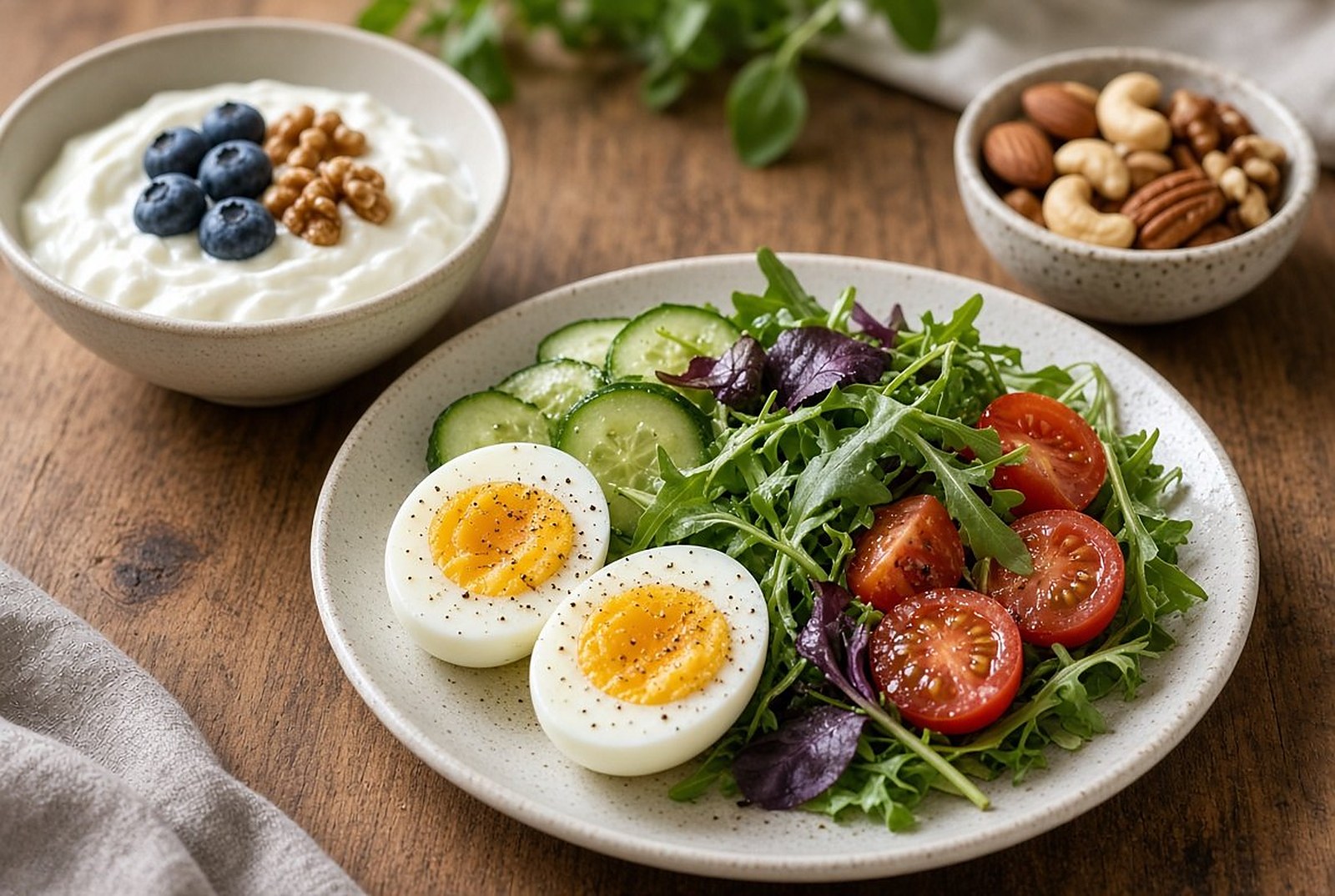
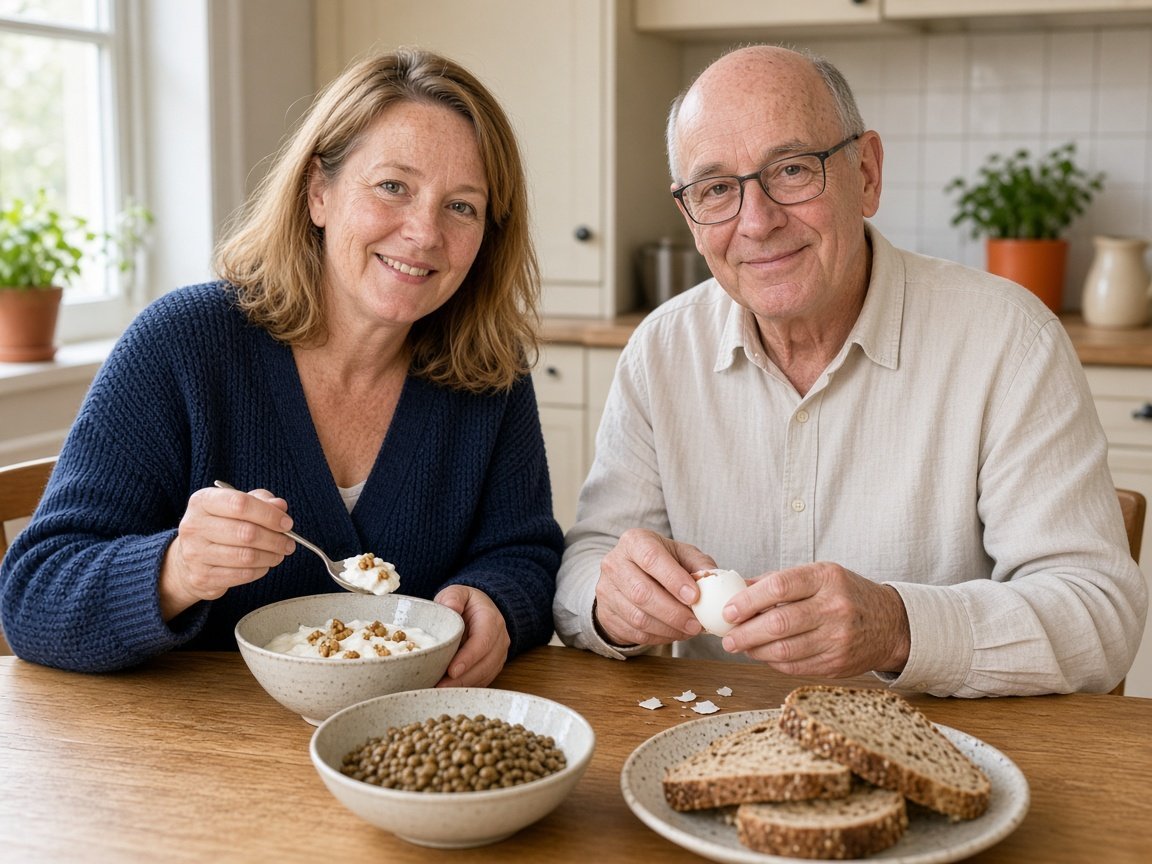
In its 2025 dietary recommendations, the Belgian Superior Health Council, the scientific body that advises the federal government, emphasises a varied diet including pulses, nuts, dairy, eggs and fish. Spread across your meals, this gives most people enough protein without powders or shakes. A breakfast with yoghurt or quark, a lunch with eggs or pulses and an evening meal with fish, chicken or tofu already provide a good share of your daily protein. Eggs are a quick option, as the article on eggs as a weekday protein source shows.
Without strength training, protein does little
Protein provides the building blocks, but your muscles also need a reason to use them. The World Health Organization (WHO) recommends that adults do muscle-strengthening activities on at least 2 days a week. The PROT-AGE group also links its protein advice to physical activity. You do not need a gym: you can start at home with your own body weight, as in this simple home strength training plan.
So it is the combination that counts: enough protein spread over the day, and twice a week giving your muscles some real work. If you deliberately eat less to lose weight, the PROT-AGE group notes there is even more reason to pay attention to protein and exercise, because you can lose muscle along with fat.
References
- EFSA Panel on Dietetic Products, Nutrition and Allergies. Scientific Opinion on Dietary Reference Values for protein. EFSA Journal. 2012;10(2):2557.
- Bauer J, Biolo G, Cederholm T e.a. Evidence-based recommendations for optimal dietary protein intake in older people: a position paper from the PROT-AGE Study Group. Journal of the American Medical Directors Association. 2013;14(8):542-559.
- Cruz-Jentoft AJ, Bahat G, Bauer J e.a. Sarcopenia: revised European consensus on definition and diagnosis. Age and Ageing. 2019;48(1):16-31.
- Morton RW, Murphy KT, McKellar SR e.a. A systematic review, meta-analysis and meta-regression of the effect of protein supplementation on resistance training-induced gains in muscle mass and strength in healthy adults. British Journal of Sports Medicine. 2018;52(6):376-384.
- Superior Health Council (Belgium). Dietary recommendations for the Belgian population (advice 9805-9807). 2025.
- World Health Organization. WHO guidelines on physical activity and sedentary behaviour. 2020.