
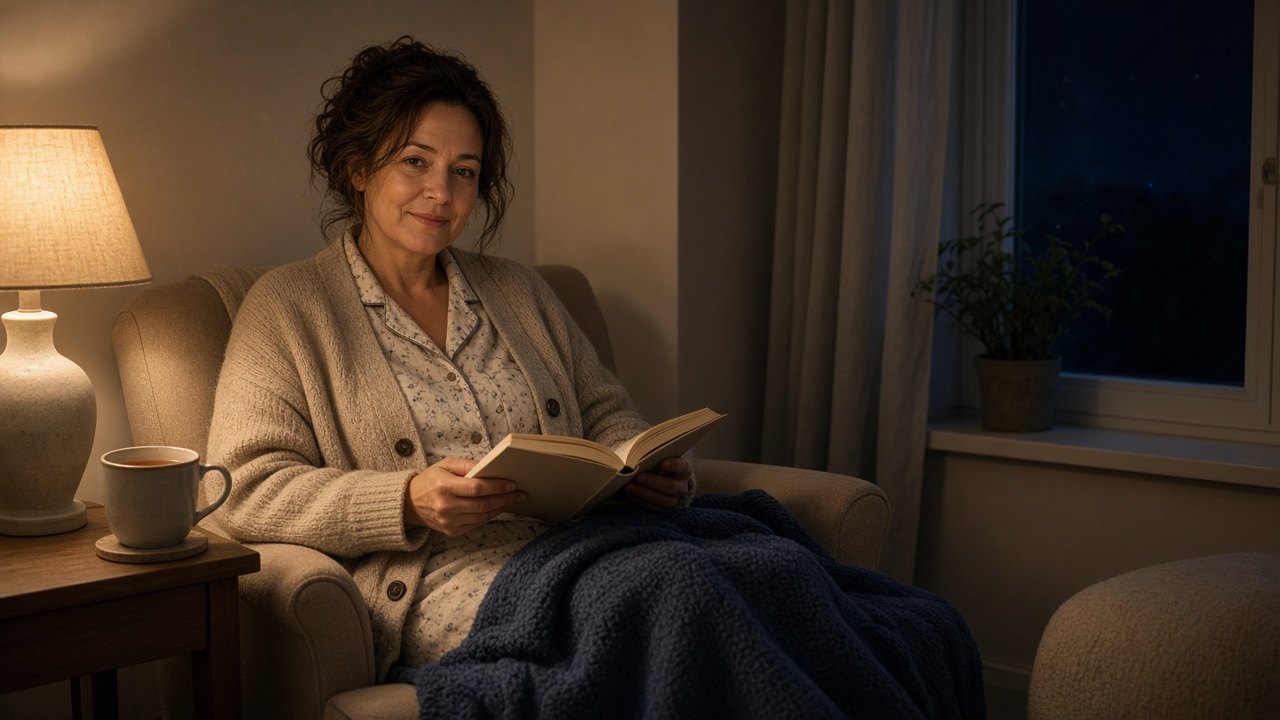
Lying awake at night: why getting up after 20 minutes can help
General information, not medical advice.
It is three in the morning and you have been wide awake for a while. The Flemish Institute for Healthy Living (Vlaams Instituut Gezond Leven) developed its information on sleep together with the Academic Centre for General Practice at KU Leuven. If you are still not asleep after 20 minutes, it advises getting up for a while.
Waking briefly is normal
According to Gezond Leven, a sleep cycle lasts 1.5 to 2 hours. After a cycle you sometimes wake for a few seconds, usually without noticing. That is normal: your body checks whether you are in pain or have a full bladder, and whether your surroundings are still safe. As you get older, your sleep pattern also changes. You sleep more lightly and may have nights when you wake three or four times, or sleep only six hours.
It gets harder when you often lie awake in bed for a long time. Your brain then starts to link your bed with being awake, and that keeps the pattern going.
Getting up after 20 minutes
To break that link, Gezond Leven describes a technique called stimulus control. The idea is that your brain learns again that your bed is for sleeping, not for lying awake. The technique has four steps:
- If you are still not asleep after 20 minutes, get up for a while.
- Do something relaxing or boring in another room, such as watering the plants, ironing, emptying the dishwasher or reading a book.
- Only go back to bed when you feel calm and sleepy.
- Repeat these steps until you fall asleep.
Screens are not a good idea at that moment, because the light from a TV, computer or phone stimulates your brain too much. That is one more reason to leave your phone outside the bedroom. A book is a better fit, and if you are already used to reading instead of scrolling, you will have one to hand.
Sleep habits do not change overnight. Gezond Leven advises keeping up a bedtime routine and stimulus control for more than three weeks, and some people need several months. If sticking with it is hard, talking about your goal with someone can help.
What else you can do for better sleep
These tips also come from Gezond Leven:
- Get up at about the same time as much as possible, and only go to bed when you feel sleepy. If you are older, don’t make a habit of going to bed early.
- Caffeine reduces your sleep pressure, the feeling of tiredness that builds up over the day. So drink no more than four cups of coffee or tea a day, and preferably none after 3 p.m.
- Don’t drink too much just before bedtime, so you don’t wake at night because you need the toilet.
- Avoid alcohol as a nightcap: it may help you fall asleep more easily, but the quality of your sleep is worse.
- Sleeping during the day disturbs your sleep rhythm. If you have trouble sleeping, it is best to skip naps. If you do take a short afternoon nap, keep it to 20 minutes at most.
- Keep the bedroom at a comfortable temperature, no colder than 17 °C, limit light and noise, with earplugs if needed, and put your alarm clock out of sight.
When to see a doctor
According to Gezond Leven, about 30% of Belgians have sleep problems, so you are certainly not alone. If these tips do not help you change your habits and sleep better, contact your GP, who will look with you at which approach suits your situation best. In 2026 an updated guideline on sleep complaints and insomnia appeared for GPs and other health professionals, drawn up by WOREL, the working group that develops guidelines for primary care. It focuses first on an approach without medication and includes a new chapter on tapering off sleeping pills. If you already take sleeping pills, discuss with your GP whether tapering off is an option for you.
Sources
- Vlaams Instituut Gezond Leven. Je slaap verbeteren. gezondleven.be, no publication date given, accessed 14 October 2026.
- Vlaams Instituut Gezond Leven. Wat is slaap? gezondleven.be, no publication date given, accessed 14 October 2026.
- Vlaams Instituut Gezond Leven. Slaap. gezondleven.be, no publication date given, accessed 14 October 2026.
- Janssen A. Nieuwe richtlijn: aanpak van slaapklachten en insomnia. Domus Medica, 2 July 2026.
- Van Thienen K, De Coninck L, Goossens M et al. Multimodale aanpak van slaap en insomnia. Guideline, Domus Medica, May 2026.



One Comment