Foam roller: what actually helps mobility — and what is not magical recovery
TLDR
- Foam rolling can feel temporarily looser and soften muscle soreness a bit — not a “recovery reset.”
- Yes: short sessions around training or stiff zones. No: hours of rolling as a substitute for sleep, food or progressive load.
- UAntwerpen nuance: many claims are bigger than the evidence; felt ≠ structural recovery.
- See also recovery within 24 hours, signs of too little recovery and ice-bath timing.
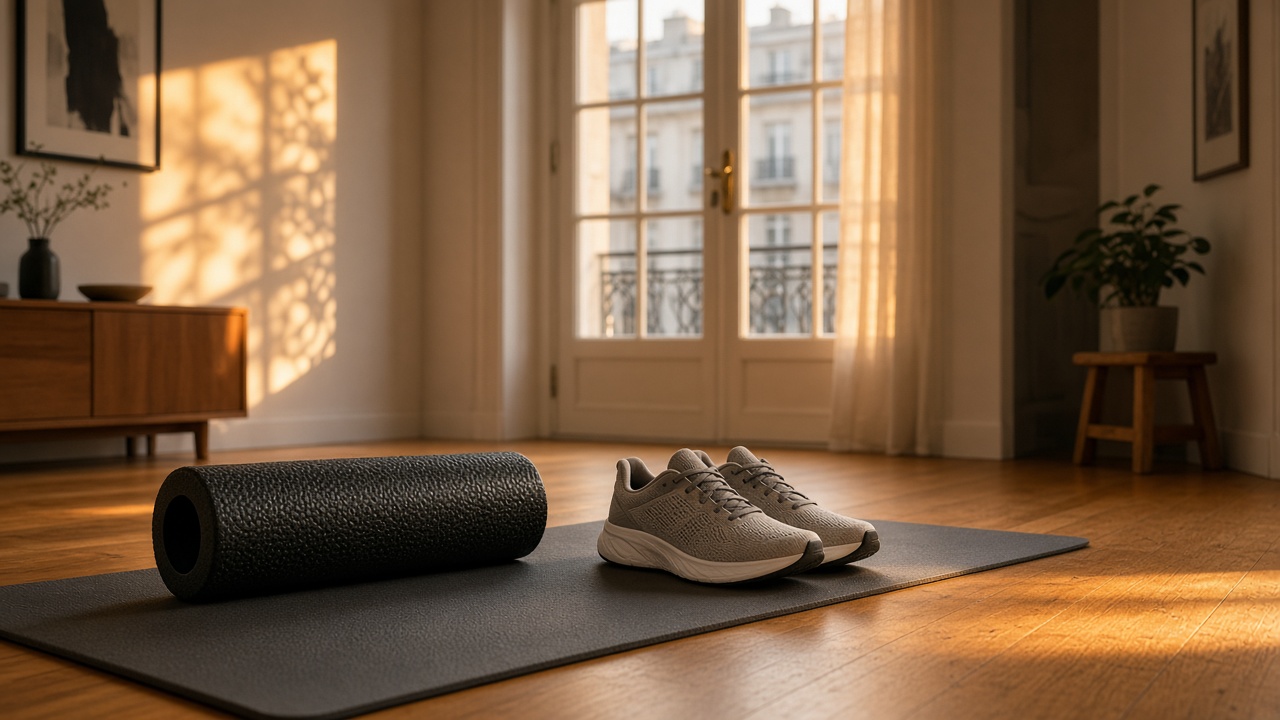
In the locker room the foam roller sits like a holy stick. Feeds promise “fascia release” and “faster recovery.” As a practitioner I sometimes roll myself for five minutes — and I have also seen weeks where rolling was the only “recovery strategy” while sleep and volume ran off the rails. Put it in perspective: a roller is a comfort tool, not a magical recovery factory.
Sporza IN FORM and sports science push the same way: short, targeted, realistic. Who thinks rolling “wipes out” a heavy leg week misses the real levers.
What foam rolling actually does
The most consistent outcome is subjective: tension feels less, range of motion seems briefly wider, and some people report a bit less soreness the next day. That is useful — especially if you would otherwise walk into the next session stiff. It is not proof that tissues are “repaired” or that you get stronger faster.
Research from the UAntwerpen angle (and broader reviews) nuances hard: effects are often short-lived, methods vary, and marketing talks about “toxins” and “fascia unlocking” as if those were lab facts. For a recreational athlete, the honest translation: rolling can be comfortable; it does not replace recovery within 24 hours.
When yes
- Short before or after: 30–90 seconds per zone, a few minutes total — not half an hour of torture.
- Stiff hotspots: calves, quads, upper back after desk + training — soft enough that you still breathe.
- As a ritual: downregulate briefly instead of scrolling; mental calm counts in recovery too.
When no / limits
- Not as punishment: rolling harder “because it must burn” is not progression.
- Not as an alibi: if you are chronically tired, look first at signs of too little recovery and a real rest day or deload.
- Pain ≠ gain: sharp pain, swelling, recent injury or nerve symptoms: stop and have a professional look.
- Not a rival to sleep: late roll sessions that keep you awake help no one.
Foam roller vs ice bath vs “everything at once”
Same family as ice baths: popular, felt, oversold. An ice bath can be timing-sensitive around strength work; foam rolling is milder but also not a cure. Stacking modalities because “everyone does it” is often busywork without a plan. Pick one comfort tool you can stick with, and invest the rest of your energy in training quality, protein, walking and sleep.
Practical Engy tip
Set a timer for 5–8 minutes. Roll zones that will load tomorrow’s session. Breathe calmly. Done. No 40-minute podcast on “myofascial release” needed to decide whether your legs may work again tomorrow.
Recommendations in bullets
- Short sessions, mild pressure, do not hold your breath.
- Use rolling as an add-on to sleep/food/volume — not a replacement.
- If you “need” it for weeks just to move: revisit load and recovery, not only the roller.
- Injury-like pain: professional, not harder rolling.
- Compare modalities honestly: comfort ≠ structural recovery.
Sources (selection)
- Sporza IN FORM — foam rolling in sports practice: use and limits (inspiration, not republication).
- UAntwerpen / sports-science reviews — acute ROM and DOMS effects often temporary; relativise claims.
- ISSN / recovery reviews — recovery modalities as add-ons, not the core of adaptation.
- Engy frame: recovery within 24 hours, rest day/deload, signs of too little recovery.