Shingles after 60: why the Belgian Superior Health Council recommends a vaccine you usually pay for yourself
General information, not medical advice. If you think you have shingles, especially on your face or near your eye, or if you are unsure about vaccination, contact your GP.
Shingles, also called zona or herpes zoster, becomes more common as you get older. The Belgian Superior Health Council (SHC), the scientific advisory body of the Belgian government for public health, recommends vaccination from the age of 60. The vaccine is only reimbursed in certain situations. As a healthy person over 60, you will therefore usually pay for it yourself.
What is shingles and how common is it?
Shingles is a band-shaped skin rash on one side of the body. It is caused by the varicella-zoster virus, the virus that causes chickenpox. After an earlier infection, the virus stays behind in the nerve ganglia next to the spinal cord, places where nerve cells are bundled together. Later it can become active again.
According to the patient guideline from Gezondheid en Wetenschap, the risk of shingles is highest in people over 60. In Belgium, a GP sees on average 5 new people with shingles per 1,000 patients. In people under 50 that is fewer than 2 per 1,000 and in people over 80 up to 11 per 1,000. According to the SHC, about one third of the population will get shingles at some point in their lives.
A few days before the rash, people often feel burning, pain or itching. Then red spots and blisters appear. Shingles usually heals in 1 to 2 weeks. The fluid in the blisters is contagious for 1 to 2 weeks to people who have never had chickenpox. The scabs are no longer contagious.
Postherpetic neuralgia: pain that lingers
In some people the pain persists after the rash has healed. This nerve pain can last for months after the infection and is called postherpetic neuralgia. According to Gezondheid en Wetenschap, the vaccine reduces both the risk of shingles and the risk of this nerve pain.
Shingles and vaccination: what does the SHC advise?
In advisory report 9684 from 2022, the SHC recommends a non-live vaccine, meaning a vaccine without live virus, in 2 doses. The advice applies to adults aged 60 and over with a normal immune system and to people aged 16 and over with a weakened immune system, meaning one that works less well. The vaccine discussed by the SHC is called Shingrix.
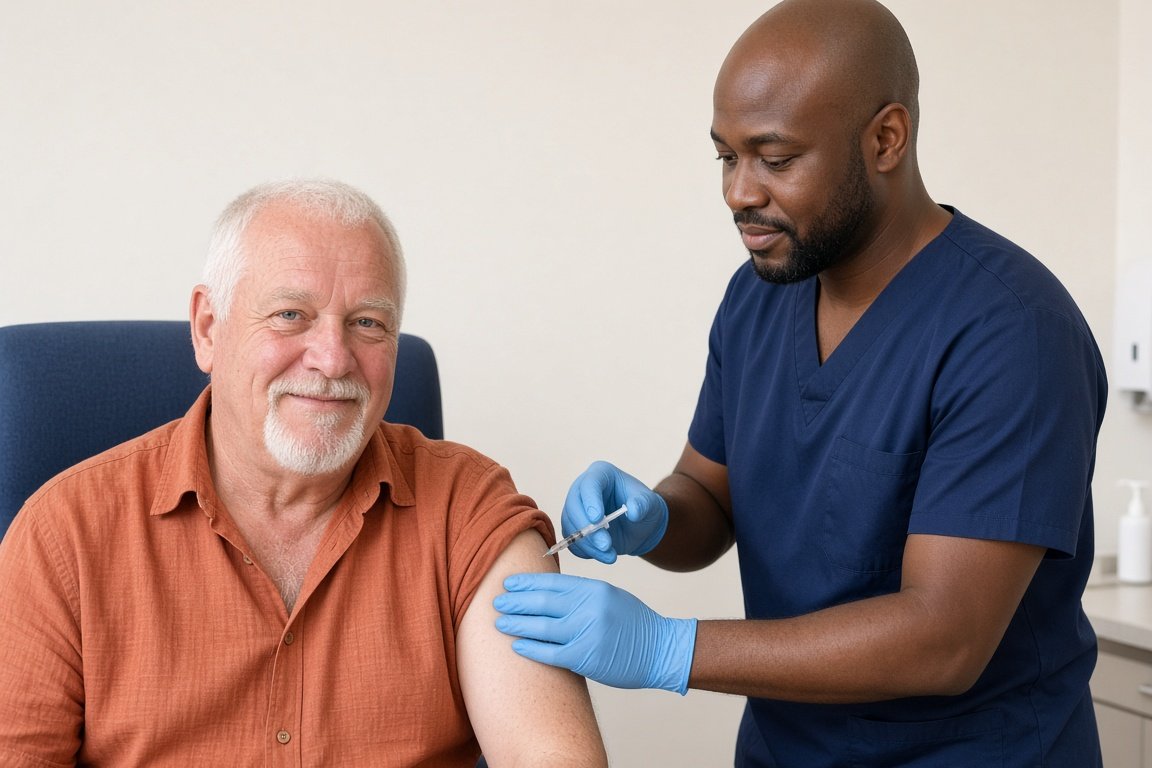
In the ZOE-50 study, a randomised trial in which chance decides who gets the vaccine, efficacy was 96 percent after 4 years. Efficacy indicates by what percentage the vaccine lowers the risk of shingles. Against postherpetic neuralgia, efficacy is 89 to 91 percent. In real-world studies, research in vaccinated people in everyday practice, efficacy was between 70 and 86 percent. After 7 years of follow-up, it remains above 90 percent.
The most reported side effects are reactions at the injection site and mild to moderate general reactions. According to the SHC, it is safe to give the vaccine together with the flu vaccine. That is useful if you get the flu vaccine after 65 in the autumn.
What does the vaccine cost and when is it reimbursed?
Reimbursement follows the rules of RIZIV-INAMI, the Belgian health insurance institute, as listed by the Belgian Centre for Pharmacotherapeutic Information (BCFI). The vaccine is only reimbursed from the age of 18 and in one of these situations:
- you have a malignant blood disease or another malignant tumour and received active treatment for it in the past 5 years;
- you are infected with HIV, a virus that weakens your immune system;
- you have had a stem cell or organ transplant or are eligible for one.
Your doctor must then fill in an application form in advance for the advisory doctor of your health insurance fund. You then pay a personal contribution of 12.80 euros per dose, or 8.50 euros if you are entitled to increased reimbursement. The personal contribution is the part you pay yourself. Increased reimbursement is a higher refund for people who are entitled to it. A maximum of 2 packs is reimbursed, with the second dose 2 to 6 months after the first. For everyone else, including healthy people over 60, there is no reimbursement. Ask your pharmacist or GP for the price.
When should you see your GP about shingles?
If shingles affects your face, your eye can also become inflamed. In that case, see a doctor. If you want to know whether the vaccine is right for you, discuss it with your doctor, as Gezondheid en Wetenschap advises. Shingles can knock you out for a while. Once you are back on your feet, social contact as a daily habit is a small step back to normal life.
Sources
- Gezondheid en Wetenschap. Zona (gordelroos) (patient guideline, in Dutch). Last updated 30/08/2023.
- Superior Health Council. Vaccinatie tegen herpes zoster (in Dutch). Advisory report 9684, 2022. English text of the report (pdf).
- BCFI. Terugbetaling Shingrix (reimbursement, source: RIZIV, in Dutch). Accessed November 2026.