Nosebleed: why tilting your head back does not help and what does
General information, not medical advice. If your nose bleeds after an accident or a hard blow, or keeps bleeding, call your GP or the out-of-hours service straight away.
A nosebleed often catches you at an awkward moment: in a meeting, at the dinner table or in the middle of the night. Many people immediately tilt their head back, as they were taught as children. That is exactly what you should not do. This article explains how to stop a nosebleed, why it happens more often in winter and when to get help.
Why tilting your head back does not help
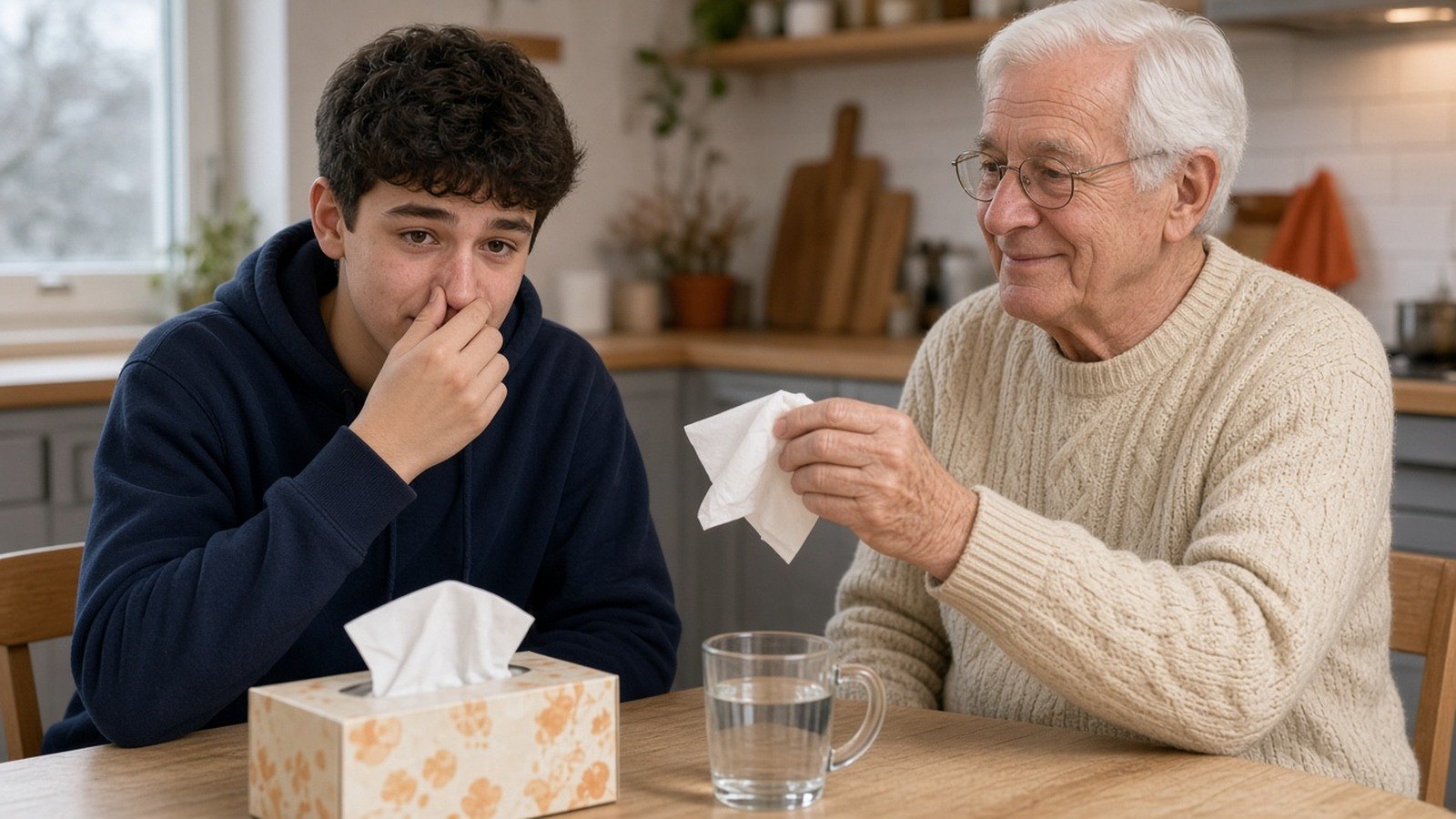
Thuisarts, the patient website of the Dutch college of general practitioners NHG, advises leaning your head slightly forward. If you tilt it back, the blood runs down your throat. Swallowing blood can make you feel sick. The British health service NHS also advises sitting down and leaning forward, with your mouth open.
How to stop a nosebleed
Thuisarts describes this approach, which almost always stops a nosebleed:
- Sit down and breathe calmly through your mouth.
- Blow your nose gently. This also clears out blood clots, which helps the bleeding stop sooner.
- Lean your head slightly forward.
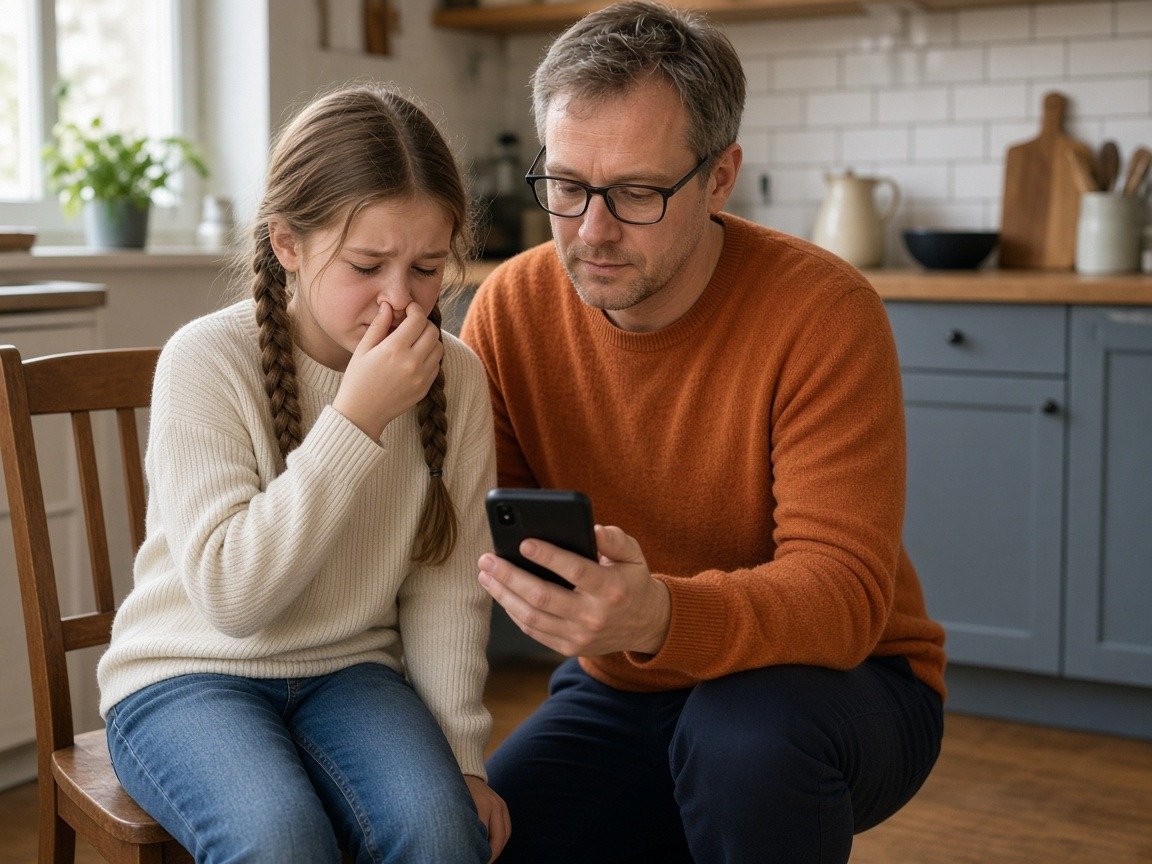
- Pinch the soft part of your nose with your thumb and index finger, just below the hard bony part.
- Hold it for 5 minutes or longer without letting go in between. Use your phone or watch to keep track of the time.
If your nose is still bleeding, pinch it again, this time for 10 minutes. There is no need to blow your nose first. The NHS advises pinching for 10 to 15 minutes in one go. According to the NHS, an ice pack or a bag of frozen peas wrapped in a tea towel on top of your nose may reduce the blood flow, although the evidence is not strong. According to Thuisarts, a nasal spray probably does not help stop the bleeding.
Why a nosebleed happens more often in winter
The inside of your nose is lined with a thin mucous membrane full of tiny blood vessels. If one of them breaks, you bleed. This often happens by itself. The NHS names a nose that is too dry as a cause, for example because of a change in air temperature. Picking your nose, blowing it hard, a blow to the nose and a cold can also cause a nosebleed. When you have a cold you blow your nose more often, which does not help. Whether you should rest or keep moving is covered in the article on exercising with a cold.
In older people a small blood vessel in the nose breaks more often, according to Thuisarts. Besides children, the NHS also names adults over 45, pregnant women and people with high blood pressure as groups who get nosebleeds more often. Thuisarts, on the other hand, says a nosebleed is usually not caused by high blood pressure. If you want to keep an eye on your blood pressure anyway, the article on measuring your blood pressure at home can help.
If you take blood thinners, a broken blood vessel can bleed for longer than normal.
What to avoid after a nosebleed
Do not pick your nose and blow it gently. You can also put a little petroleum jelly inside your nose a few times a day to keep the lining supple. Thuisarts honestly says it is not known whether this prevents a new nosebleed, but it has no downsides either.
For the first 24 hours after a nosebleed, the NHS advises not to blow or pick your nose, not to pick any scabs, not to drink hot drinks or alcohol, not to do heavy lifting or strenuous exercise and not to lie flat. Thuisarts does note that doctors do not know whether hot drinks, alcohol or a hot shower really increase the chance of a nosebleed.
When to see your GP
Call your GP or the out-of-hours service straight away if you have a nosebleed after an accident or a hard blow to your nose, or if your nose is still bleeding after you have pinched it 2 times in a row. The NHS also names bleeding that seems excessive, swallowing so much blood that you vomit, feeling weak or dizzy and difficulty breathing as reasons to get help immediately. Do you get nosebleeds often, for example once a month, and does the advice not help? Then make an appointment with your GP.
Sources
- Thuisarts, Nederlands Huisartsen Genootschap (NHG, the Netherlands). Ik heb een bloedneus. 2026 (last updated 28 July 2026).
- NHS (United Kingdom). Nosebleed. 2023 (page last reviewed 5 December 2023).