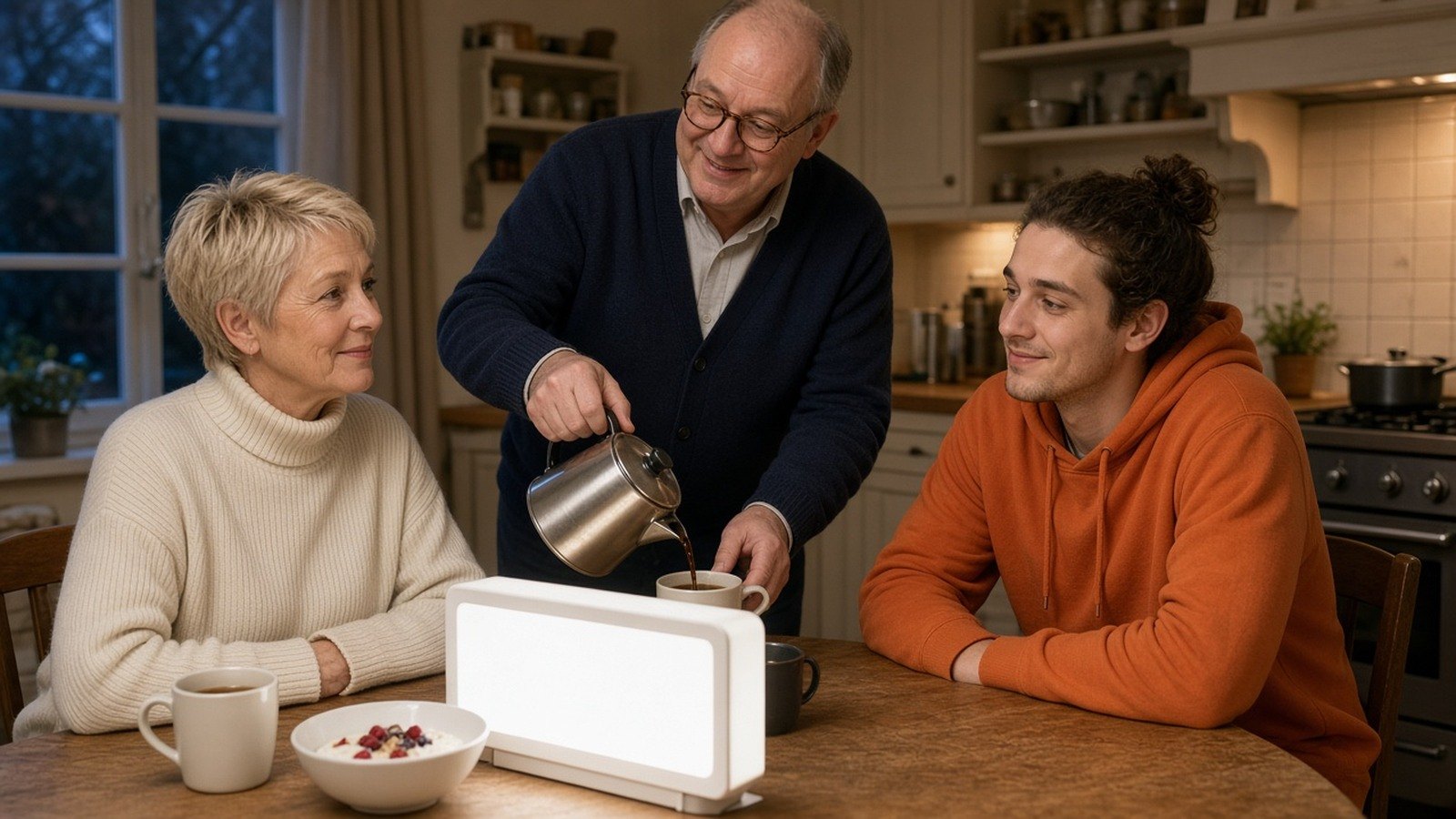
Winter depression: why morning light worked for 61 percent in one study, against 32 percent with a sham treatment
General information, not medical advice. If you have been feeling low for weeks, or have thoughts of suicide, talk to your GP or call the free Belgian suicide prevention lines: 1813 in Dutch or 0800 32 123 in French.
Do you feel low and drained every autumn, and better again in spring? It may be winter depression. Light therapy is a common treatment, and research shows what it can and cannot do.
What is winter depression?
According to the patient guideline on depression from Gezondheid en Wetenschap, the Flemish health website of the Belgian Centre for Evidence-Based Medicine (Cebam), you have winter depression if you become depressed in autumn or winter for at least two years in a row and feel better again in spring. According to that guideline, the treatment is light therapy and sometimes medication. The Belgian website gezondheid.be lists fatigue, low mood and loss of energy as typical symptoms.
How exactly light helps is unclear. Gezondheid en Wetenschap writes that light therapy may reset your body clock, may work through melatonin, or both. Your body clock is the internal rhythm that decides when you feel sleepy and when you are awake. Melatonin is a hormone made in your brain that plays a role in your sleep-wake rhythm. How morning light and your body clock are linked is explained in a separate article.
What a study of morning light found in winter depression
This American study from Chicago was published in 1998 and is randomised: a draw decides who gets which treatment. In total, 96 patients with winter depression completed it. For 4 weeks they received 1.5 hours a day of morning light, evening light or a placebo. A placebo is a sham treatment, used to see how much of the effect comes from expectations. Here it was fake negative-ion generators. The light of about 6000 lux came from light boxes. Lux is the unit used to measure the strength of light.
After 4 weeks, by a strict criterion, 61 percent responded to morning light, 50 percent to evening light and 32 percent to the placebo. The effect needed at least 3 weeks. Yet expectations and average depression scores did not differ between the three groups after 4 weeks. The benefit of morning light lay in more patients whose symptoms had (almost) completely disappeared.
Light or antidepressants?
In 2020, Gezondheid en Wetenschap discussed a literature review by French researchers (Geoffroy et al., 2019). It compared light therapy with antidepressants, alone and combined, in 7 studies with 397 participants with moderate to severe depressive symptoms, not only in winter. The treatments lasted 5 weeks on average. There was no difference between light therapy and antidepressants, and the combination had the largest effect.
There are caveats. There was no comparison with a placebo, there were few studies with few participants, and it is unclear how long and how strong the light therapy was. The researchers have also received a lot of support from pharmaceutical companies in the past. According to the review, light could be preferred because it is cheaper and has few side effects.
How to use a light box
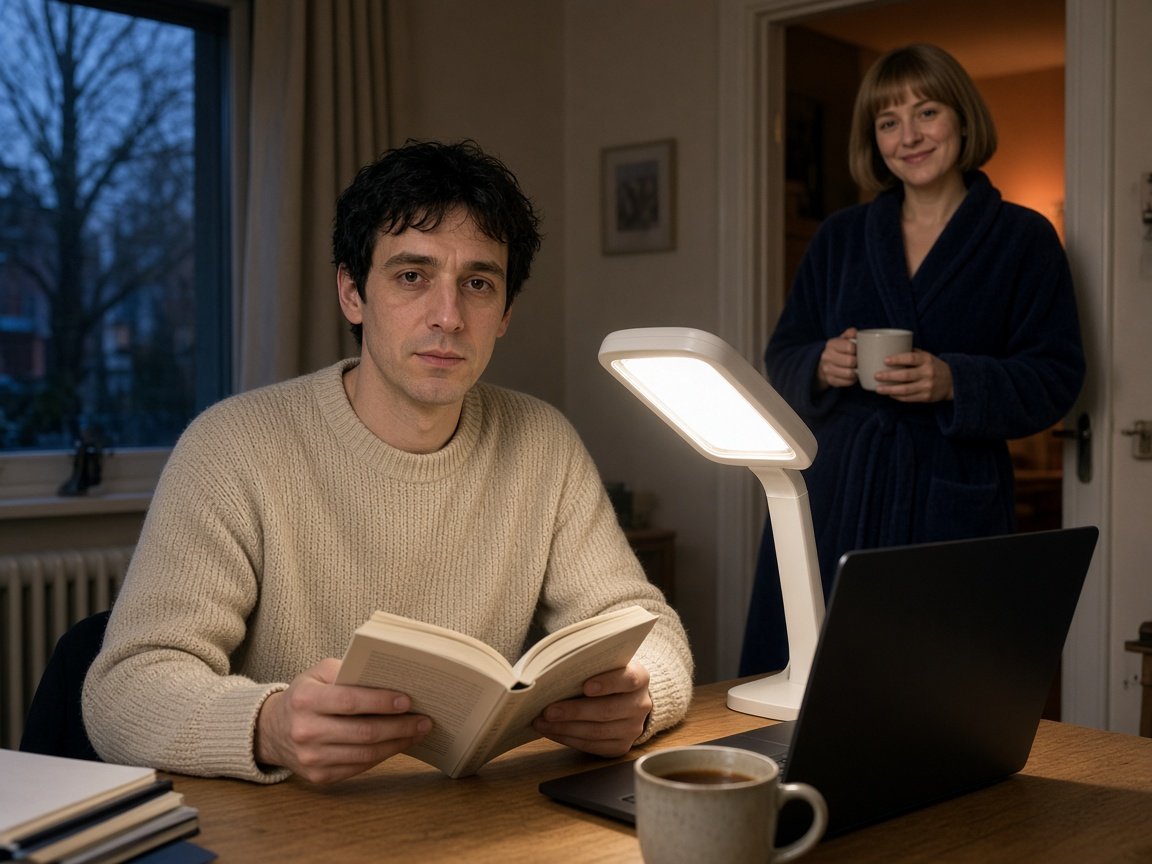
According to gezondheid.be, ordinary indoor artificial light rarely exceeds 500 lux, while the recommended strength is usually 10,000 lux. Use it within the first hour after waking up, for about 20 to 30 minutes, at the distance given by the manufacturer, with your eyes open but without looking straight into the light. Choose a device made for winter depression that filters out UV light. This schedule differs from the 1998 study, which used weaker light and longer sessions.
What you can do yourself
Gezondheid en Wetenschap mentions regular exercise: it lowers your risk of depression and can ease a depression. Even if you do not feel like it, there is evidence that exercise can improve your mood. Ideas are in the article on exercising outdoors in autumn and winter. Also try to stay in touch with friends or family and do not stay home alone. How to make social contact a daily habit is explained separately.

When to see a doctor
Do you feel low for most of the day, (almost) every day, for at least 2 weeks, and does it seriously disrupt your daily life, or do you have recurring thoughts of death? According to Gezondheid en Wetenschap, these are signs of depression, and then you see your GP. According to gezondheid.be, not everyone benefits from light therapy. Talking therapy or antidepressants are often needed too, so do not start on your own if you feel depressed.
Sources
- Gezondheid en Wetenschap (Cebam). Behandeling van depressie. Patient guideline, last updated on 14 January 2026 (in Dutch).
- Finoulst M. Kan lichttherapie depressieve gevoelens temperen? Gezondheid en Wetenschap (Cebam), 9 December 2020, in Dutch (review of Geoffroy PA et al., Sleep Medicine Reviews, 2019, literature review with meta-analysis).
- Eastman CI, Young MA, Fogg LF, Liu L, Meaden PM. Bright light treatment of winter depression: a placebo-controlled trial. Archives of General Psychiatry, 1998 (randomised placebo-controlled trial).
- Van Rossom S. Tips voor lichttherapie bij winterdepressie. gezondheid.be, last updated in November 2024 (in Dutch).