
Caffeine and blood pressure: when coffee fits and when it does not
General information, not medical advice. If you have high blood pressure, a heart condition or are pregnant, discuss your coffee intake with your GP.
Caffeine and blood pressure are linked: after a cup of coffee your blood pressure rises a little. This article explains how big that effect is according to research, how to measure reliably at home and which limits European and Belgian bodies use.
What caffeine does to your blood pressure
Caffeine stimulates your nervous system and can briefly narrow your blood vessels a little. A 2005 meta-analysis by Noordzij and colleagues pooled randomised trials in which participants had coffee or caffeine every day for several weeks. Across all trials, systolic pressure, the pressure when your heart contracts, rose by 2.04 mmHg (millimetres of mercury, the unit for blood pressure) and diastolic pressure by 0.73 mmHg. With caffeine tablets the rise was larger: 4.16 mmHg systolic. With coffee it was smaller: 1.22 mmHg. The researchers conclude that regular caffeine raises blood pressure, but that the effect through coffee is small.
The smaller effect of coffee may come from other substances in coffee or from daily drinkers getting used to caffeine. The study itself shows the difference, not the explanation.
Measuring caffeine and blood pressure at home
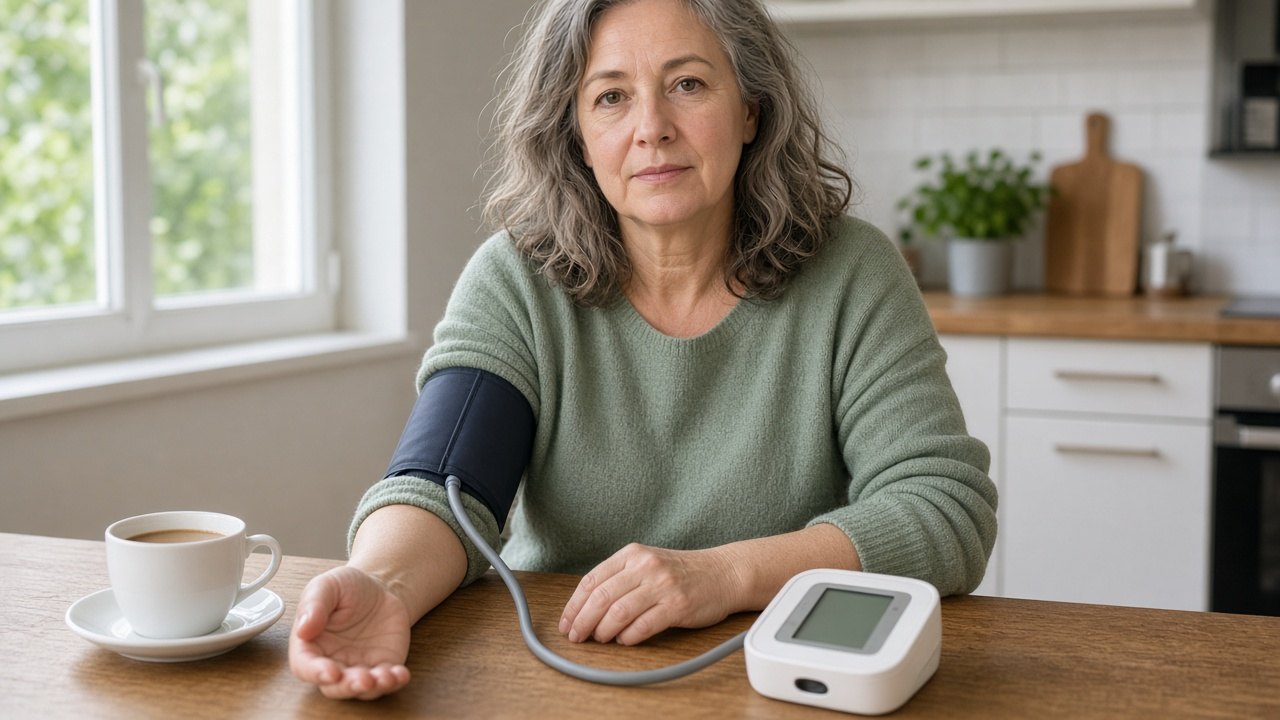
At the doctor’s, your blood pressure is sometimes higher because of the tension of the moment. That is why the ESC advises confirming a raised reading with measurements outside the surgery, at home or with a device worn for a day and night. Your blood pressure also follows a daily rhythm: it falls during sleep and rises again after waking. If you check your blood pressure at home, a cup of coffee just before skews the result. In its 2024 guidelines, the European Society of Cardiology (ESC) advises no caffeine, smoking or exercise in the half hour before a measurement. Then sit quietly for five minutes, with your back supported and your arm on the table at heart level. Measure at fixed times if you can, so your results are comparable.
To find out how you respond to coffee, you can measure on a few days before your first cup and some time after. Discuss the results with your GP, especially if your readings are often high.
How much coffee fits?
In 2015, the European Food Safety Authority (EFSA) concluded that single doses of up to 200 milligrams of caffeine, and up to 400 milligrams a day in total, raise no safety concerns for healthy adults. Gezond Leven, the Flemish institute for health promotion, recommends no more than 4 cups of coffee or tea a day and preferably none after 3 pm, because caffeine can disturb your sleep. The article on stopping caffeine before sleep explains why timing matters. If you exercise, timing plays a role too, as the article on caffeine later in the day shows.
If you already have high blood pressure, these general limits do not automatically apply to you. Follow what you agree with your doctor and use your home readings to see whether coffee makes a difference.
References
- Noordzij M, Uiterwaal CS, Arends LR e.a. Blood pressure response to chronic intake of coffee and caffeine: a meta-analysis of randomized controlled trials. Journal of Hypertension. 2005;23(5):921-928.
- McEvoy JW, McCarthy CP, Bruno RM e.a. 2024 ESC Guidelines for the management of elevated blood pressure and hypertension. European Heart Journal. 2024;45(38):3912-4018.
- EFSA Panel on Dietetic Products, Nutrition and Allergies. Scientific Opinion on the safety of caffeine. EFSA Journal. 2015;13(5):4102.
- Gezond Leven. Je slaap verbeteren (Improving your sleep, in Dutch). Accessed October 2026.






One Comment