Low back pain: why it’s best to keep moving
General information, not medical advice.
Suddenly a sharp pain shoots through your lower back, for example after lifting something heavy. Lying down and waiting for it to pass then seems the safest choice. The Belgian guideline on low back pain from the Belgian Health Care Knowledge Centre (KCE) says otherwise: keep moving as much as you can.
Common and usually harmless
When the KCE presented its guideline in 2017, one in five Belgians had had back pain in the previous twelve months. The World Health Organization (WHO) estimates that low back pain affected 619 million people worldwide in 2020. According to the WHO, recurring episodes of low back pain become more common as you get older.
In about nine out of ten people with low back pain, no specific cause can be found, such as a disease or a problem in the spine, according to the WHO. This is called common or non-specific low back pain. Gezondheid en Wetenschap, a Belgian website with medical information for the general public, describes it as not serious: the worst pain lasts a few days and then eases.
What the guidelines say about moving
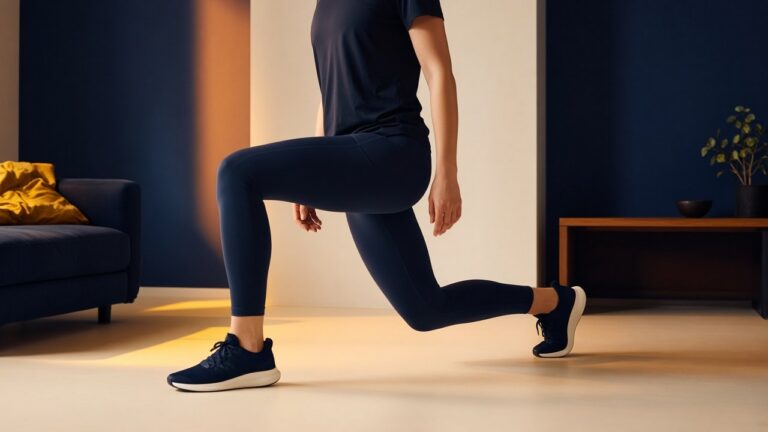
The KCE is clear: people with back pain should keep moving, continue their daily activities as far as possible, or even do exercises. Many people stop all physical activity, afraid that a wrong movement will make things worse. According to the KCE, that fear is unfounded. Gezondheid en Wetenschap gives the reason to keep moving: it helps prevent the back pain from becoming chronic. The site advises against bed rest, because it makes your symptoms drag on longer. For short-term bed rest, the KCE guideline found no evidence of harm, but no evidence of benefit either.
What you can do yourself
Gezondheid en Wetenschap gives these tips:
- Carry on with your usual activities, within your own limits. Pace your activities, set priorities in your day and give yourself time.
- Go for walks. Walking supports your recovery and lowers your risk of a relapse. As a general guideline, start with short distances and build up as things improve, until a long walk at the weekend is possible again.
- Change position regularly if you sit or stand for a long time, and use a good chair that supports your lower back. If you spend a lot of time at a desk, you can combine those changes with short exercises for your neck, shoulders and hips.
- Mind your posture when you lift something: keep the object close to your body, don’t bend forward and don’t twist your back while lifting something heavy.
- Return to work as soon as possible, part-time if needed, because the longer you are away, the harder it is to go back. Your employer or occupational doctor can look with you at whether your work can be adjusted for a while. If you are not (or no longer) working, the same applies to your daily activities, according to the KCE.
Which exercises work best is less clear. The KCE guideline found no consistent evidence that any particular type of exercise, programme, duration or intensity is better. An exercise programme does need to be feasible for you, and it requires you to take an active part. A physiotherapist can draw up an exercise programme with you that suits you.
What you usually don’t need
According to Gezondheid en Wetenschap, there is not enough evidence that back belts, insoles or shoes with rounded soles have any effect. Imaging is usually not needed either: according to the KCE, an X-ray, scan or MRI is usually pointless for low back pain and can make you needlessly worried. Many people have a herniated disc without knowing it, and most herniated discs disappear on their own after a few months, according to the KCE.
When to see a doctor
Gezondheid en Wetenschap lists several serious symptoms: paralysis that spreads, a high fever, difficulty urinating, sudden loss of bladder or bowel control, a suddenly cold foot, and back pain after a recent bad fall. If you have any of these, contact your GP straight away. If the pain radiates into your leg and you clearly lose strength in that leg, have it checked quickly too. According to the KCE, that is a reason for referral to a spine surgeon. If you have had back pain for more than three months, Gezondheid en Wetenschap says you can get support from an exercise coach through the Bewegen op verwijzing project (“exercise on referral”).
Sources
- Belgian Health Care Knowledge Centre (KCE). Lage rugpijn: niet ongerust zijn en blijven bewegen! Press release, 19 May 2017.
- Van Wambeke P, Desomer A, Ailliet L et al. Klinische richtlijn rond lage rugpijn en radiculaire pijn: samenvatting. KCE Report 287As, Belgian Health Care Knowledge Centre, 2017.
- Gezondheid en Wetenschap. Lagerugpijn met of zonder uitstraling naar het been. gezondheidenwetenschap.be, last updated 28 August 2025.
- World Health Organization. Low back pain. Fact sheet, 19 June 2023.