Oatmeal as a breakfast base: why I add fibre and protein on top
Informational, not a diagnosis. This is not medical advice.
In short
- Gezond Leven places whole grains at the base of the food triangle; oatmeal fits as a simple breakfast base.
- I combine oats with a protein source (yoghurt, quark or egg) and fruit or nuts, so fibre and protein both land on the plate.
- Fibre supports satiety; protein helps me last until lunch without a snack reflex.
- No miracle food: portion, toppings and what you eat the rest of the day still matter.
On autumn mornings I want something warm, fast and thought-free. Oatmeal has become my base: a handful of flakes, water or milk, then a topping layer that actually matters. Not because oats are magic, but because fibre and protein together make a breakfast I stick with.
What Gezond Leven says about grains
Flanders’ Gezond Leven institute puts whole-grain products in the dark-green zone of the food triangle. The advice is to prefer whole grains (bread, pasta, rice, oats) over refined ones. Belgium’s Superior Health Council stays in the same lane: fibre-rich carbohydrates belong in a stable eating pattern, alongside vegetables, fruit and legumes.
I do not read that as “oatmeal mandatory every morning”, more as: if I choose a grain breakfast, it might as well be whole grain. See also how I use whole grains and legumes in an active week.
Why I add protein
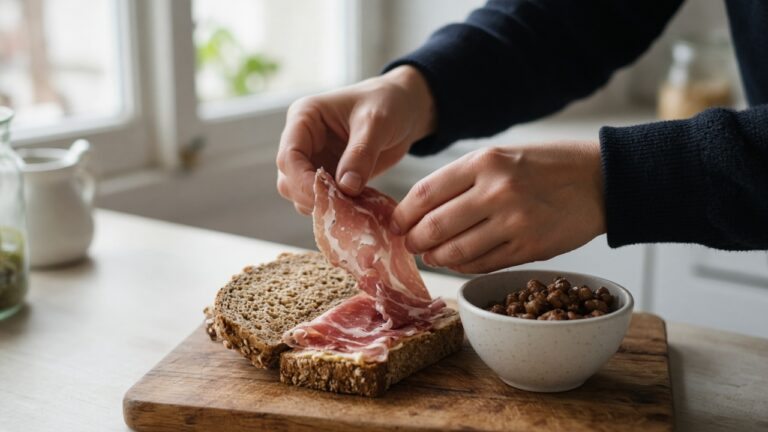
Oatmeal alone is mostly carbohydrate and fibre. That is fine, but I then get hungry around 10:30. So I add a protein source: quark or yoghurt, a boiled egg on the side, or nuts with yoghurt. Breakfast feels more like a meal and less like a bowl of porridge.
That matches how I think about protein at other times of day, for example protein before bed: not a dosing prescription, just a deliberate place in the day.
My fixed build (about 10 minutes)
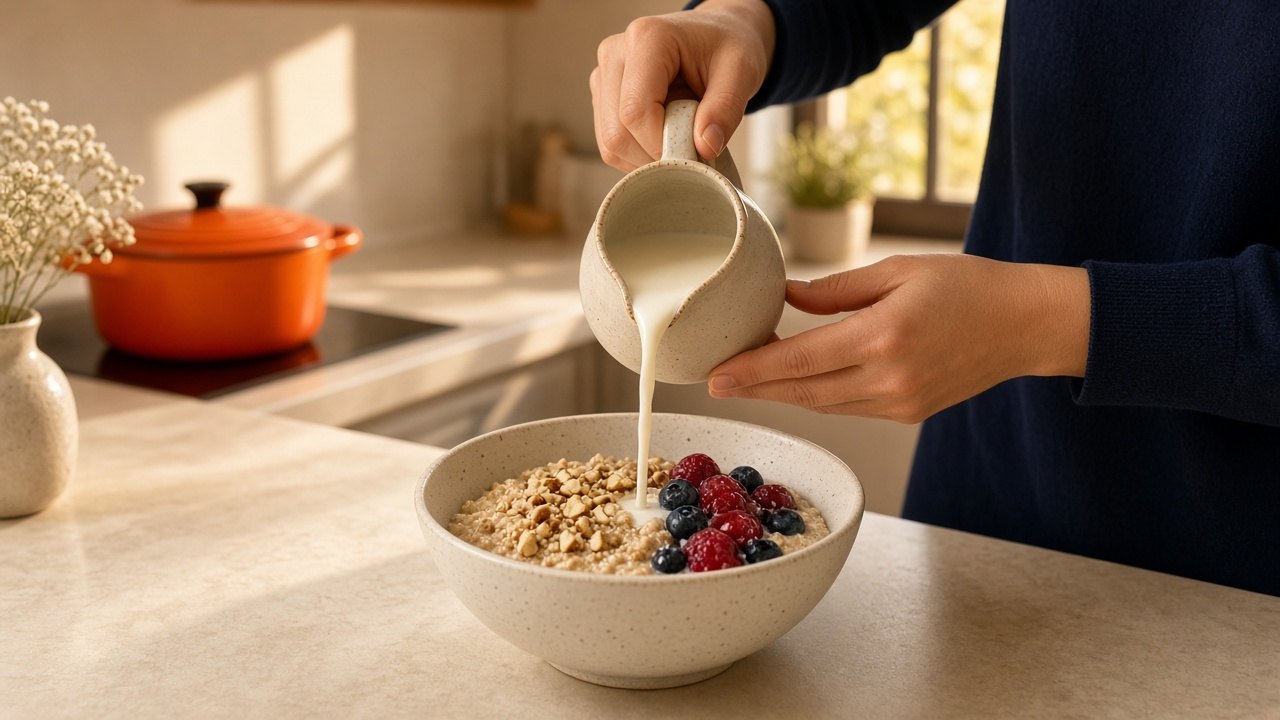
- Base: 40–50 g oat flakes with water or semi-skimmed milk, 3–5 minutes on the hob until creamy. Microwave works too.
- Protein: 125–150 g quark or yoghurt stirred in or on top, or an egg on the side.
- Fruit: apple or pear pieces (in season: see apples and pears in October), or frozen berries.
- Extra: a teaspoon of linseed or a handful of nuts; cinnamon to taste.
Before coffee I drink water first. That ritual is in hydration before coffee: small, but I start breakfast less “dry”.
Variations I rotate
- Savoury: oats with spinach, egg and pepper (more lunch-like).
- Sweet without syrup: ripe pear, yoghurt and cinnamon.
- Leftovers: a spoon of cooked legumes in a savoury bowl when I want more staying power.
Vegetables need not wait until evening: sometimes a bowl of vegetable soup is ready later, so breakfast does not have to carry everything.
Limits
Oatmeal is not a diet plan. If you are gluten-sensitive, choose certified gluten-free oats or another grain. If you have a prescribed diet (diabetes, kidney issues, food allergy), align with a doctor or dietitian. Sugary toppings (syrup, chocolate spread) quickly turn fibre into dessert. And portion stays personal: I eat until satisfied, not until the bowl “must” be empty.
This article is informational and not medical advice. If you have a prescribed diet or an intolerance, talk to a professional.
Sources (selection)
- Vlaams Instituut Gezond Leven. Food triangle: grains and bread. gezondleven.be.
- Superior Health Council (Belgium). Dietary recommendations (via Gezond Leven). gezondleven.be.
- EFSA. Dietary reference values for carbohydrates and dietary fibre (EU frame). efsa.europa.eu.